
Hola querida comunidad #Greenzone, hoy vengo con la Pincelada XVI, sobre temas de arte. Recuérdenme que les hablaré de arte, pero antes les digo su contexto.

Mi ciudad cambió su decursar histórico con el concurso del arte. Una ciudad joven que apenas cuenta con 226 años de fundada. Y si bien este número no me dice mucho porque hay ciudades de 500 años que son constantemente bautizadas bajo otro nombre y el conteo de la fundación parte de ese preciso momento.
Pero Las Tunas, con numerosa población antes de la llegada de Cristóbal Colón, se desarrolló con cierta tendencia a la cultura rural; fotos de la ciudad nos muestran las argollas en las columnas donde los habitantes amarraban los caballos.

Pero voy al arte y el cambio que propició. En la primera mitad del siglo XX se fundó la Escuela del Hogar, Centros de Recreo y con ello se iban focalizando los talentos. En esta etapa fue que Mary Cruz Medina presentó en 1937 la propuesta en lienzo del escudo de la ciudad, y ganó el concurso.


Estos fueron los cimientos de la Escuela de Arte en 1975, artistas de varias zonas del país llegaron a Las Tunas, encabezados por el artista de la plástica Rogelio Ricardo Fuentes.
Luego se fundó en 1984 la Escuela de Cerámica, que con los años fue Escuela Profesional de Artes Plásticas y hace unos años desapareció porque para los decisores de hoy el arte no es importante.
Afortunadamente, el Museo Provincial de la ciudad guarda hoy una importante colección de varios artistas, de diferentes generaciones, entre ellos obras de Rogelio Ricardo, Gustavo Polanco, Eliades Ávalos, Leonardo Fuentes, Alexis Roselló y Jesús Vega Faura, entre otros.


Estos artistas, a través del sistema de enseñanza oficial, se encargaron de formar a otros artistas que han brillado en el contexto nacional e internacional. Algunos representados en esta colección y otros retirados por alguna circunstancia de pensamiento.
Pertenecientes a la generación más joven podemos observar obras de los pintores Yamila Comas, Liusan Cabrera, Alexander Lecusay, y los escultores Pedro Escobar, Adolfo Áreas, Yitzy López.


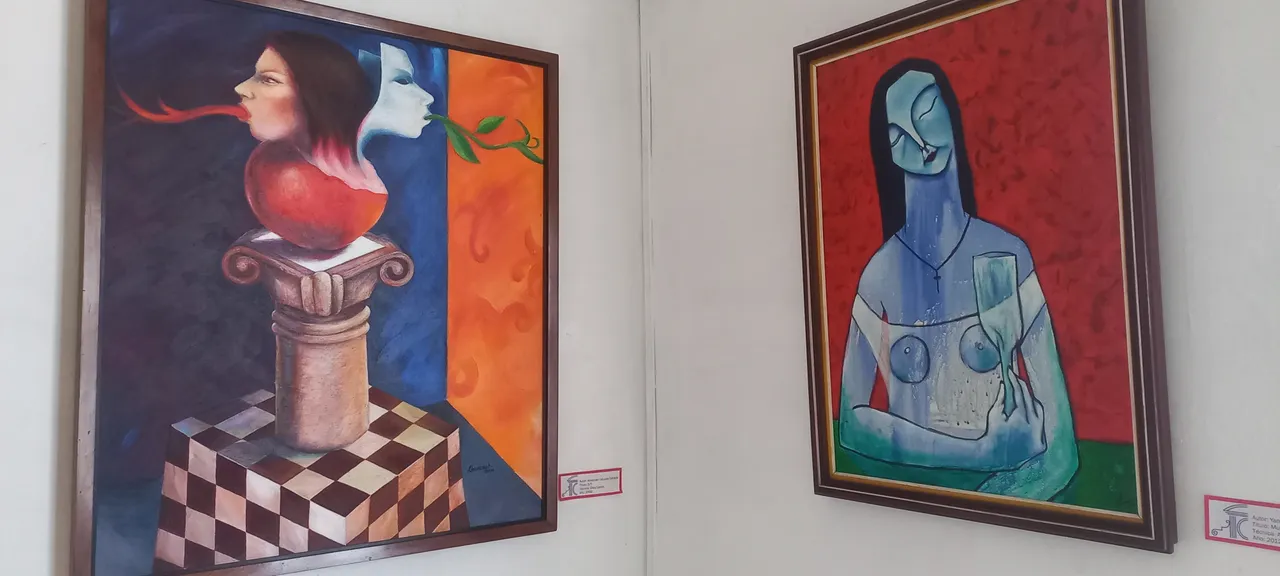

El arte actúa como espejo y motor de la sociedad. Documenta épocas, cuestiona normas y expresa lo inefable. Fomenta la empatía, critica injusticias y teje identidad colectiva. Al estimular el pensamiento crítico y la sensibilidad artística, es un pilar esencial para el desarrollo cultural y el progreso humano. Las Tunas ha sido desde entonces una ciudad diferente.

Recuerden que pueden seguir esta comunidad #Greenzone, y delegar a su usuario 
Gracias por visitar mi blog. Soy crítica de arte, investigadora social y amante de la cocina. Te invito a conocer más de mí, de mi país y de mis letras. Texto e imágenes de mi propiedad.


Art: Mirror and Engine of Society
Hello dear #Greenzone community, today I come with Brushstroke XVI, about art topics. Remind me that I will talk to you about art, but first I'll tell you its context.
My city changed its historical course through art competitions. A young city that has barely been founded for 226 years. And while this number doesn't mean much to me because there are cities of 500 years that are constantly renamed and the founding count starts from that precise moment.
But Las Tunas, with a large population before the arrival of Christopher Columbus, developed with a certain tendency towards rural culture; photos of the city show us the rings on the columns where inhabitants used to tie their horses.
But let me get to the art and the change it fostered. In the first half of the 20th century, the Home Economics School and Recreation Centers were founded, and through them talents began to be focused. It was during this stage that Mary Cruz Medina presented the canvas proposal of the city's coat of arms in 1937, and won the competition.
These were the foundations for the Art School in 1975, artists from various areas of the country came to Las Tunas, led by visual artist Rogelio Ricardo Fuentes.
Later, the Ceramics School was founded in 1984, which over the years became the Professional School of Visual Arts and disappeared a few years ago because for today's decision-makers, art is not important.
Fortunately, the Provincial Museum of the city now holds an important collection of various artists from different generations, including works by Rogelio Ricardo, Gustavo Polanco, Eliades Ávalos, Leonardo Fuentes, Alexis Roselló and Jesús Vega Faura, among others.
These artists, through the official education system, were responsible for training other artists who have shone in the national and international context. Some represented in this collection and others retired due to some circumstance of thought.
Belonging to the younger generation, we can observe works by painters Yamila Comas, Liusan Cabrera, Alexander Lecusay, and sculptors Pedro Escobar, Adolfo Áreas, Yitzy López.
Art acts as both a mirror and an engine of society. It documents eras, questions norms, and expresses the ineffable. It fosters empathy, criticizes injustices, and weaves collective identity. By stimulating critical thinking and artistic sensitivity, it is an essential pillar for cultural development and human progress. Las Tunas has been a different city ever since.
Remember that you can follow this community #Greenzone, and delegate to its user
Thanks for visiting my blog. I am an art critic, social researcher and food lover. I invite you to learn more about me, my country and my writing. Text and images are my property.