
WHY DO WE GO FOR SPEECH THERAPY?

There are 3 main reasons why we need therapy or intervention according to Olswang and Bain.
🔷The first one is to change or eliminate the underlying problem . This means that we work on helping the child learn age-appropriate skills wherein if she’ll be able to achieve those she wouldn’t need therapy anymore. This obviously is the ultimate goal for the parents, however, most of the time there are a lot of factors and underlying concerns that we have to understand and deal with.
💭An example would be a student of mine who has good thinking or cognitive skills, can understand questions, can follow commands, can socialize well but had difficulty producing consonants correctly which made her speech hard to understand. She would most likely attend a few months of speech therapy but once her articulation improves and goals achieved, she wouldn’t need further intervention.

🔷The second reason is changing the disorder . This is when the therapists help the child learn specific behaviors or language skills. As the kids get older, their skills also become more complex. This is the common reason why intervention exists because children who are diagnosed with conditions such as Autism, Developmental delay or Intellectual disability might need therapy for a longer time.
💭An example would be teaching the child to say “eat” and use a gesture (that represents eat) or use sentence “I want to eat.” instead of him just holding your hand and bringing you towards the food.

🔷The third reason is teaching compensatory strategies that will aid them and help them function better despite the difficulties or deficits that they have (which may be temporary or permanent difficulties). This is usually for older children or teenagers who can understand instructions and who can remember the different strategies they should use.
💭An example would be an older child who stutters when in front of a crowd. We teach techniques or strategies that they can do before, during and after talking that will help them manage their stuttering.
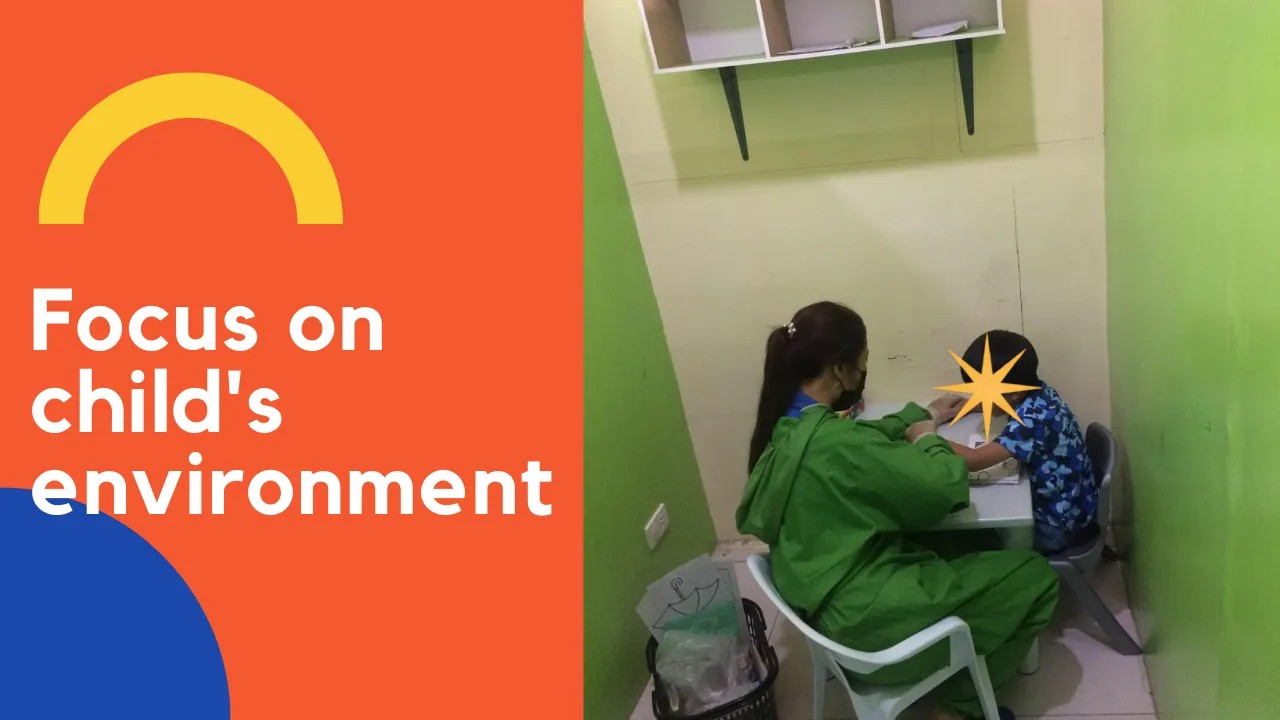
🔷According to Paul and Norbury, there is also another reason, the goal of intervention is focused on the child’s environment . This is when the therapists involve the people that the child usually interacts with (parents, relatives, teachers, other therapists, classmates etc.) and give specific instructions on how they can assist the child so he can communicate effectively in school and at home.
💭An example will be helping a child who has hearing loss. The SLP will need to communicate and teach the people involved on how they can best assist her: by making sure the hearing aid is properly placed and operating, facing the child when speaking, use of gestures to support spoken language.

- Usually the purpose of the therapy would depend on a lot of factors such as the age and skills of the child, the diagnosis or findings from the doctor, the environment and the people that the child is usually with. If we are able to identify the purpose of the therapy, we can plan and prioritize goals, set expectations in terms of duration of therapy if it’s short-term or long-term, and the frequency of therapy if once a week is sufficient or intensive therapy is needed.
In my experience, it would really make a huge difference if the parents and caregiver fully understand how important their role is in the whole intervention. We would really appreciate that you follow through with assisting and teaching your kids when they go outside of the therapy center because in the center they only spend one hour with the therapist and after that they still have the rest of the day to apply what they learned through the learning opportunities that you provide.
Think of every therapy session or visit as a continuous assessment of your kid. Therapists would still keep on evaluating how your child is improving, what goals to continue or change and that also include teaching you what to practice at home.
Some students would need months, years of therapy or even throughout their whole life. They still need to check in with the therapist from time to time.
If you are a therapist, I think that is something we have to work on, being able to effectively explain the different purposes of therapy to our clients or parents to set expectations. Explaining that some kids may just need a little push while some kids might take a little longer developing or learning certain skills.
And if you are a parent, if there’s something you don’t understand with regards to the therapy plan or recommendations, don’t hesitate asking questions to your child’s speech pathologist because all and any questions are valid and it is important that we are on the same page with the therapists and the whole team.
Source: Paul, R., & Norbury, C. (2012). Language Disorders from Infancy Through Adolescence.
Thank you for reading! ❤️
Photos used with permission from Therachieve Pediatric and Adult Therapy Center
If you are from Lapu-Lapu City Cebu inquire here: https://www.facebook.com/Therachieve/ or contact: 0975-658-2308
For other questions, comment below or you may reach me here: https://www.facebook.com/ChillwithShanna

Welcome to Chill with Shanna. Shanna is a life enthusiast and a wanderer. She is easy going, spontaneous and want to challenge herself by testing her limits. She aspires to be an effective storyteller and content creator. She is in pursuit of fulfilling her purpose, living a good life and ticking adventures off her bucketlist.
She is a Speech-Language Pathologist and AXA Financial Advisor by profession.
If you like to hear her stories and experiences, please upvote, follow and leave a comment. It will be much appreciated. 😊