
A call for help from many children and adolescents who find themselves in the midst of separation from their parents and who are often forced to make decisions they do not want to make and to live situations they should not have to live.
Llamado de auxilio de muchos niños y adolescentes que se encuentran en medio de la separación de sus padres y que muchas veces se ven obligados a tomar decisiones que no desean tomar y a vivir situaciones que no deberían vivir.

Good morning dear friends, happy start of the week! I hope it is a super productive week full of blessings!
Today I want to talk to you about a very delicate subject that I consider extremely important because of the impact it has on the lives of all those involved. A situation that many times we have to face without being prepared for it and in which the children are in the middle of two adults who in most cases are unable to reach an agreement and who in their eagerness to hurt each other see in their children the perfect weapon to do so without repairing or stopping to think about the great damage they cause to that being they love so much. Today we are going to talk about the word that no child wants to hear Divorce!
Buenos días queridos amigos, feliz inicio de semana! Espero que sea una semana súper productiva y llena de bendiciones!
Hoy quiero conversar con ustedes de un tema muy delicado y que considero sumamente importante por el impacto que tiene en la vida de todos los involucrados. Una situación que muchas veces toca afrontarla sin estar preparados para ello y en la cual los hijos están en medio de dos adultos que en la mayoría de los casos no logran ponerse de acuerdo y que en su afán de lastimarse ven en sus hijos el arma perfecta para ello sin reparar ni detenerse a pensar en el daño tan grande que les ocasionan a ése ser que tanto aman. Hoy vamos a hablar de la palabra que ningún hijo quiere escuchar Divorcio!

Divorce or separation is one of the most traumatic and stressful situations that a child or adolescent can be subjected to, and from every point of view it is an extremely difficult situation for someone who is not able to assimilate it. They not only have to understand and process by force that their environment will no longer be the same, that everything has changed, that mom and dad will no longer be together, but they must also face everything that this separation implies for them, such as a radical change in their daily life, modification of their routines and often even a change of address, school and even of care with all the consequences that this brings with it for a child or adolescent. And to this we must add that mom or dad form a new family to which they must adapt and do not forget the countless fights that must be witnessed between both parents who on behalf of their children claim and demand all kinds of things.
And as if this were not enough to destroy the mental stability of the children involved in a divorce process, there is the whole legal background that arises once mom and dad decide not to stay together. Questions arise such as who will have custody of the children, how will be the regime of cohabitation, food obligations, with whom they will spend special dates such as birthdays, Christmas, New Year, Carnival, Easter, etc! And there begins the real ordeal for the children or adolescents involved in the breakup of the couple. Endless appointments in Protection Councils, Child Ombudsman's Offices and Protection Courts to try to define all these aspects and to carry out the "party" in peace in the least traumatic way for the children in common of that couple that is in the middle of the dissolution of their bond.
El divorcio o separación es una de las situaciones más traumáticas y estresantes a la que pueda verse sometido un niño o adolescente y es que desde todo punto de vista es una situación en extremo difícil para alguien que no está en capacidad de asimilarla. Ya que no sólo tiene que entender y procesar a la fuerza que ya su entorno no será igual, que todo cambió, que papá y mamá ya no estarán juntos, sino que deben enfrentar todo lo que ésa separación implica para ellos como el cambio radical de su día a día, modificación de sus rutinas y muchas veces hasta cambio de domicilio, colegio e incluso de cuidad con todas las consecuencias que éso trae consigo para un niño o adolescente. Y a ésto debemos sumarle que papá o mamá formen una nueva familia a la cual tendrán que adaptarse y no olvidemos las innumerables peleas que deben presenciar entre ambos progenitores quienes en nombre de sus hijos alegan y exigen todo tipo de cosas.
Y como si ésto no fuese suficiente para acabar con la estabilidad mental de los hijos involucrados en un proceso de divorcio está todo el trasfondo legal que nace una vez papá y mamá deciden no seguir juntos. Surgen preguntas como quién tendrá la guarda de los niños, cómo será el régimen de convivencia, obligación alimentaria, con quién van a pasar fechas especiales como cumpleaños, navidad, año nuevo, carnaval, Semana Santa, etc! Y ahí comienza el verdadero suplicio para los niños o adolescentes involucrados en esa ruptura de pareja. Interminables citas en Consejos de Protección, Defensorías del Niño y Tribunales de Protección para tratar de definir todos éstos aspectos y llevar la "fiesta" en paz de la manera menos traumática para los hijos en común de ésa pareja que está en plena disolución de su vínculo.

And it is right in the middle of these legal processes that the stress and anxiety begins. The pressure from mom and dad, being forced to choose sides even though they resist with all their strength and think "why should I choose between mom and dad if I love them both" and that debate begins, that internal struggle in a being who sees his world crumbling and now must choose sides! He has to make decisions he doesn't want to make and many times in that process he is the victim of constant manipulation to make him take one side or the other. And things change, that father who loves his son with madness seems to forget that love and uses him as an object of revenge towards the other who decided to leave him, and then the beloved son becomes a "weapon" in the hands of mom and dad who use him, manipulate and pressure him at their convenience just to make the other one angry or hurt him without stopping to think about the damage they cause to their son.
Y es justo en medio de éstos procesos legales que comienza el estrés y la ansiedad. La presión por parte de papá y mamá, el verse forzados a escoger un bando aunque ellos se resisten con todas sus fuerzas y piensan "por qué debo escoger entre mamá y papá si los amo a los dos" y comienza ése debate, ésa lucha interna en un ser que ve que su mundo se desmorona y ahora debe escoger un bando! Debe tomar decisiones que no quiere tomar y muchas veces en ése proceso es víctima de manipulaciones constantes para que tome partido por uno u otro papá. Y las cosas cambian, ése papá que ama con locura a su hijo pareciera olvidarse de ése amor y lo utiliza como objeto de venganza hacia el otro que decidió dejarle, y entonces el hijo tan amado se convierte en un "arma" en manos de papá y mamá que lo utilizan, manipulan y presionan a su conveniencia sólo para hacer enojar o lastimar al otro sin detenerse a pensar en el daño que ocasionan a su hijo.

In my 17 years as a Child and Adolescent Protection Counselor, part of my job was to mediate in separation processes, be it divorces, de facto stable unions or simply the breakup of a couple's relationship that came to an end, where the common denominator in most cases was to see the children as the big losers, children and adolescents in the middle of a psychological war on both sides, a power struggle that they do not want to be part of, but they are involved because mom and dad are unable to solve the situation without subjecting them to more stress than the stress of seeing their family unit destroyed, their routines altered and having to separate from one of their parents.
It was very common to see parents coming to our office looking for help because their child was out of control! Dr. the child is rebellious, from one moment to another he changed and does not want to obey, he behaves badly, he does whatever he wants, I do not know what to do" and they said they had no idea why this was happening or how to solve it and when I inquired a little more and asked that dad if the child/adolescent had faced any change in his life lately or if there was a new event in process, the phrase "I separated from his dad/mom" came up and those words clarified the whole picture, It is not easy for a child to face this kind of situations, even for the youngest ones these are changes that usually affect their behavior and that is how we go from having extroverted and happy children to having quiet, reserved, bad tempered and even defiant children, that is, there is a noticeable change in their behavior and many times parents do not associate it to the separation and let it pass until they reach a point where they can't take it anymore and that is when they decide to seek help.
En mis 17 años como Consejera de Protección del Niño, Niña y Adolescente parte de mi trabajo era mediar en procesos de separación, llámese divorcios, uniones estables de hecho o simplemente la ruptura de una relación de pareja que llegó a su final, donde el común denominador en la mayoría de los casos era ver a los hijos como los grandes perjudicados, niños y adolescentes en medio de una guerra psicológica de parte y parte, una lucha de poderes de la que no quieren formar parte, pero se ven involucrados porque papá y mamá no logran solucionar la situación sin necesidad de someterlos a más estrés del que de por sí implica el hecho de ver destrozado su núcleo familiar, alteradas sus rutinas y encima tener que separarse de uno de sus padres.
Era muy común ver llegar a nuestra oficina padres buscando ayuda porque su hijo estaba fuera de control! "Dra. el niño está rebelde, de un momento a otro cambió y no quiere obedecer, se comporta mal, hace lo que le da la gana, no sé qué hacer" y manifestaban no tener idea de por qué estaba ocurriendo ésto ni cómo solucionarlo y cuando indagaba un poco más y preguntaba a ése papá si el niño/adolescente había enfrentado algún cambio en su vida últimamente o si había un nuevo acontecimiento en proceso surgía la frase "me separé de su papá/mamá" y ésas palabras aclaraban todo el panorama, todo cobraba sentido y es que no es fácil para un hijo enfrentar éste tipo de situaciones, incluso para los más pequeños son cambios que suelen afectar muchísimo su conducta y así es como pasamos de tener niños extrovertidos y alegres a tener niños callados, reservados, mal humorados y hasta retadores, es decir, hay un cambio notable en su conducta y muchas veces los padres no lo asocian a la separación y lo van dejando pasar hasta que llegan a un punto que no pueden más y es cuando deciden buscar ayuda.
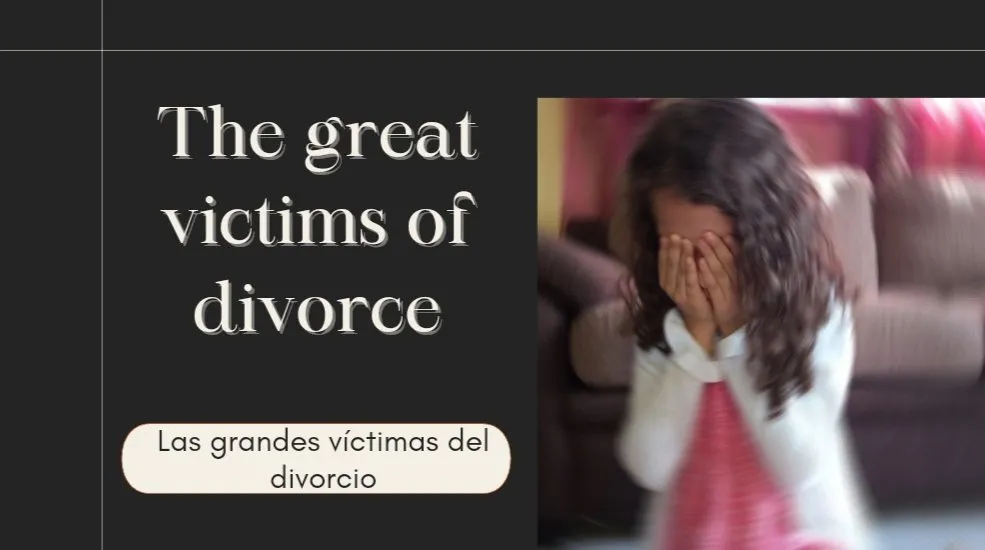
The transition of a child through the separation of their parents is a very painful process, it is a process full of stress, uncertainty, it is a process that they are not able to handle. And it is not about the process itself, it is what comes with not having mom and dad living together. Now they must share their days in two homes, two homes where the rules are different, where the father who exercises the guardianship by spending most of the time with the child is the one who imposes discipline, he is the father who corrects, scolds and sets rules and on the other hand there is the "cool" dad, the one they only see on weekends, the one who does not scold, the one who goes out and spoils the child! And how could he not, if he only sees him on weekends! Imagine what it is like for a child to constantly change routines, to have different rules in each house and many times to listen to all the negative things that the dad on duty says about the other one. There are too many things to assimilate and they obviously affect the emotional part of that child. In fact it was a very common thing to see in the Protection Council that the guardian father went to ask for some kind of help because when the child returned from complying with the cohabitation regime there was a kind of constant struggle between him and the child since he refused to abide by the rules because "in the other father's house things were different", it was a back and forth that affected considerably the stability of the child and caused a lot of tension in the home. In these cases, my recommendation is and will always be the same.... Seek psychological help
As soon as the separation process begins, immediate help should be sought for the family nucleus, not only for the children! Mom and Dad must learn to deal with children who are literally losing their world, their stability, their home and that often implies behavioral changes, rebellion, disobedience and that sweet and loving child you had at home changes and you no longer know how to treat him or her or how to handle that situation. Hence the importance of seeking help right at the beginning of the process, and thus be prepared for everything that lies ahead that if in itself is not easy for the adult believe me that for children is much worse and as parents we must be prepared and be able to help them. And on the other hand there is the fact of being able to manage the tension between both parents especially when the separation is not on good terms and they are not able to reach common agreements regarding the children and in those cases psychological assistance is of great help and in fact it was one of the Protection Measures that was dictated more frequently in my office to the family nucleus that was going through a separation.
El transitar de un hijo por la separación de sus padres es un proceso muy doloroso, es un proceso lleno de estrés, de incertidumbre, es un proceso que no están en capacidad de manejar. Y no se trata del proceso en sí, es lo que trae consigo el no tener a mamá y papá viviendo juntos. Ahora debe compartir sus días en dos hogares, dos hogares dónde las normas son distintas, donde al papá que ejerce la guarda al estar la mayor parte del tiempo con el hijo le corresponde imponer la disciplina, es el padre que corrije, regaña y pone normas y por otro lado está el papá "cool" ése que ven solo los fines de semana, el que no regaña, el de las salidas y la consentidera! Y cómo no, si lo ve sólo los fines de semana! Imaginen lo que es para un niño cambiar constantemente de rutinas, tener normas diferentes en cada casa y muchas veces escuchar todas las cosas negativas que el papá de turno dice del otro. Son demasiadas cosas para asimilar y que obviamente van afectando la parte emocional de ése niño. De hecho era cosa muy común ver en el Consejo de Protección que el padre guardador acudiera a solicitar algún tipo de ayuda debido a que cuando el niño regresaba de cumplir con el régimen de convivencia surgía una especie de lucha constante entre el y el niño ya que se negaba a acatar las normas porque "en la casa del otro papá las cosas eran diferentes", era un avanzar y retroceder que afectaba de manera considerable la estabilidad del niño y la causante de mucha tensión en el hogar. En éstos casos mi recomendación es y será siempre la misma... Búsquen ayuda psicológica!.
Apenas se inicia el proceso de separación se debe buscar ayuda de manera inmediata para el núcleo familiar, no sólo para los niños! Papá y mamá deben aprender a lidiar con hijos que están perdiendo de manera literal su mundo, su estabilidad, su hogar y éso implica muchas veces cambios de conducta, rebeldía, desobediencia y ése niño dulce y amoroso que tenías en casa cambia y ya no sabes cómo tratarlo ni cómo manejar ésa situación. De ahí la importancia de buscar ayuda justo al iniciar el proceso, y así estar preparados para todo lo que se viene por delante que si de por sí no es fácil para el adulto créanme que para los hijos es mucho peor y como padres hay que estar preparados y poder ayudarlos. Y por otro lado está el hecho de poder manejar la tensión entre ambos padres sobre todo cuando la separación no se da en buenos términos y no logran llegar a acuerdos en común en cuanto a los hijos se refiere y en ésos casos la asistencia psicológica es de gran ayuda y de hecho era una de las Medidas de Protección que se dictaba con mayor frecuencia en mi oficina al núcleo familiar que atravesaba por una separación.

Have you ever stopped to think what goes through that child's head when he/she hears the phrase "we are going to separate"I imagine it as if they let go of your most precious treasure in front of you and you see it shatter right in front of your eyes and in tears and despair you try without success to put all the pieces together and you want to understand why they let go, why they broke it and the only thing you have at that moment is what you love so much in pieces and you wonder what now, what is going to happen to me! That's how I always imagined it after interviewing so many children and adolescents going through that situation, as a state of total despair, of frenzy, of anguish, of uncertainty, of wanting to understand what happened and what is going to happen to them. And the question they usually ask themselves is and now what?. And just like those many more for which there is simply no answer and many times mom and dad don't have an answer at the moment either, plunging the child into a state of complete uncertainty that fills him/her with anxiety and stress.
In addition to all this, the child feels in the middle of a pitched battle in which he/she must choose which side he/she is on! He is taken from one agency to another where he is evaluated or questioned about which of his two parents he wants to be with and the only thing he wants is both parents together! He doesn't want to decide, he doesn't want that responsibility, he doesn't want to disappoint or hurt either of them by mentioning a choice. Children desperately ask not to be made to choose between the two people they love most in life. In my work more than once I had to ask this question and the answer was the same, "I love them both, I want them to be together again" and I had to explain to them why sometimes it is better for mom and dad to be separated in order to be happy and you realize with that answer how much pressure these children feel and it is no wonder! Who can choose between their two parents without thinking that they are going to hurt the other parent with their decision? How can a child make such a decision? Tell me if this is not a cause of anguish and worry for someone who is not able to handle so much pressure.
Alguna vez se han detenido a pensar qué pasa por la cabeza de ése hijo cuando escucha la frase "nos vamos a separar!"? Yo lo imagino como si soltaran delante de tí tu tesoro más preciado y lo vieras hacerse trizas justo delante de tus ojos y en medio de las lágrimas y desesperación tratas sin lograrlo de unir todas las piezas y quieres entender por qué lo soltó, por qué lo rompió y lo único que tienes en ése momento es éso que tanto amas hecho pedazos y te preguntas y ahora qué, qué va a pasar conmigo! Así es como siempre lo imaginé después de entrevistar a tantos niños y adolescentes que atravesaban por ésa situación, como un estado de desesperación total, de frenesí, de angustia, de incertidumbre, de querer entender que pasó y qué va a suceder con ellos. Y la pregunta que suelen hacerse es y ahora qué?. Y así como ésas muchas más para las cuales simplemente no tiene respuesta y muchas veces papá y mamá tampoco la tienen de momento sumiendo al niño en un estado de completa incertidumbre que lo llena de ansiedad y estrés.
A todo esto se le suma el sentirse en medio de una batalla campal en la cual debe escoger de qué lado está! Se le lleva de un organismo a otro donde es evaluado o interrogado sobre con cuál de sus dos padres quiere estar y ése niño lo único que quiere es a sus dos padres juntos! El no quiere decidir, no quiere esa responsabilidad, no quiere defraudar ni lastimar a ninguno de los dos mencionando una elección. Los hijos piden desesperadamente que no les hagan escoger entre las dos personas que más aman en la vida. En mi trabajo más de una vez me tocó realizar ésa pregunta y la respuesta era la misma, "los quiero a los dos, quiero que vuelvan a estar juntos" y tocaba explicarles el por qué a veces resulta mejor que papá y mamá estén separados para poder ser felices y te das cuenta con esa respuesta de la presión tan grande que sienten éstos niños y es que no es para menos! Quien puede escoger entre sus dos papás sin pensar que va a lastimar al otro con su decisión? Cómo puede un hijo tomar semejante decisión? Díganme ustedes si no es ésto motivo de angustia y preocupación para alguien que no está en capacidad de manejar tanta presión.

Many times it is the parents themselves who put "against the ropes" their children, pressuring them to take one side or the other. And to achieve their purpose they use every resource they can think of! Then they take on the task of speaking badly to their children about their parents, telling them in detail why mom or dad left, telling them that now they have another family and they have already forgotten about them, that it is their fault that they are alone and living this situation, and so little by little they begin to undermine their hearts and their thoughts of hatred for the parent who made the decision to end the relationship. Without stopping to think about the great damage they are causing in that parent-child relationship that is so important to maintain and especially in the psychological damage and emotional burden they cause to their child. On the other hand, there are the dads with detective complexes! Those that when their child arrives to fulfill the regime of cohabitation or to fulfill it, they sit him/her as a police procedure and begin to ask all kinds of questions that fill him/her with anxiety and anguish because he/she does not want to speak badly of any of his/her parents, he/she does not want to do anything that can affect the other one if he/she says something that should not or tells some "secret". And so his days go by between one worry and another, filling him with stress thanks to parents who do not understand that the separation in itself is too much to bear to put their children in this kind of situation.
Muchas veces son los mismos padres quienes ponen "contra las cuerdas" a sus hijos presionando para que tomen partido por uno u otro. Y para lograr su propósito echan mano de cuánto recurso se les ocurre! Entonces se dan a la tarea de hablarles mal a los hijos de sus padres, de contarles con lujo de detalles por qué se fue papá o mamá, de decirles que ahora tienen otra familia y ya se olvidaron de ellos, que por su culpa están solos y viviendo ésa situación y así poquito a poco comienzan a minar su corazón y sus pensamientos de odio hacía el padre que tomó la decisión de terminar la relación. Sin detenerse a pensar en el daño tan grande que están causando en esa relación padre-hijo que es tan importante de mantener y sobre todo en el daño psicológico y la carga emocional que ocasionan a su hijo. Por otro lado están los papás con complejos de detectives! Esos que al llegar su hijo de cumplir el régimen de convivencia o a cumplirlo lo sientan tipo procedimiento policial y comienzan a realizar todo tipo de preguntas que lo van llenando de ansiedad y angustia porque él no quiere hablar mal de ninguno de sus padres, él no quiere hacer nada que pueda afectar al otro si dice algo que no debe o cuenta algún "secreto". Y así transcurren sus días entre una preocupación y otra, llenándose de estrés gracias a unos padres que no entienden que la separación en sí misma es demasiado para sobrellevar como para poner a sus hijos en éste tipo de situaciones.
Parents, this is a call for reflection, separation in itself is a traumatic process for the children, do not make it more difficult, remember that you are the ones called to care for and watch over their well being and every step you take must be taken from the love you feel for them regardless of the process you are going through as a couple, your children must be a priority, your emotional stability depends on how you manage to handle the separation and if you realize that you cannot handle it alone, seek help for you and for your children. Separation does not have to be the end, it can be the beginning of a new tomorrow.
Thank you so much for joining me today!
Kisses and blessings!

Papitos, es un llamado a la reflexión, la separación de por sí es un proceso traumático para los hijos, no se lo hagan más difícil, recuerden que ustedes son los llamados a cuidar y velar por su bienestar integral y cada paso que den denlo desde el amor que sienten por sus ellos independientemente del proceso que como pareja estén viviendo, sus hijos deben ser prioridad, su estabilidad emocional depende de cómo logren manejar la separación y si se dan cuenta que no pueden solos busquen ayuda tanto para ustedes cómo para sus hijos. La separación no tiene por qué ser el fin, puede ser el comienzo de un nuevo mañana.
Muchas gracias por acompañarme hoy!
Besitos y bendiciones!


Fotografía por:| Photography by:

Edición por:| Edtion by:
Traducido con:| Translated with www.DeepL.com/Translator (free version)