
Hola, setero! My today's post is for #FungiFriday challenge that we have here at Hive's FungiLovers community. By the way, I invite all setero and mushroom hunters to share your photos with us -- community supports blogs that bring good material to the blockchain.
NB. Count this as an advertisement: Photofeed community is hosting this week a macro photography contest, just two days left. Do not miss this opportunity to present your macro photographer skills! Let me alert here my friends 


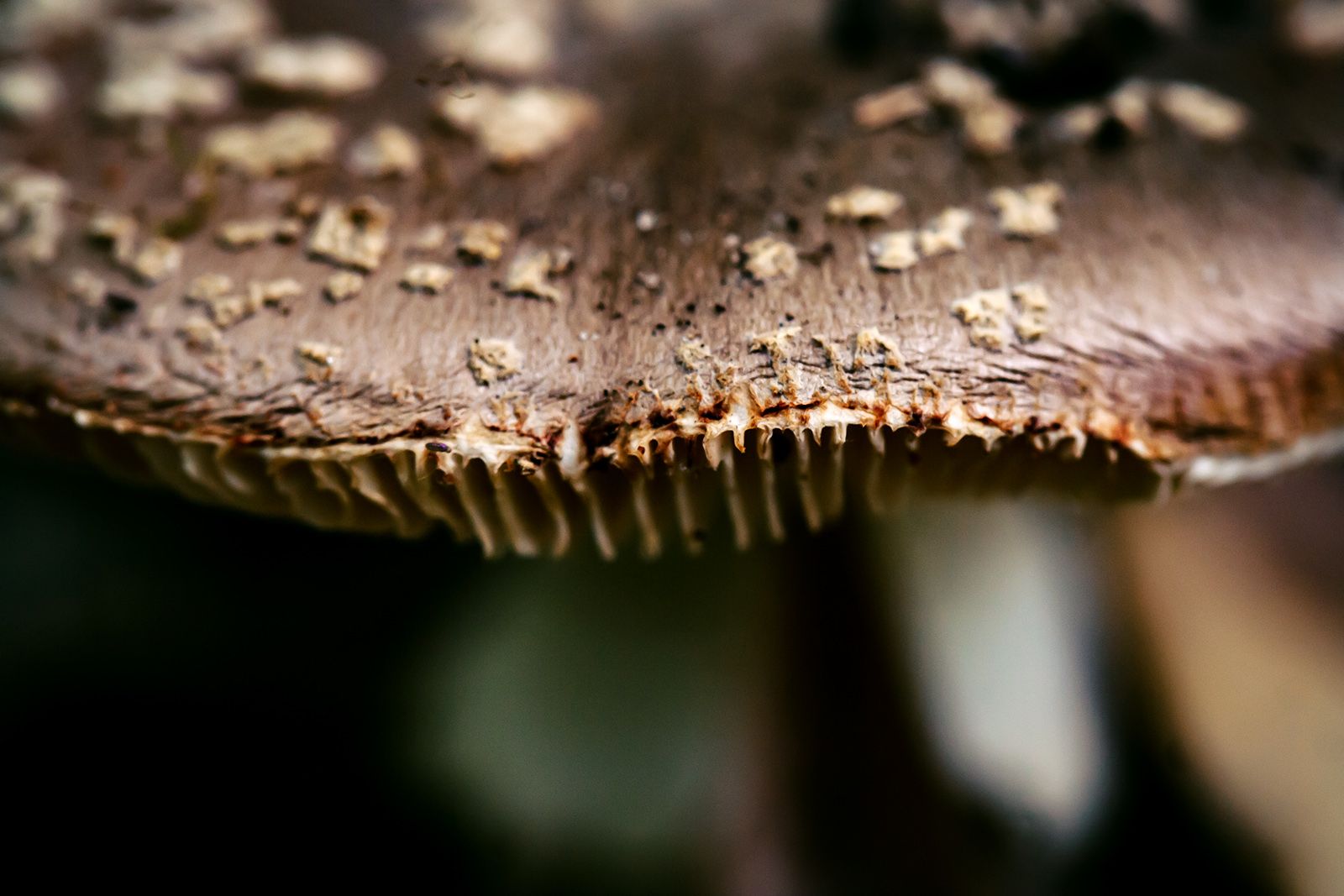
Image is clickable for hi-res version. No, this wasn't a gigantic fly -- it was rather a small mushroom.
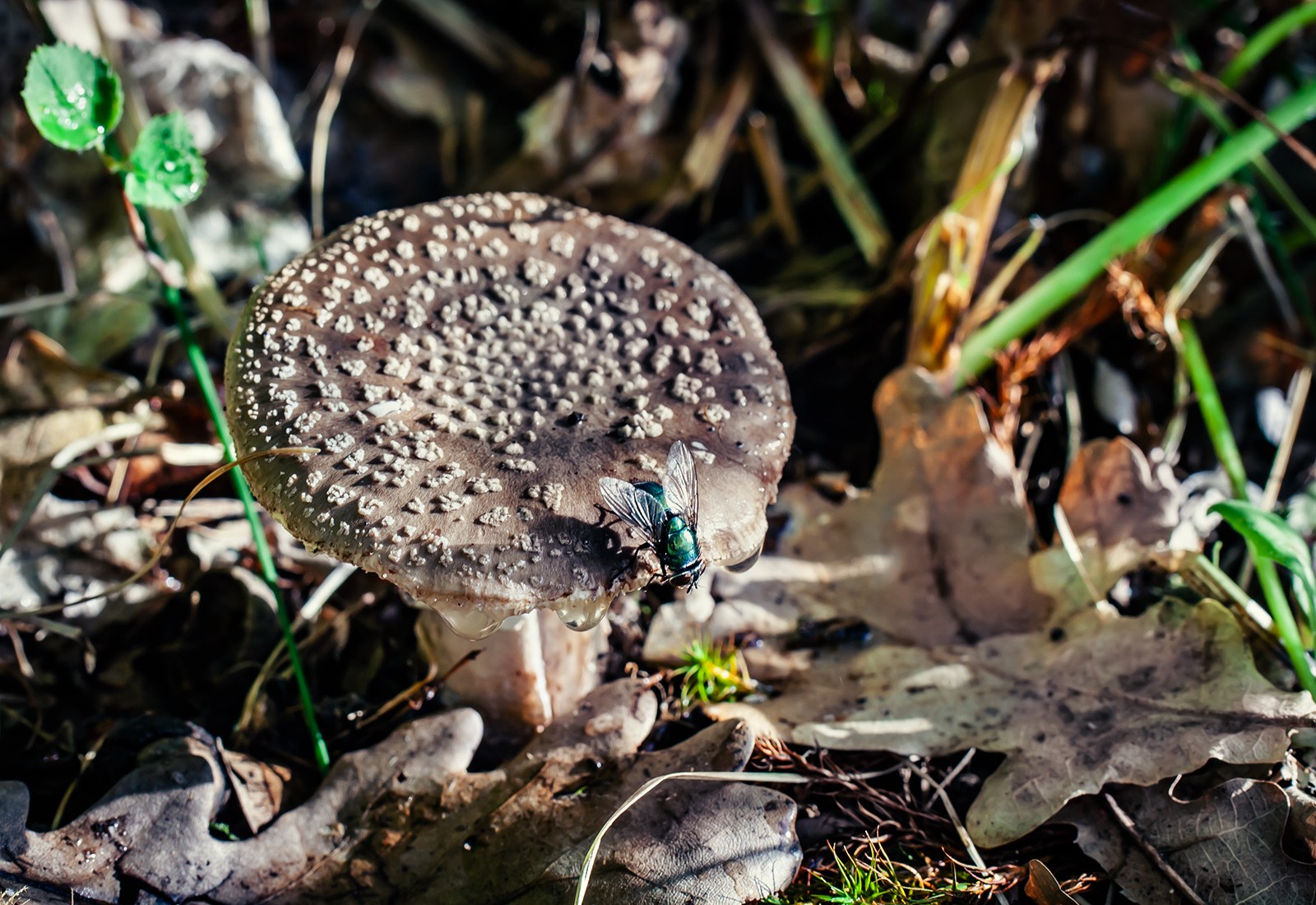

Well, now let me turn to the topic of my today's lecture. An ugly and unuseful toadstool grew near my countryside cottage last summer. (This summer they also popped up there, but due to the dry weather, the harvest was less than back in 2020, and I almost did no captures). The photos you see below were taken in July 2020. Now their time have come (okay, okay, I’m not going to deceive you: my mouse just accidentally poked into this certain folder!) So, I processed a few photos, and ready to present them.
Ну и на этом, перехожу к теме моей сегодняшней лекции. Некрасивая и неполезная поганка выросла на моем дачном участке летом 2020 года. Собственно говоря, летом 2021 она снова там появилась, но из-за сухой погоды в гораздо меньшем количестве, и я почти не фоткал. Только сейчас подошла очередь (ладно, ладно, не стану вас обманывать - просто мышка случайно ткнулась в этот каталог!) и я обработал фотографии, и готов показать их вам.
Image is clickable for hi-res version. This is a macro focus stake assembled from 8 separate images.
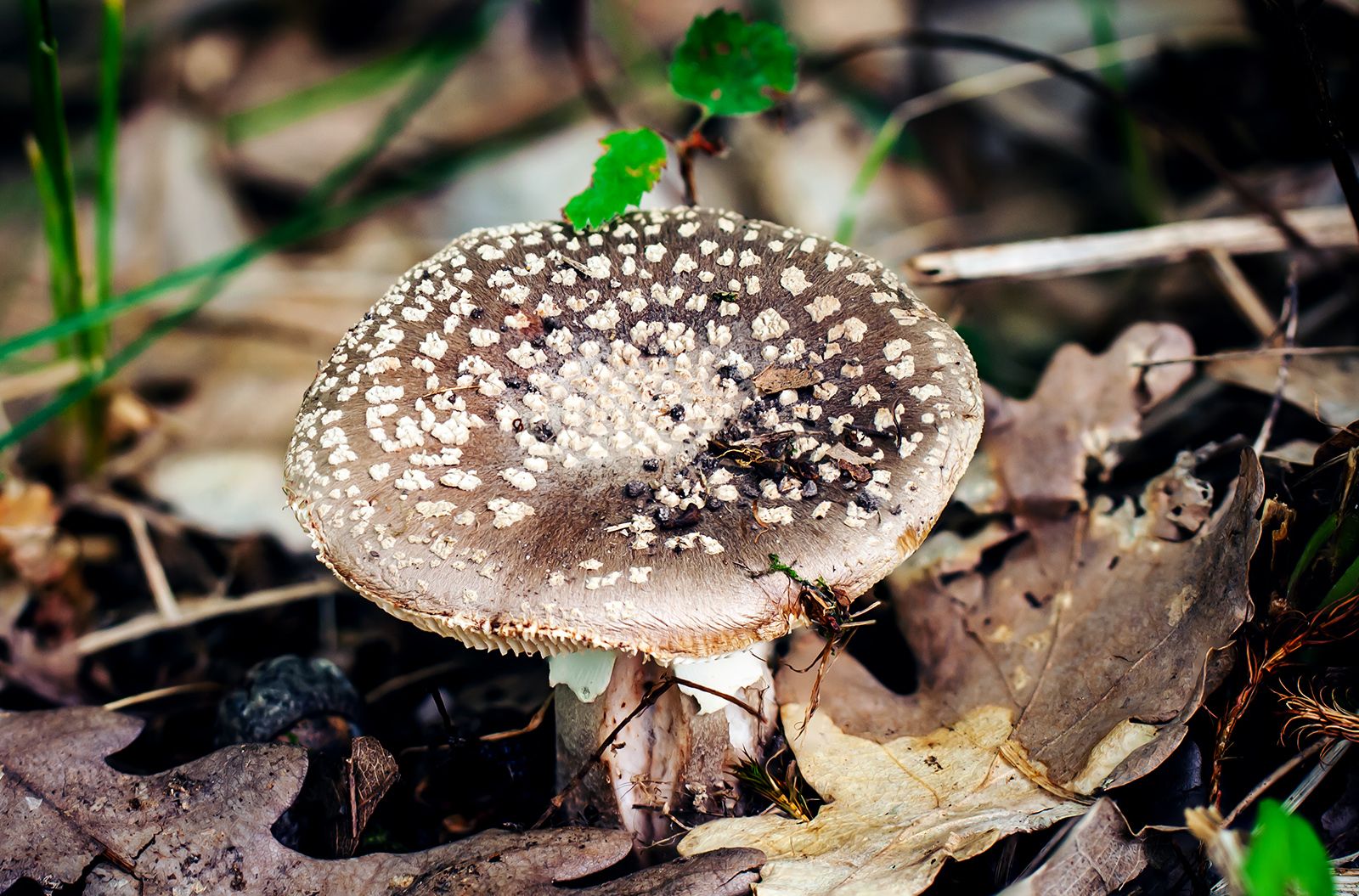
Amanita pantherina
Amanita pantherina, also known under different names such as panther amanita, panther cap, false blusher (due to the similarity to the true blusher (Amanita rubescens). The species is not uncommon, and occure mostly in Europe and Western Asia, in late summer and autumn, in both deciduous and, less frequently, coniferous woodland, rarely at meadows. Forms mycorrhiza with birch, pine, oak, beech, prefers alkaline soils. Found in deciduous and less often coniferous forests, sometimes in meadows.
Имя: Мухомор пантерный (лат. Amanita pantherina). Гриб широко распространён в умеренном климате Северного полушария. Встречается в Европе и западной Азии, отмечены случаи появления в Южной Африке, Канаде, Британской Колумбии (куда гриб попал вместе с завезенными из Европы деревьями). Появляется с середины июля по конец сентября, наиболее массово - в августе. Образует микоризу с березой, сосной, дубом, буком, предпочитает щелочные почвы. Встречается в лиственных и реже хвойных лесах, иногда и на лугах.
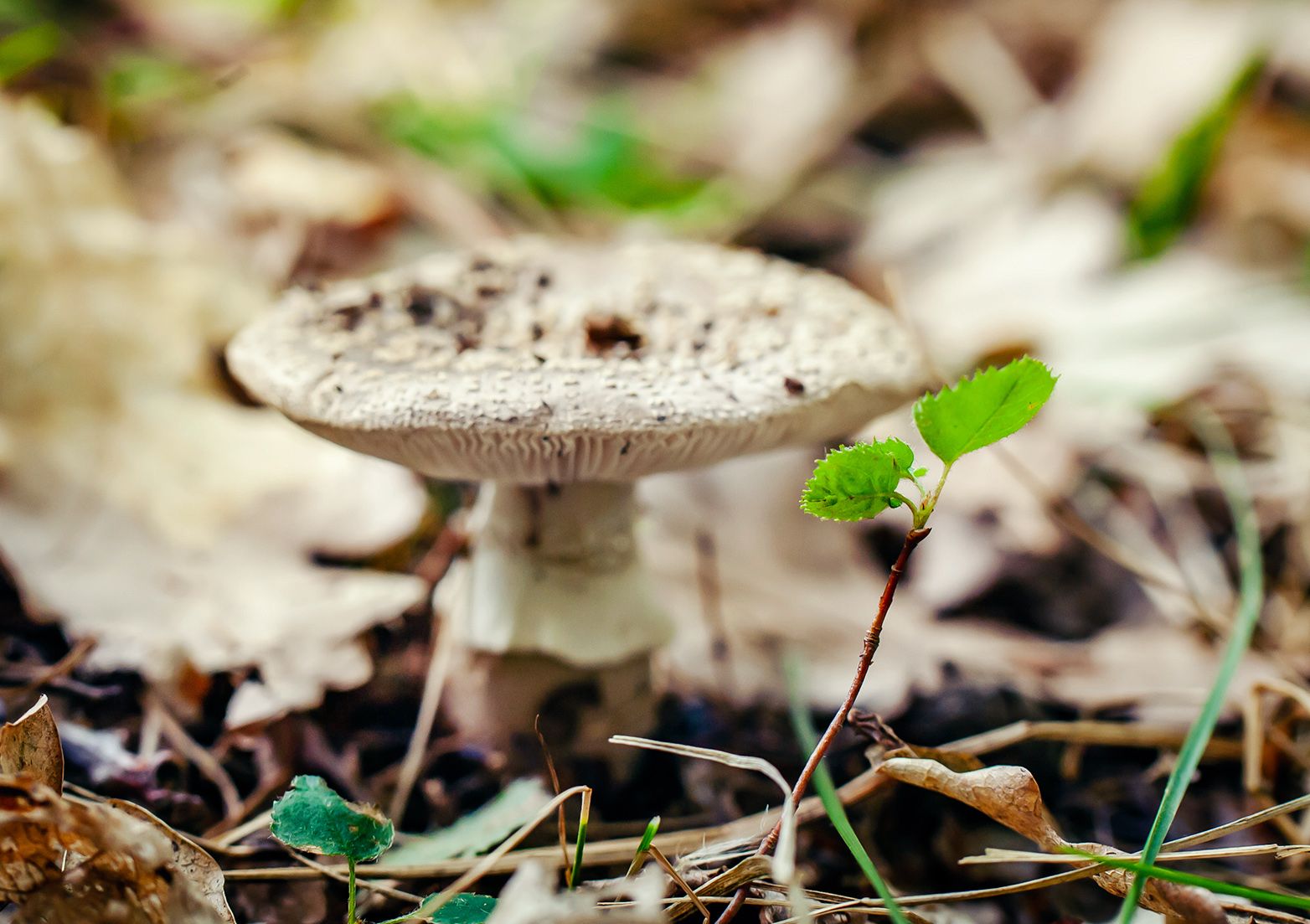
The mushroom has two synonyms it can be easily confused. Amanita rubescens (aka Pink-gray fly agaric): it has a ribbed textured top surface of the coil, and its body obtains a pinkish color exposed to the air. It is a common, non-toxic, edible mushroom. The second synonym is the inedible Amanita spissa, which is quite rare. Among its features are: a smooth ring, a less fleshy body and stem, and smaller flakes decorating its cap.
Гриб имеет синонимы, с которыми его легко спутать. Amanita rubescens, ака Мухомор серо-розовый: у него рубчатая текстурная верхняя поверхность кольца, и розовеющая на воздухе мякоть, это распространеный, неопасный съедобный гриб. Второй синоним - несъедобный Мухомор толстый (Amanita spissa). Он встречается достаточно редко, он имеет гладкое кольцо, менее мясистый, шляпку украшают более мелкие хлопья.
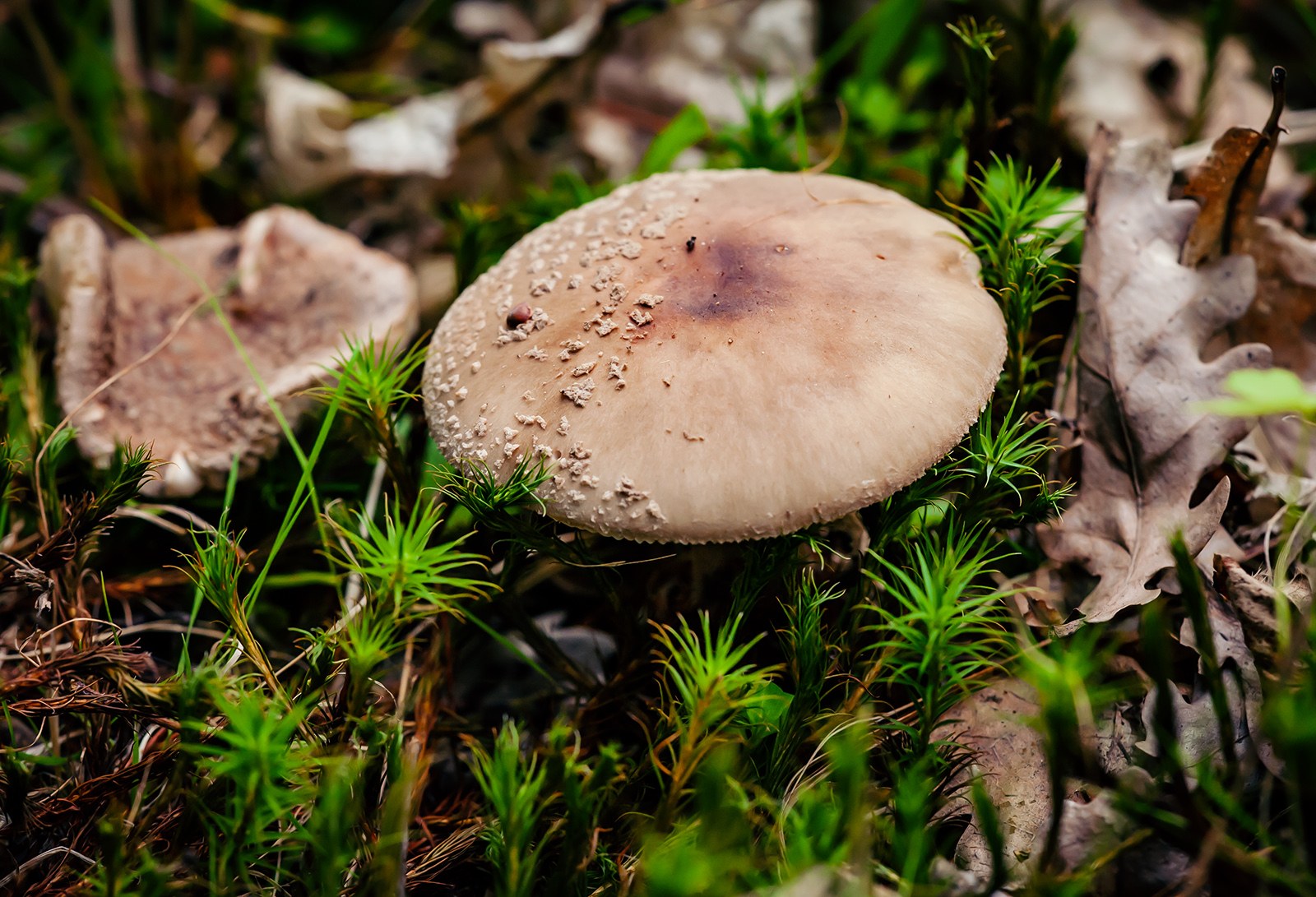
Key features for identification. The cap is grayish, brownish, olive-dirty and light brown in color. The pulp is white, does not change color on air, watery, fragile, with an unpleasant odor and slightly sweetish in taste. The gills are frequent, white, not growing to the stem, sometimes with brownish spots in old mushrooms. The stem is 4-12 cm high, white, cylindrical, tuberous-widened to the downside, hollow inside, stem's surface is slightly fleecy. The coil is located quite low, it may be hanging, smooth, fragile, sometimes it can be absent. #Source: wikipedia.
Ключевые признаки для идентификации: шляпка бывает сероватого, коричневатого, оливково-грязного и светло-бурого цвета. Мякоть белая, не изменяющая цвета на воздухе, водянистая, хрупкая, c неприятным запахом и немного сладковатая на вкус. Пластинки частые, белые, не прирастающие к ножке, иногда с буроватыми пятнами у старых грибов. Ножка 4—12 см в высоту, белая, цилиндрическая, внизу клубневидно-расширенная, полая, поверхность ножки слегка ворсистая. Кольцо расположено очень низко, висячее, гладкое, хрупкое, иногда может отсутствовать. #Source: википедия.
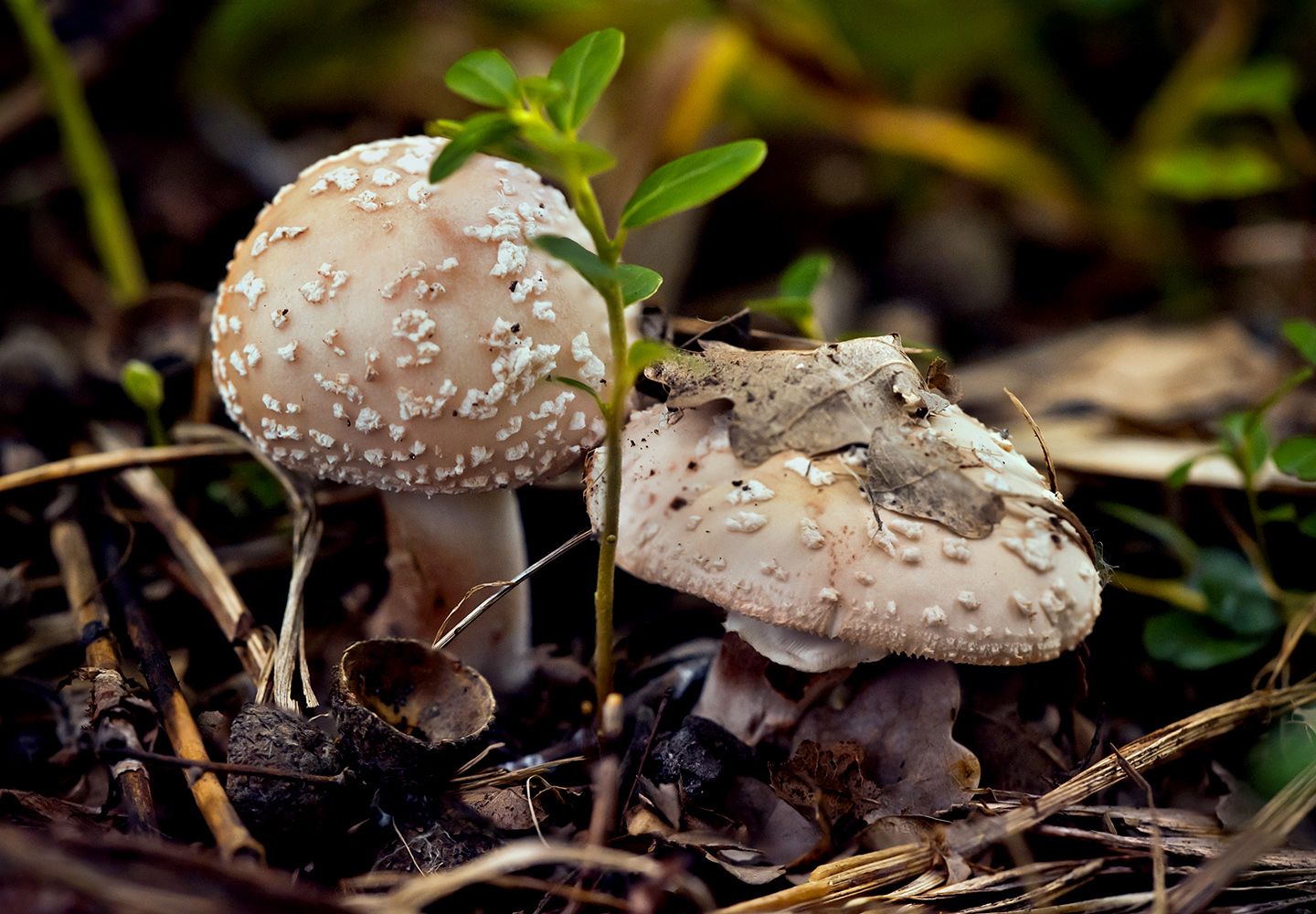
On the left is a younger edition of this mushroom - at first, the cap is semi-spherical, it becomes flat when the mushroom has matured enough.
Более молодые экземпляры (слева) носят полу-сферическую шляпку, плоской с загнутыми краями она становится когда гриб уже достаточно подрос.
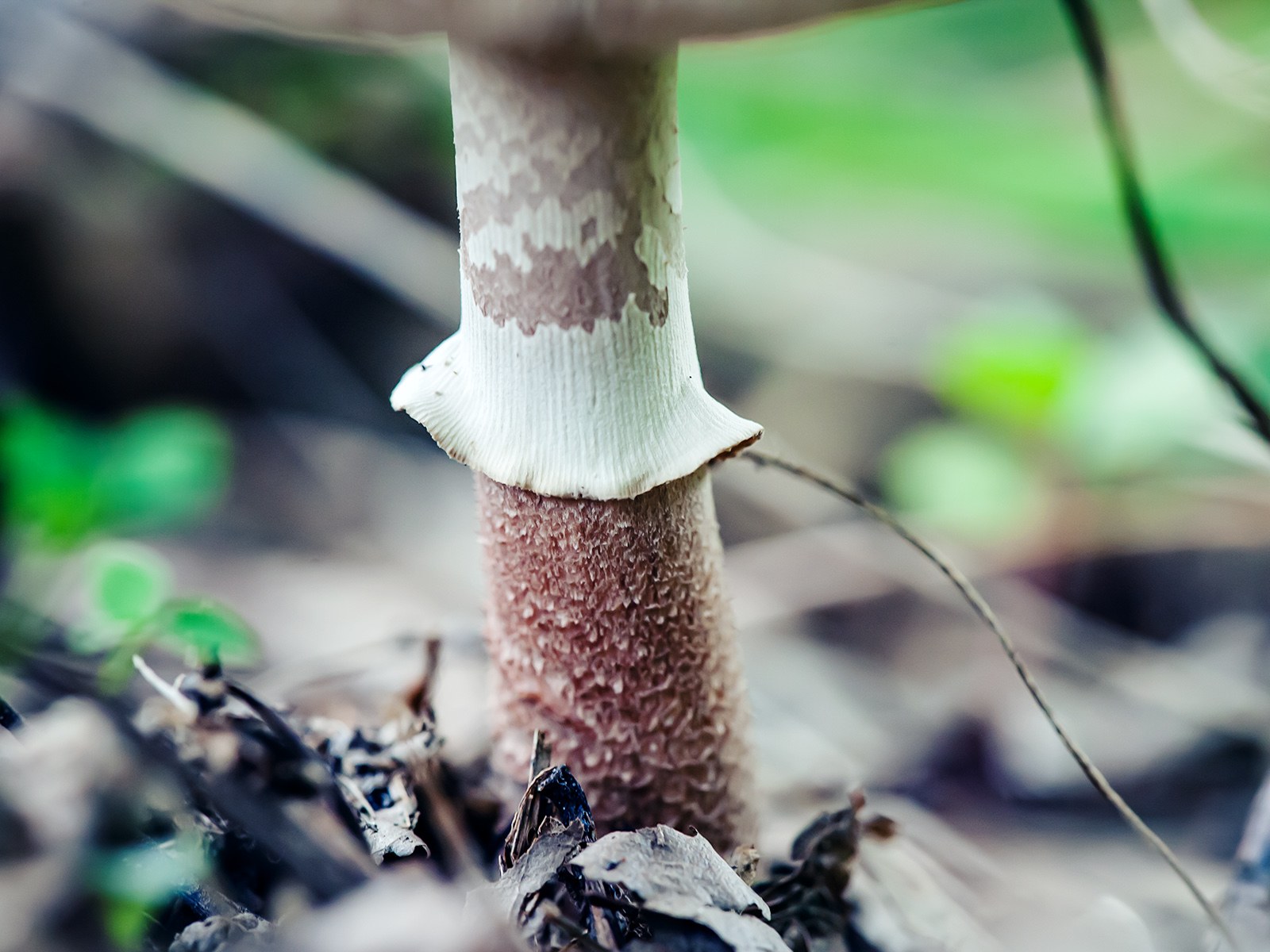
Close-up of its coil.
It belongs to psychoactive group of mushrooms. It is five times more "effective" and tough than Amanita muscaria. Fun fact: in Netherlands, this mushroom (as well as the red fly agaric) is illegal to buy, sell, or possess. Keeping 0.5 grams of dried Amanita pantherina or more results in criminal charges (if they catch you).
Гриб относится к психоактивным, он в пять раз более "действенный" и жесткий, чем Amanita muscaria. Забавный факт: в Голландии продажа и владения запасом этого гриба (а равно и мухомора красного) являются незаконным и подсудным делом. Хранение 0,5 г сушеного или 5 г свежего гриба приводит к уголовному обвинению.
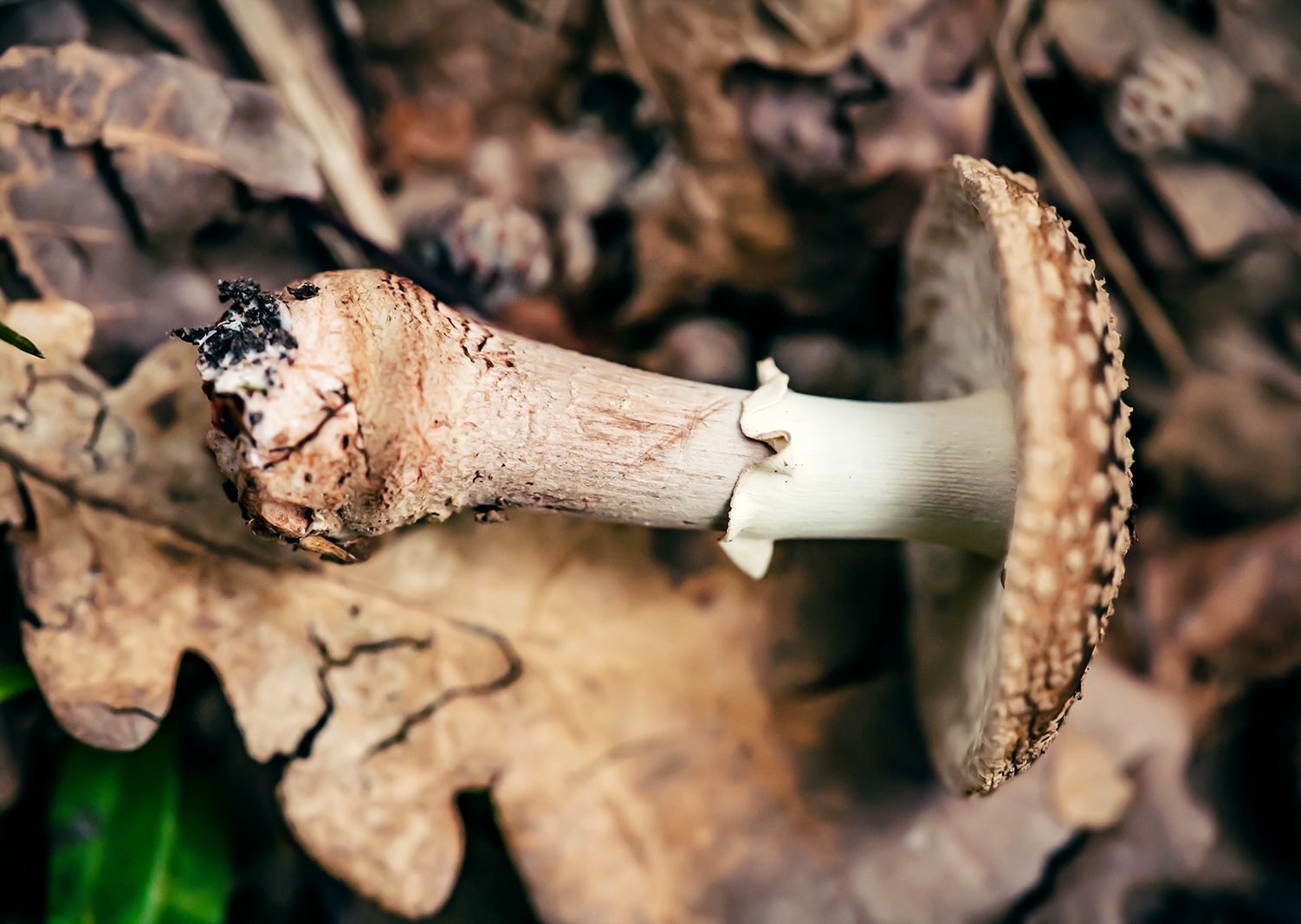
| location: | Vyritza, Russia | July 2020 | natural light |
| camera/lens: | Canon 350D | Tamron 60mm | raw-conv |
Я уверен, что вы слушали лекцию внимательно и получили достаточное представление об этом незаконном грибочке... // I'm sure those of you who listened to the lecture carefully, at this moment got a decent idea about the key identification features for this illegal mushroom. Now its time to part ways, I wish you good luck -- and Good Hunting!
And a little reminder: we have a fun challenge at Hive, named #FungiFriday.
I hope many of you will join, as there are only 2 simple rules:
- when Friday comes, share your fungi with us! post your own, original photo/drawing/art/food/anything-at-all of any type of fungi (yes, stolen images will be checked and reported !)
- add #fungifriday (not necessarily must be your 1st tag). that's all!


All images taken by me, copyright (c) 