

Spoiler Warning!!!
The following post may contain warning for many movies such as The Dark Knight, The Prestige, Inception, Breaking Bad, and Game of Thrones
So you go to watch a movie that everyone anticipates, everything good about a movie is there it has car chases, murder, betrayal, no Adam Sandler, all good things. You sit in the cinema expecting a great movie only to be surprised
THIS MOVIE SUCKS!!!
Whenever someone asks you about the reason it sucks, you don't know how to answer them exactly or what to say. Not everyone is a movie expert, there could be a flaw in cinematography, audio, lighting, directing. So here we attempt to answer the question as to what makes a movie good or bad, with the help of who I consider the best filmmaker in the world Christopher Nolan
Let's Talk Scenario
You can't start any movie without a scenario, a direction for the movie to follow. Here we go to who the CNN described as the Guru of all screenwriters, Syd Field

Who taught screenwriting at the best colleges and universities in the world, whose book "Screenplay: The Foundations of Screenwriting", was translated into 29 languages, that was used as reference for over 400 universities and colleges, and is considered the manifesto of screenwriting. Syd also worked as screenwriting consultant in major production companies such as Warner Brothers, Universal Studios and Disney.
Now that I am done sucking Syd Field's dick, let's carry on. Syd Field says that a scenario is simply a story like any other but is told through visual medium. The scenario here is told through images rather than the hero of the story. That is the reason the viewer need to be entertained and not get bored or else they will stop caring about the events
Uhmmm, dude? Where is Nolan is all of this?
Give me a sec. Syd says that the first 10 minutes of any movie, also known as "the opening sequence", are the most important part of any movie as that is all the time you need to know whether you like the movie or not. Syd says that the best openings are those with an action sequence. An action sequence where you jump around like a monkey, you can start a movie with a regular scene.
Here we go to Nolan
What an opening sequence needs to contain is character exposition, an intro to what the character is like so once things get heated we know those people and what they want. One the greatest -The actual greatest as far as I am concerned- opening sequence is that in The Dark Knight

Within the space of ten minutes the movie shows us the Joker, how much of a smooth planner he is, how careless he is about human lives, and how ruthless he is. It also introduces the existence of the powerful mobs. All of that and we are not even past the first five minutes.
While it can be fairly argued that those five minutes are the movie's opening sequence, I will also add the latter part where Batman fights and stops Scarecrow. By the end of the opening sequence we know our hero, the villain, and their abilities.
You can find the same thing in all of Nolan's movies. Inception and its introduction to the strange world, Cobb's strange relationship with his wife. The Prestige, Borden sneaks behind stage in disguise only to watch Angier drowning in a glass box, you know there is trickery involved due to the narrating. You basically find such emphasis on the opening sequences of all of Nolan's movies.
Nolan's opening sequences combines action sequences with character reveal. Such combination leaves you intrigued, wanting to know more. A boring, cold opening sequence will leave you irritated, not wanting to know more making the remaining of the movie a moo point
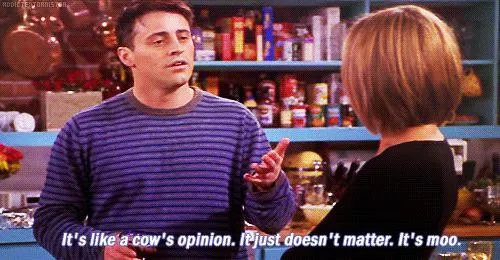
What you is obvious and common sense
Well, if it was then all the movies would be good
A Good Opening Sequence Isn't Everything
There plenty of other things a filmmaker could ruin, namely: Characters. Often we see exaggerated characters that aren't convincing, often their decisions are nonsensical. You have to explain why characters behave in a certain way.
Lajos Egri says in his book "The Art of Dramatic Writing", that weak characters could ruin a movie, no matter how good the scenario is. Some characters are weak and negative the entire movie, they make no definitive decisions the entire movie and never change or resist. Viewers want a strong character, a decision maker, someone with dramatic needs, and the more those needs contradict other characters' needs the bigger the conflict and the bigger the conflict, the more the dramatic work is better making a great movie or T.V show.
Batman wants to clean Gotham of crimes
Bruce Wayne wants to be with Rachel, so does Harvey Dent, Batman wants someone to replace him, the mob wants to get rid of both Harvey AND Batman, the Joker wants to reek havoc. Batman and Harvey stand in the Joker's way, all those conflicts need resolutions, all intriguing.
Also think of two sides seeking attempting to achieve the same goal but go at it in a different way, here we speak of the Avengers and Thanos. WE WANT conflicts, we want a fight.
According to Syd Field
A character needs a character biography, you have the story of your character before writing a movie all the way from birth, sometimes even before that as it could go as far back as the character's grandparents. That may not show in the movie, but you as a writer must know all of those things.
Then you take that character in its current form and talk about their life in three parts, professional life, personal life, and their private life. That requires you to answer few questions, what does Bruce Wayne does at home? How are things going at the company? Is he happy with his life? How is his relationships with others? The characters life, his relationship with his family -Not in the case of Bruce Wayne obviously-, is the character single? What does the character want to change? All questions that need answering before the end of the movie.
The more problems you need to solve, the better. That however doesn't come with exaggerations as you can't have a character dealing with the end of the world, managing a relationship, having problems cleaning the kitchen, dealing with a wisdom tooth, and needs to find a good place to fix his car.
Syd simply states that without conflict there is no drama
To build a character there are three parts you need to consider,
A) Their point of view
Do they think their life is just or unjust? Do they see peace better or is it violence? Is the character pro-revenge or seeks a peaceful solution? Are they capitalist or socialist? And so on
B) Their attitude
Is the character cold or hotheaded? Are they angry or calm? Do they break under pressure or excel? All of those things and more help us understand the actions of the characters when put under certain circumstances and whether they could realistically survive it or not.
C) The Change
The character we see at the end of the movie has to be different from the one in the beginning. I touch more on that in my post Let's Write A Movie. But basically, the question is how did the events affect a change on the character, Walter White at the end of Breaking Bad is completely different from the push over we see on the first episode.
Stars often say that whenever they receive a script they read the first and last ten pages to see whether the character changed or not. If the character doesn't change, they throw it in the trash, unless the studio will pay them a lot, looking at you Bruce Willis.
So, we've done all of that
The opening sequence is great, the characters are strong, and the changes are good and great. Is that all we need? Well, no.
The Paradigm
The paradigm is the term Syd Field uses to describe the sequences of action. Any story, since the beginning of history, requires three things, a set up, a conflict, and a resolution. If one part of those didn't take the right time, the entire meal would be ruined.
If the set up was bad, you won't relate to or understand the characters and their motives, and in turn if the set up took too long on the expense of the conflict, you would feel that the movie skipped a beat or two and hurried itself. You spend an hour and a half introducing characters and their motives, then have to wrap up the movie in 10 minutes.
We want more, we want the fight
We want to see conflicts, characters struggling, striving for more, need to survive. We want to see it take its time, you can't just tell me the character struggled without explaining the where, when, and how. You can't just tell me Batman needing to defeat the joker then defeat him in a 3 minutes battle.
With that out of the way, we reach the ending
Many works do a great job from all what was mentioned but often botch the ending, Game of Thrones is a great example. By the way there is a petition to remake Game of Thrones that was signed by 1.8 MILLION people. You spend eight seasons building characters, the conflict is A level, everything is great then ruined the ending.
The ending is very important, that is why some writers recommend writing the ending before the beginning. Some writers think you should start and see where it leads you, that could lead to botched endings of all sort because without an ending in mind the set up could pointless and subsequently weak and even the writer himself would be surprised by it.
Also many writers without an ending in mind often get lost and give up halfway through writing after getting struck by what is called "the writer's block". With an ending in mind all you need to do is write a path that leads there.
You might disagree
Many people do with that take, but that is the point of view of the author. Many other opinions say that you need to build a character and create a conflict that you, as a writer, wouldn't know how to resolve much like what the Russo brothers did with the last two movies of the Avengers movies. Those are two different standpoints, after all it is art and you can choose what method to follow. The author simply says that you need to have an ending so you don't get stuck halfway through.
What is a good ending
You might say
I saw a great ending, they all die
That is not how it works, Syd Field says that such melodramatic endings are often a sign of an amateur writer. Often those endings are also considered too easy, there are times where those endings are great. Syd Field recommends that if you can make the ending a happy one, don't come up short and stop being depressing
In Summary
Scenarios aren't the only thing that could make or break movies, movies can be ruined by many things as it is build upon many details just like an extra pinch of salt could lead to Gordon Ramsay screaming at you. Many factors play a part in the success of a movie, acting, cinematography, lighting, audio, and many other things.
Here we talked about scenario in specific, Syd Field himself doesn't offer a secret recipe to make a great movie, what he offered is the steps required in writing a scenario. Steps that when followed would lead to meeting the standards set by the expectations of the audience.
Syd isn't the only one with great books about writing movies in case you want to learn , there are also John Truby and Robert McKee the latter of which agreed with Syd Field in his book Story when it comes to parts and disagreed in others. McKee disagreed that spiting the process into three phases is an overused stamp and doesn't cover the entirety of the creative process.
Syd in the end is known to have covered the basics in scenario writing which is the reason I used five of his books as sources in making this post. You can check them in the sources below among other sources. I hope you liked my post, thanks for reading
Sources
Screenplay, Syd Field.
The Definitive Guide to Screenwriting, Syd Field.
Four Screenplays, Syd Field.
The Screenwriter’s Workbook, Syd Field.
Going to the Movies, Syd Field.
The Art of Dramatic Writing, Lajos Egri.