
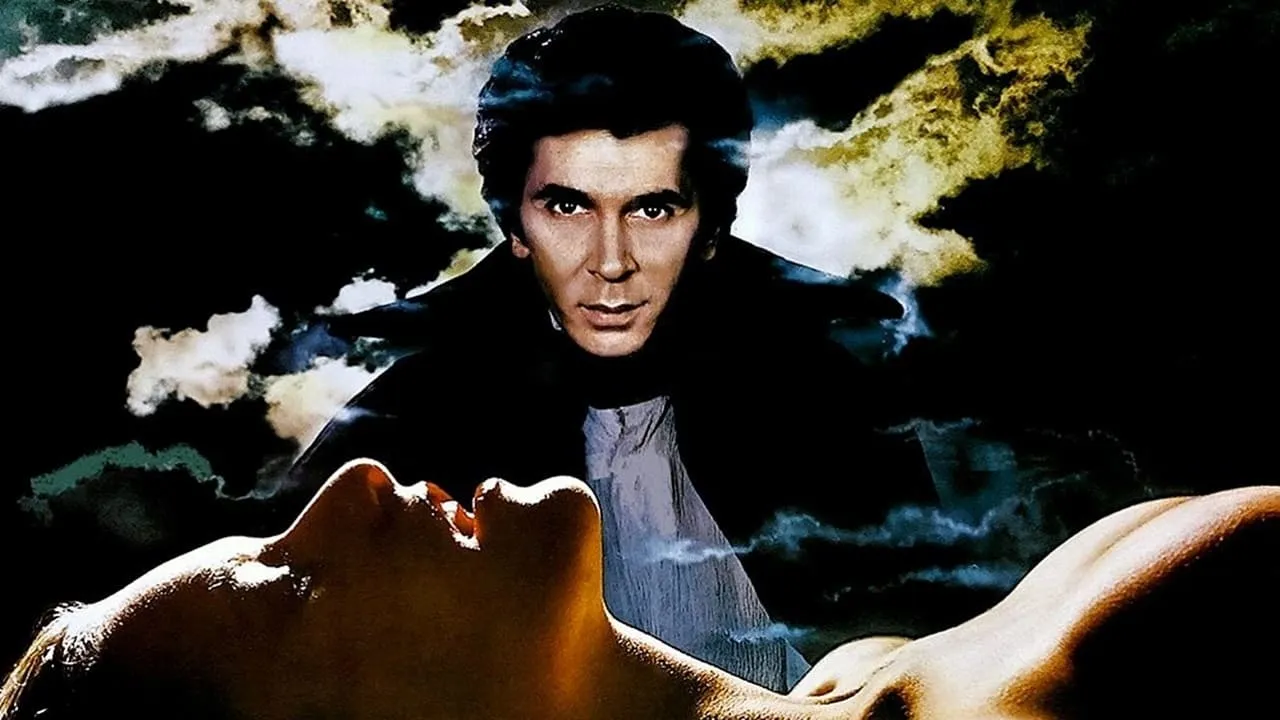
Count Dracula is arguably the most iconic of all characters in the history of horror genre and, as such, he has spawned countless film incarnations. However, there are relatively few of them that tried to be faithful to Bram Stoker’s original novel. Dracula, 1979 film directed by John Badham, could be seen as one of them, although its script wasn’t based on the novel itself, but on 1924 stage adaptation by Hamilton Deane. This version, sanctioned by Bram Stoker’s estate as official, was revised by John Balderston for Broadway adaptation in 1927. This version starred Bela Lugosi, who would later repeat the role in classic 1931 film, in many ways responsible for setting the broad parameters of Dracula’s character in popular culture. In 1970s the play was revived on Broadway with Frank Langella in starring role; its impact was such that Hollywood producers hired him to repeat it on big screen.
The plot begins one stormy night in 1913 with a shipwreck off the coast of England. Apparently the only survivor is Count Dracula, mysterious Romanian aristocrat who has purchased abandoned Carfax Abbey. He was rescued by Mina Van Helsing (played by Jan Francis), guest in the home of Dr. Seward (played by Donald Pleasance), manager of local lunatics asylum. Dracula visits Dr. Seward and can’t fail to notice his daughter and Lucy’s best friend Lucy (played by Kate Nelligan) and expresses his admiration in a way that doesn’t sit well with Lucy’s fiance Jonathan Harker (played by Trevor Eve), who else happens to be Dracula’s solicitor. Soon afterwards Mina is visited by Dracula, seduced and bitten only to suddenly die shortly afterwards. Mina’s father Professor Abraham Van Helsing (played by Laurence Olivier), arrives at Sewards’ home and, after some strange incidents involving apparent reappearance of his daughter, concludes that she was turned into vampire and that Dracula might be responsible.
Despite being based on a stage play, Dracula manages to deliver proper big budget film experience to the audience. This is due to very good direction by John Badham, capable use of special effects, interesting production design (especially in the case of Dracula’s new home of Carfax Abbey) and very effective music soundtrack by John Williams. The script by W. D. Richter generally doesn’t try to reinvent the wheel and mostly stays close to the original source, with characters of Mina and Lucy being switched as only notable deviation.
What rises this Dracula above the others is the acting. Frank Langella, who had already perfected the role at the stage, delivers perfect performance and, while being true to the source, adds new dimension to the iconic character. His Dracula isn’t introduced as bloodsucking monster nor menacing presence but enters the film as refined, well-mannered and well-spoken aristocrat and is later revealed to be some sort of romantic hero, both blessed and cursed with immortality and driven by desire to find a perfect partner. It takes Laurence Olivier delivering incredibly moving portrayal of Van Helsing as grief-stricken father for the consequences of Dracula’s actions to be seen by the audience and the conflict between two sides to actually begin. Kate Nelligan delivers another memorable performance as a woman who attracts Dracula not for simply being beautiful, but also for being independent and strong-willed woman; chemistry between Nelligan and Langella is palpable and results in strange but effective lovemaking scene that would look cheesy in any other film. Nelligan’s Lucy is far from helpless victim and actually becomes Dracula’s formidable ally after she is turned. Even supporting actors deliver memorable performances, which includes Donald Pleasance as some sort of comic relief and Trevor Eve who does very good job of potentially thankless role of Dracula’s romantic rival.
Dracula is very good film and arguably one of the best if not the best Dracula film ever made. Its reputation, however, has in many ways been influenced by relatively modest box-office and comparisons with overhyped and ultra-stylish Coppola’s 1992 adaptation of Bram Stoker’s novel. But the worst was decision of John Badham in 1991 to issue new digital version with deliberately desaturated colours, which was supposed to be closer to his original idea of Dracula being black-and-white (vetoed by producers in 1979). That small detail made Dracula too “artsy” and significantly less attractive than in its original 1979 form. The film became the subject of intense debate among critics and film scholars, further spawned by 2019 DVD edition that finally offered viewers chance to see both versions and decide for themselves. Controversy might have harmed Dracula, but it also served as the proof of film’s quality.
RATING: 8/10 (+++)

Blog in Croatian https://draxblog.com
Blog in English https://draxreview.wordpress.com/
Leofinance blog @drax.leo
Cent profile https://beta.cent.co/@drax
Minds profile https://www.minds.com/drax_rp_nc
Uptrennd profile https://www.uptrennd.com/user/MTYzNA
Hiveonboard: https://hiveonboard.com?ref=drax
Rising Star game: https://www.risingstargame.com?referrer=drax
1Inch: https://1inch.exchange/#/r/0x83823d8CCB74F828148258BB4457642124b1328e
BTC donations: 1EWxiMiP6iiG9rger3NuUSd6HByaxQWafG
ETH donations: 0xB305F144323b99e6f8b1d66f5D7DE78B498C32A7
