
Hello Hive friends and readers. I had quite the weekend and it was a holiday today so it was an extended one. Also I even made it longer since I took off Friday:) Let me take you what I did over this span of a super weekend for me.


Well with that many days off I have to get near water. It wasn't the first thing (Sunday) I was able to do but it wasn't the last. Lake Manawa is my ace in my hand when it comes to a fishing destination. Why you may ask? Ok it's only five minutes from my house and I know it like the back of my hand.


The first thing I noticed was the main lake was busy with speed boats, fishing boats, jetskis, and sail boats. So I decided to hit the canal area of the lake where traffic was almost zero. It was tough day fishing here. I managed to catch two small bluegills, which I kept later for cut bait.
It's okay some days are like that and a big weekend such as Memorial day in the United States puts a lot of pressure on the fish. Also it was a very sunny day with no wind, even the geese were looking for shade.


This canal has a lot to offer not just fishing either. It's about a mile long in it's entirety. Both ends give you a natural look like your out in the secluded outdoors. In the middle section of the canal are some luxury lake homes. So you can cast and retrieve and ponder what the good life would be owning one of these houses. I mean who wouldn't want a boat slip, a dock, small beach and a monsterous house to see much of the lake activities.
I spent a good hour trying to catch some bait. I fished about a half dozen places on the canal. I get near the end of the canal and decide to set up my throw out lines. I sat in my Cabela's chair and watched my poles for any bites. I looked behind me and my car was only about 50 feet away. Rather than be in the sun and swatting flies I head to my car. Before doing that I throw some bells on the poles and grab my lunch box. Sat in my car for about 45 minutes before I decided to throw in the Lake Manawa towel. Am I done fishing? Nah I decided to go to another body of water.


I headed to another place that I know very well, Arrowhead park. First cast, bang a nice 9 1/2 inch blue gill. They are a good fighting fish if you use ultra light gear. I fished here for about two hours and caught about 20 fish in total. The smallest fish I caught was about 8 inches. I caught quantity not variety, all fish were blue gills. It was fun and it was a joy not just beating the water with my jig. Maybe I should have came here to begin with, haha. I packed up shortly after seeing these geese swim with their younglings.


At the beginning of my weekend I visited Lauritzen Gardens. I wrote an article about this a few days ago, so I'm sharing one garden that I didn't mention. So what you see is flowers and plants from the Peony Garden. Some flowers are just one color, these are a combination of more than one which I really enjoyed seeing and smelling.


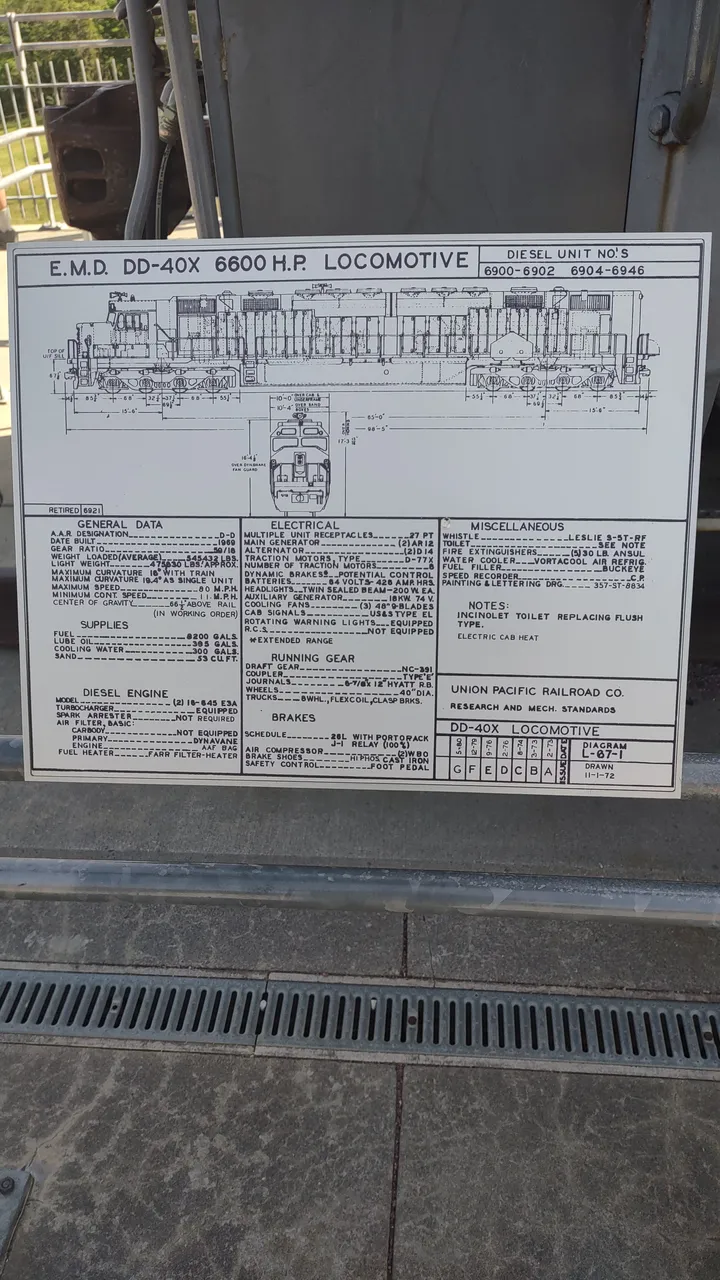
On the same adventure I visited Kenefick Park. Once again some new pictures I didn't share in that article. This is a park and a history museum in one. The focus of the park is the rich history of Union Pacific Railroad and how Omaha, Nebraska played it's part in it. Seeing two work horses (Locomotives) of the Union Pacific Railroad was really neat. Go see "Big Boy" and "Centennial" they won't disappoint.


It's a fact I can't go that many days off without uploading or downloading cargo onto an aircraft. At least this was Today on my last day before I go back to work and work my normal shift. Since I have showed you a little bit about this before I'll tell you a little bit about loading and tie down.


There are a few ways to load cargo. When you have equipment with wheels the most common practice is using the aircraft winch. If a winch is used the equipment is backed up so it can be steered with the tongue. Since equipment is usually heavy a strap is fed through the tongue. Safety is the reason for this. You don't want to be directly in front of the equipment as it ascends up the ramp because the winch cable could snap. Also for low center of gravity equipment a spotter and approach shoring (wood) is required to ensure there is no contact on the ramp or main floor of the aircraft.
Another way to load cargo is with a K-Loader. This loader is equiped to hold both pallets and small pieces of cargo. It's usually the fastest way to load cargo because the loader can match in height with the the raised ramp. Once that is done all you have to do is push the cargo.
Vehicles can be backed up the ramp if there being shipped. Not just vehicles but everything is backed up onto the aircraft. This is for the ease of offload.
The last method of loading is using a prime mover. A prime mover is a vehicle that pushes equipment up the ramp. This is probably the least used method. Part of the reason is the equipment is too heavy and the tongue would just fold going up the ramp angle of accent. Often equipment is too heavy for some prime movers. There really only useful if you have light equipment under 4000 lbs. Anything heavier than that you need a large prime mover and to be honest it takes longer than just winching it up.


There are 3 different types of tie down to secure a piece of cargo. There are cargo straps (Nylon) which are rated at 5000 lbs. The other is two sets of chains and devices. One set is rated at 10,000 lbs while the other is rated at 25,000 lbs.
You might be asking yourself which ones do I use in which situations. Well to determine this some factors got to be looked at. Sometimes the tie down points or rings are give aways on the equipment. It's not always the case though. So you may have to look at the overall weight of the item. Usually if an item is under 2000 lbs you can use cargo straps. For heavier items you want to use the least amount of tie down as possible. If you needed restraint for 100,000 lbs use four 25,000 lbs chains and devices instead of ten 10,000 lbs chains and devices.


Next up is determining how many you need. You need the gross weight of the cargo along with the G forces of the given directions (forward, aft, lateral, & vertical). Here is an example with the G force factors:
Humvee that weighs 10,000 lbs
Foward: 10,000 lbs X 3G = 30,000 lbs
Aft: 10,000 lbs X 1.5 G= 15,000 lbs
Lateral 10,000 lbs X 1.5 G = 15,000 lbs
Vertical 10,000 lbs X 2 G = 20,000 lbs
Total restraint 80,000 lbs
You would use 4 X 25,000 lbs chains and devices.
Now the number of restraint used has to be an even number always. Also you want to chain down in symmetrical pattern. Using the right angle or chain placement comes into play as well. If you can cross chains it gives each chain more restraint in more directions. Heavy pieces will always need at least 4 chains or devices. Some light pieces such as the towbar pictured above (540 lbs) can be restrainted with two cargo straps. Are you ready to chain down some cargo now?
That's all I have for you this weekend. I kept busy doing things and I must say it's one of my better weekends I've had in awhile. Take care, be safe, and let's make it to the next weekend!!