

Being a child I dreamed of visiting Greece, because I really wanted to get to this hot country with an amazingly clean and transparent sea of stunning color, and I never thought that I would live there. But Greece is not just Mykonos and Santorini. In fact, Greece boasts a beautiful collection of small islands located near Athens - one of these islands is called Spetses, which is located in the Aegean Sea at the entrance to the Argolic Gulf.

We rented a boat (let's call it a motorboat, because I am not very good at names of sea and river vessels) from Porto Heli city, where we stayed for one night, to Spetses. We were told it would be a very short trip, just a few minutes.


On the way to the island, we could admire the beautiful views of the coast, buildings, churches and transparent water, which changed color every minute.


I simply lost track of these few minutes, contemplating such beauty. Finally, we stepped out on the shore with a picturesque beach. The only downside is the rocky coastline, and it is a bit uncomfortable to step onto the shore without shoes, but, you get used to it pretty quickly.


So, having left the boat for the pier, we immediately felt a fresh sea breeze, even coolness, which was very pleasant. The Poseidon Hotel on the shore catches our eye - it is so pompous and does not fit into the surrounding environment at all.
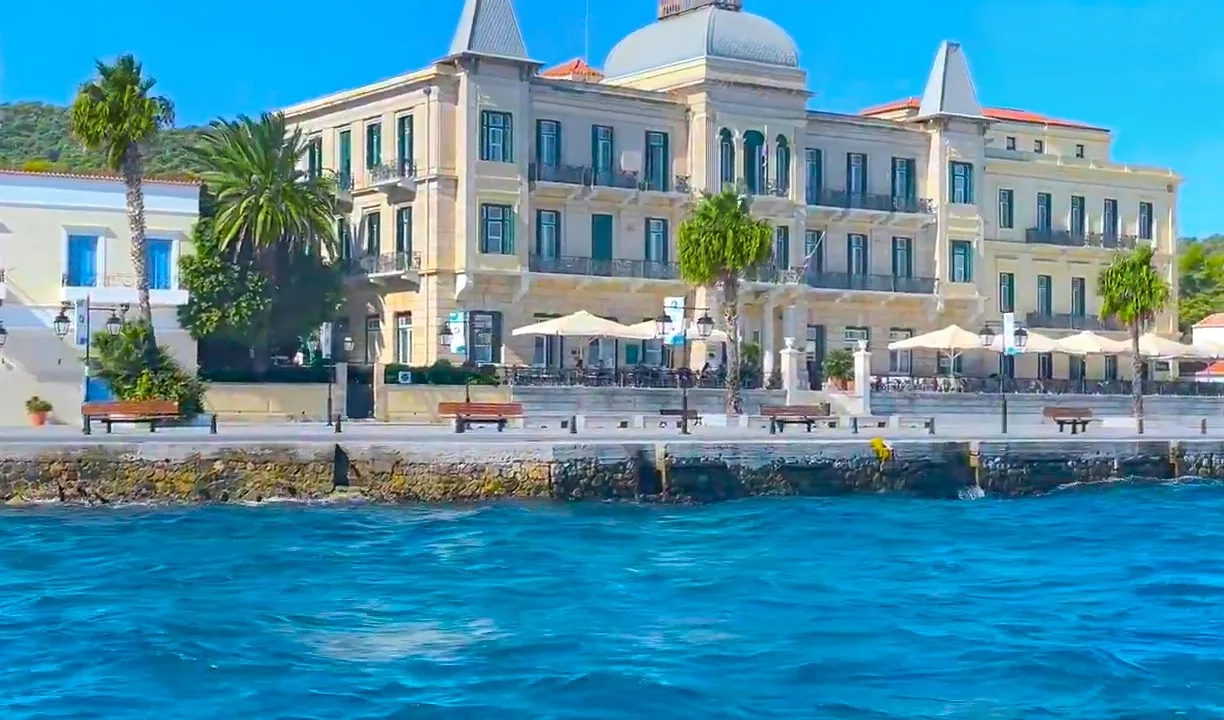

An island with its rich historical past is well known for its maritime traditions that date back even to ancient times. Spetses or Isola di Spezzini, the island of scents, the name given to the island by the Italians during the Venetian rule (because it is home to many fragrant herbs and plants), belongs to Attica and has been included in the Saronic Islands many times. Spetses is a lordly island.

Centuries ago, the picturesque island of Spetses began to attract noble people who built luxurious villas on the coast. Today, this "aristocratic" Greek island is accessible to absolutely everyone. Unspoiled nature and numerous beaches attract tourists.

There are very few cars on the island, and bringing new ones is prohibited. Taxi boats and horse-drawn carts are used for transportation here. Neoclassical buildings, elegant cafés, chic boutiques and horse-drawn carriage rides...


The harbor has retained its timeless charm. Here you will see many large "captain's" mansions, reminiscent of the glorious past.


The national heroine of Greece, Laskarina Bouboulina, was born here. Her name will be mentioned very often on the island. This heroic woman, a Greek national hero, participated in the Greek War of Independence. Possessing a strong will, Bouboulina actively participated in planning the strategy of military operations. You can visit the Bouboulina Museum, which contains an African yataghan, given to the Greek heroine by the Russian Emperor Alexander I himself. You will be able to visit her house, which is currently a museum with an exhibition of her personal belongings. She died in poverty as all the wealth she had was spent on the revolution.


We were able to visit the house of Hatzigiannis Mexis, who is one of the most influential residents of Spetses. H. Mexis also played a decisive role in the Greek revolution. His house has been turned into a museum, where we saw various letters written by the hands of war heroes, a collection of folklore and also personal belongings of Bouboulina. So interesting to look at objects that reflect the history of the island for 4,000 years.


The Church and Monastery of Saint Nicholas - one of the most famous churches on the island of Spetses is located on the site where the Independence flag was raised on April 3, 1821.

We strolled along the charming promenade, admiring the luxurious architecture of this compact, chic island, sometimes called the Greek Monaco. We saw numerous cannons placed along the sea, a reminder of the island's difficult past.

In the heart of the old port of Spetses, we saw the traditional docks, where the locals continue the traditions of their ancestors and create beautiful wooden boats. Since ancient times, Spetses was one of the largest shipbuilding centers in Greece, and this is one of the few places where this tradition is preserved and has continued to this day.
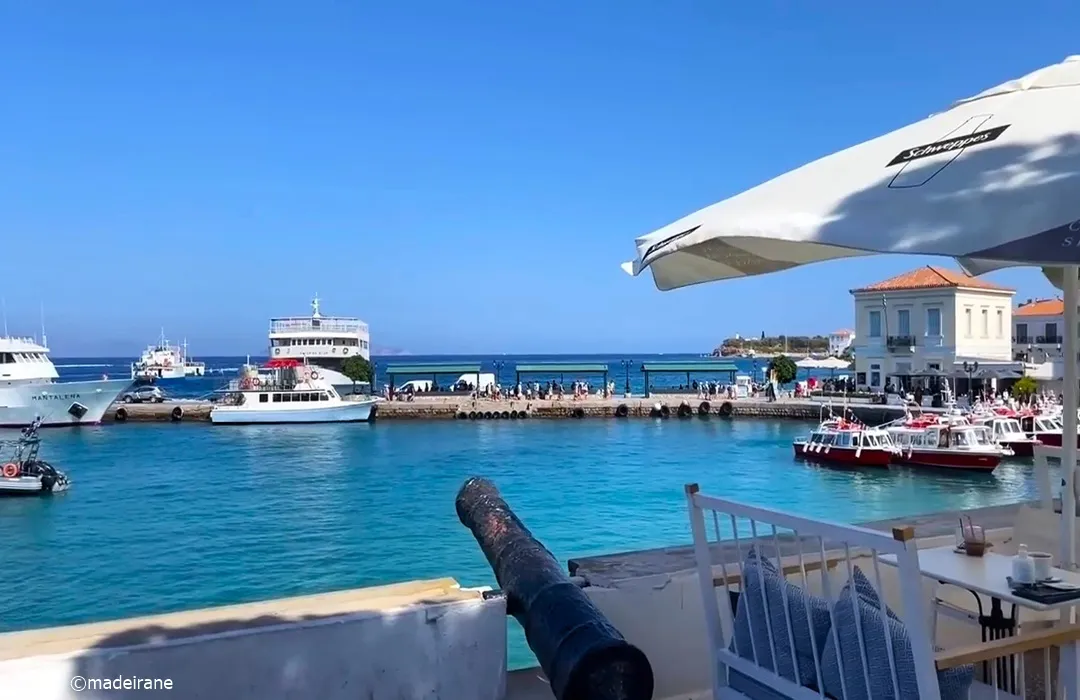
The restaurants themselves usually offer a stunning view - palm trees, white boats and motorboats, sailboats, local houses with flowers. For our launch we chose a nice little taverna on the seashore.

The menu mainly consists of fish and seafood - octopus, anchovies, many local Greek meat dishes, vegetables - eggplants, tomatoes and cucumbers, but not so much chicken. Almost all dishes are served with a variety of sauces, mainly based on fragrant olive oil, lemon juice and oregano.

Almost along the entire coast there are beaches, absolutely clean, sometimes sandy, sometimes with pebbles. Some of them are near the main port of Dapia, while others need to be reached by boat. The most famous beach on the island is Agia Marina, located 2 kilometers southeast of Dapia. It is a well-equipped beach with bars, restaurants and opportunities for water sports.


The buildings are mostly white with tiled roofs - a typical Mediterranean style. But on the island you need to be careful and "keep your eyes open" - as the locals themselves say, there are many cases of bags and cash being stolen from tourists. Sometimes bags are snatched by criminals driving by on motorcycles.

There are many shops on the island with all sorts of things - local handicrafts, leather sandals of all sorts of colors and types, clothes, and cosmetics. In addition, the shops are open until 12 at night.

The city is usually full of people having dinner in restaurants, checking out the prices in stores or just walking around. One of the few photos where I managed to capture the streets themselves, without vacationers.

I expected it to be hotter, but at the end of July the temperature was about 35 degrees, there was a light breeze, and the heat was easy to bear.

Spetses is beautiful. No other epithets can describe it; it cannot be called simply nice, picturesque, charming - it is beautiful. Nine-tenths of the surface are not inhabited or cultivated: only pine trees, bays, silence, the sea...
💝💝💝💝💝💝💝💝💝💝
