
Nearly everybody can hum or whistle a tune if he hears it for a long enough period. If you attend church, you would have heard people sing or play some instruments like the organ or piano. Music is everywhere on the radio, on the streets, in homes and in churches. However, to be able to sing properly or play on a musical instrument, one needs to understand the basic principles of music.

In order to understand what music is, let us first consider the phenomena of sound.
WHAT IS SOUND?
The first thing is expected from a healthy new born baby is to cry or make a sort of loud noise. As a child grows, he learns to talk, shout, cry, laugh and sing. How do we understand what a child says? How do we understand what adults convey through their voices?
We are able to understand what others say by one of the five human senses called hearing. The human being has five senses:
- Sense of taste - felt with the tongue
- Sense of sight - felt with the eyes
- Sense of feel - felt all over the body e.g. child will cry when picked with a pin
- Sense of smell - felt with the nose
- Sense of hearing - felt with the ear
SOUND - is what we hear from people or things. It can also be described as the sensation of hearing. When a person speaks or hits an object, the surrounding air is set into vibrations. VIBRATION is the rapid to and fro movement of an object or of air. It is quite similar to the ripples caused by
throwing a stone into a pool of water. Ripples start at the point of contact of stone and water and spread outwards.
There are many examples of vibrating objects. Some of these are:
-Plucking the string of any string instrument
-Engine of a car that is running
You can feel vibration by putting your hands on the bonnet of a car that is running or on the loudspeaker of a radio or cassette player.
When the air is disturbed, the very rapid vibrations create waves that beat on our eardrums. This result is the sensation that the brain interprets as sound.

WHAT IS MUSIC?
There are two kinds of sound that can be produced.
- Noisy sound - usually not agreeable to the ear
- Musical sound - quite pleasant to hear and very agreeable.
MUSIC can be defined in many ways. One of the simplest definitions is that Music is any agreeable sound. However, this is a simplistic way of defining the subject. One can also define Music as the science or art of combining sounds into a composition having structure and continuity. So, when a series of sounds are arranged in a logical and continuous manner agreeable to the ear, music is formed.

WHAT PRODUCES MUSIC?
Music is produced by the human voice and a variety of musical instruments including:
-Keyboard Instruments (Piano, Organ, etc.)
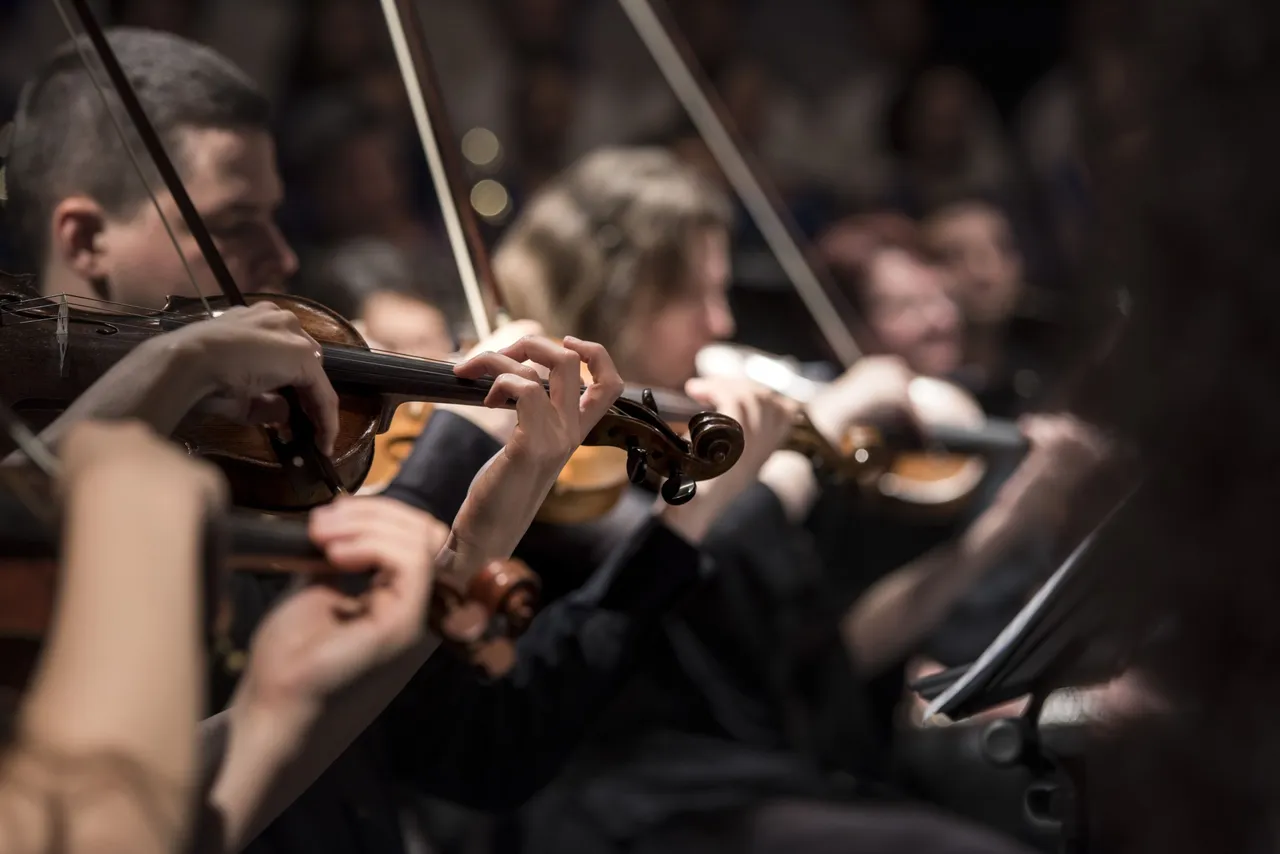
-String Instruments (violin, Viola and Double Bass)
-Woodwind Instruments (trumpets, French horn, Trombone)
Music can also be produced by birds and some animals
THE CHARACTERISTICS OF SOUND
The characteristics of a person are those things that would distinguish him from any other person. Some of the characteristics of a person may be;
a) Height (tall or short or medium)
b) Complexion (light or dark)
c) Size (fat or slim)
There are also properties that distinguish one particular sound from another.
For example, one sound may be loud and harsh while another may be soft and sweet.
There are four characteristics that distinguish sounds
- PITCH
- DURATION
- INTENSITY
- TIMBRE
PITCH
If you attempt to call your friend from a long distance, your voice will sound high. If you try to talk to a person sitting right next to you, your voice will sound low Pitch shows how high or how low a tone is.
DURATION
This is the length of sound or silence in music. If you make a sound and hold
the sound for 30 seconds, the duration of that sound will be more than that of another sound that is held for say 5 seconds.
Sometimes, when one part of the choir is singing, the other part keeps silent.
The silent part is said to be observing a rest. Rests also have duration. You may be silent for 20 seconds or for only 2 seconds.
INTENSITY
Intensity refers to the loudness or softness of a tone. Intensity is also called Power. When you sing loud, the intensity or power is high. When you sing soft, the intensity or power is low.
TIMBRE
Two different instruments (eg. piano and violin) each playing the same tune will produce a different quality of sound such that you will be able to recognize which of the instrument is playing even if you don't see the players. This quality of sound is known as its timbre. Timbre also allows us to recognize the voice of one person from the other. Timbre is also called Quality of sound.
NOTE:
You need not be scared about music. At first it may appear difficult. It is actually a sheep in wolf's skin. What you need is determination, dedication and consistency in practice. The rest will be easy. Don't be easily put off.
Remember! If at once you don't succeed try, try, try again.
Thanks for reading...
Source: http://Pixabay.com