

Hello friends HIVERS. How are you? How are they? My greatest blessings to all!
This time I bring you a step by step on how to take advantage of the plastic of those old and useless televisions that we have in the deposit to convert it into plastic concrete.
This polymer or plastic from the back, especially of old televisions, is very resistant and of very good quality for the new utility that we are going to give it.
That said, this homemade plastic concrete as I call it is very useful, since it is capable of covering any surface, giving an almost steel protection, covering any opening in concrete walls, metal surfaces, wood, plastic. This material is very versatile and available in any home.
I hope this topic is to your liking and interest let's get started;
Hola amigos HIVERS. como se encuentran? ¡Mis mayores bendiciones para todos!
En esta ocasión les traigo un paso a paso de cómo sacar provecho del plástico de aquellos televisores viejos e inservibles que tenemos en el depósito para convertirlo en concreto plástico.
Este polímero o plástico de la parte de atrás en especial de los televisores antiguos, es muy resistente y de muy buena calidad para la nueva utilidad que le vamos a dar.
Dicho esto, esté concreto plástico casero como lo llamo es muy útil, ya que es capaz de cubrir cualquier superficie, dando una protección casi de acero, tapando cualquier apertura en paredes de concreto, superficie de metal, madera, plástico. Este material es muy versátil y disponible en cualquier hogar.
Espero este tema sea de su agrado e interés comencemos;
Materials:
• Back cover of a damaged old television.
• Gasoline.
Materiales:
• Tapa trasera de un televisor antiguo dañado.
• Gasolina.
Tools:
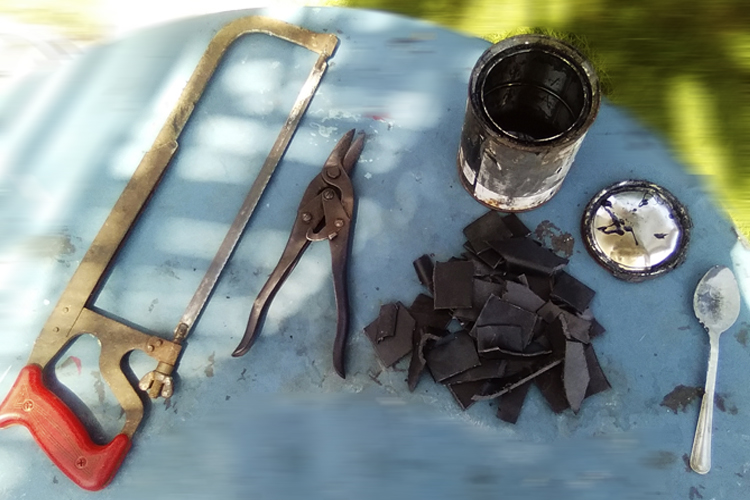
• saw.
• Cut metal scissors.
• Spatula.
• Spoon.
• Hermetic metal container.
Herramientas:
• Segueta.
• Tijera corta metal.
• Espátula.
• Cuchara.
• Recipiente de metal hermético.

Step 1
• We cut the plastic into small pieces according to the amount you think you need.
Paso 1
• Cortamos el plástico en pedazos pequeños según la cantidad que considera necesitar.
Step 2
• We put the pieces in the container with gasoline. Quantity; 10% gasoline and 50% chopped plastic, the container being 100% empty.
• we waited 72 hours in a shady place out of the reach of children, so that the plastic was diluted and formed an elastic and workable paste.
Paso 2
• Colocamos los pedazos en el recipiente con gasolina. Cantidad; 10% de gasolina y 50% plástico picado siendo el recipiente vacío el 100%.
• esperamos 72 horas en un lugar bajo sombra y fuera del alcance de los niños, para que se diluya el plástico y forme una pasta elástica y trabajable.


Step 3
• After the 72 hours have passed, we proceed to mix it very well with the spoon, it must remain with a thick and malleable consistency.
Paso 3
• Luego de haber pasado las 72 horas procedemos a mezclarlo muy bien con la cuchara, la misma tiene que quedar con una consistencia espesa y maleable.

Step 4
• We apply where we need with the help of the spatula and the spoon.
• We let it dry for 72 hours, and the more time passes, the more resistant the resin becomes until it reaches the initial hardness of the original plastic, as its name indicates, a plastic concrete.
Paso 4
• Aplicamos donde necesitemos con la ayuda de la espátula y la cuchara.
• Dejamos secar 72 horas, y mientas más tiempo pasa, más resistente se vuelve la resina hasta llegar a la dureza inicial del plástico original es como su nombre lo indica un concreto plástico.
Some examples of where or how to apply it;
Algunos Ejemplos de donde o como aplicarlo;


Grateful to the HIVERS community for browsing my post, I hope it will be of much benefit to you in your day-to-day life and put it into practice when you need it. Remember how good and beneficial recycling can be.
In this way we contribute as individuals to counteract the adverse effects that these elements cause on our lands, waterways and seas. Hence, our daily life. Well, if it is true that this harmful material is very useful for its durability and its various uses that we can give it, however, it can be used more consciously.
I did not want to conclude my post without making a brief favorable reference to recycling, and raise awareness with my humble opinion through this gigantic Hive platform; and to realize that we end up consuming these elements chemically through decomposition and integration in the land, in the air and in the seas; and ingested in our body directly affecting us and therefore our future on the planet.
Infinite blessings to all!
Agradecido con la comunidad HIVERS por ojear mi Post, espero que le sea de mucho provecho para su día a día y lo pongan en práctica cuando lo necesiten. Recuerden lo bueno y beneficioso que puede resultar reciclar.
De esta manera contribuimos como individuos a contrarrestar los efectos adversos que estos elementos provocan en nuestros terrenos, causes de agua y mares. Por ende, nuestra vida diaria. Bien si es cierto que este material tan nocivo nos brinda mucha utilidad por su durabilidad y sus diversos usos que le podemos dar, sin embargo, se puede utilizar de manera más consiente.
No quería concluir mi post sin hacer una breve referencia favorable al reciclaje, y concientizar con mi humilde opinión atreves de esta gigantesca plataforma de HIVE; y darnos cuenta que estos elementos los terminamos consumiendo químicamente por medio de la descomposición e integración en la tierra, en el aire y en los mares; e ingeridos en nuestro organismo afectándonos directamente y por ello nuestro futuro en el planeta.
¡Bendiciones infinitas para todos!
