

The name "Igloolik" means "there is a house here". It derives from iglu, meaning house or building, and refers to the sod houses known as Qarmaq that were originally in the area, and not to snow igloos.
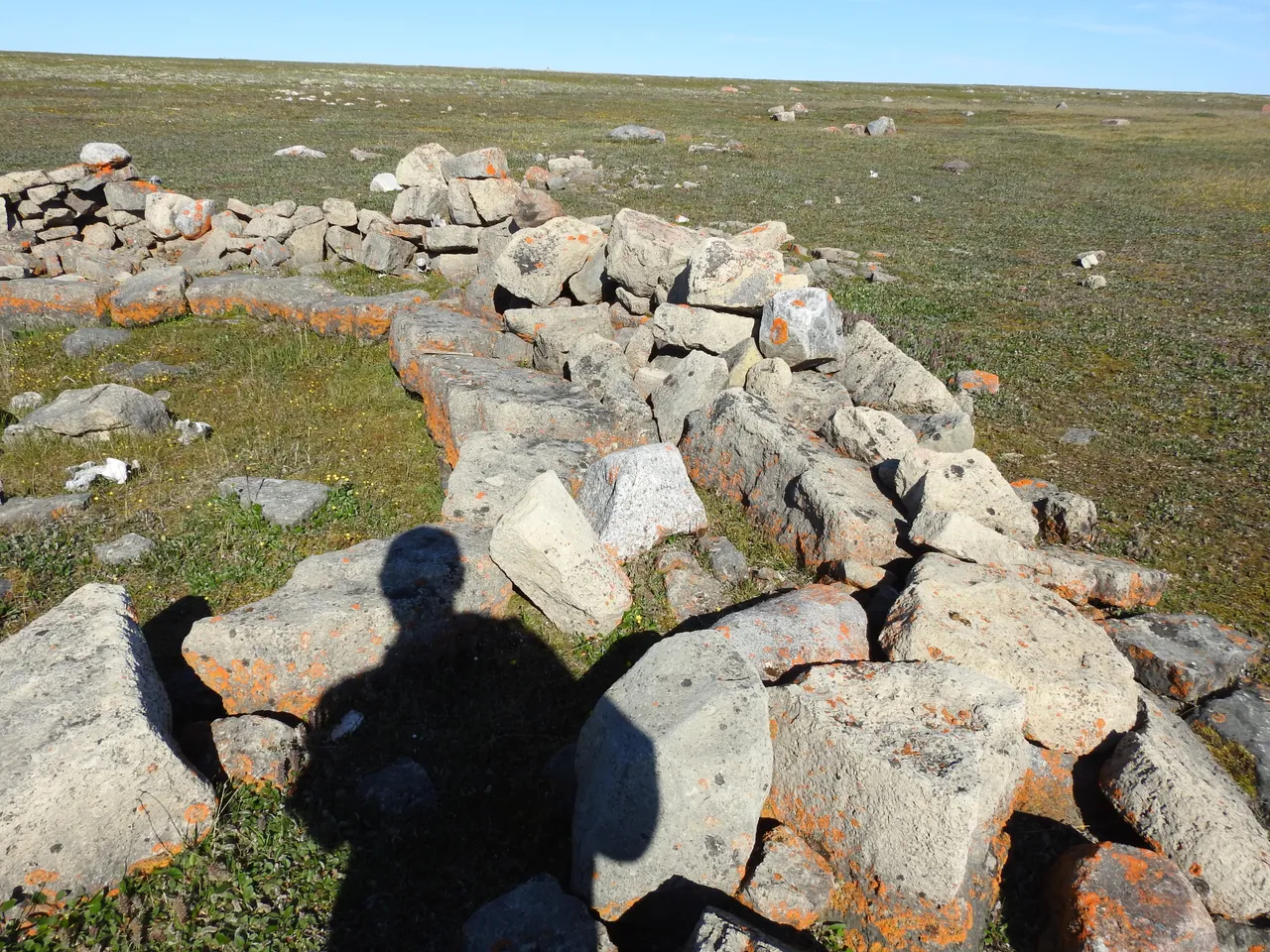
The men collect boulders and arrange them in in a circle to build a low exterior wall and an inner sleeping platform. They then construct a framework for the upper portion of the Qarmaq by collect driftwood when the area allows it, but more often the framework will be built from the ribs of whales harvested in the surrounding arctic ocean.

The women and children would then stretch hides over the framework while the men went out to hunt. They would fill the holes with the mosses abundant across the tundra. A structure like this required constant care and attention, often needing fresh patches in the harshest conditions due to the extreme winds of the arctic.

Qarmaqs were used by the inuit people into the 1960s when most families moved to settlements or made new cabins with modern materials that don't require so much maintenance.

Their only source of heat was a oil burning lamp called a qulliq that is a shallow semi-circular soapstone dish. It uses seal or whale oil/blubber as the fuel source and used arctic cotton or dried moss as a wick.

There is probably close to 20 stone circles in this area, the traditional resting ground for some of the Inuit people.

All photos are my own, taken by myself. They are taken using a Nikon P900 and a Samsung S20. Consider checking out my website, Midnight Sunsets. I'm also on Twitter and Instagram!
