

On Tuesday January 11 2022. In the morning around 07:30 WIB, I invited my friend named Mustafa to go visit one of the museums in Indonesia that has been recognized by UNESCO, the Sangiran museum.
We both went on a motorbike. Arriving at the location, without much ado, we went straight in to order tickets. We started walking accompanied by a museum guide. While walking to the museum room, I asked the guide a lot about things related to the Sangiran museum.
Let's follow the story, friends!!🌹❤️✋
- History of Sangiran Museum

What on earth is without history?
The answer must all have a history of each. Everyone has a history, it is said that history is the raw material for shaping the character and ideology of a person or a nation. By studying history, humans will know the past and predict what will happen in the future. Then what about the history of this Sangiran Museum?...
The Sangiran Museum cannot be separated from history, the history of how the Sangiran location became a site for the excavation of ancient objects.
"The history of this sangiran museum has started a long time ago. Even when Indonesia was still colonized by the Dutch." so said a museum guide, he further explained, "In 1883, the Dutch colonial government sent a paleoanthropologist to prepare excavations at Sangiran." It should be noted that Paleoanthropology is a branch of archeology that focuses on studying humans.
I asked the guide to continue explaining about the history of this Sangiran museum, relying on the recording on my cellphone to listen to the guide's explanation about the history of this Sangiran museum.
"The plan to excavate these objects was led by a man named Eugene Dubois. Unfortunately, Dubois did not find any interesting fossils. Then Dubois shifted his excavations to Trinil in East Java. In Trinil, Dubois managed to find significant fossils." The museum guide explained in a fun way.
I think Java is indeed known as a place where many fossils of ancient life are found. "That's why scientists who understand the steps of historical science research immediately come here." said the guide.
At the Sangiran site, excavations began in 1934, as explained by the guide below.
"An anthropologist named Gustav Heinrich Ralph von Koenigswald began researching the Saingiran area in 1934, 11 years before Indonesia's independence (1945). In the following years, Gustav Heinrich began to find fossils of a human ancestor named Pithecanthropus erectus." said the guide
Based on several books and articles that I have read, Pithecanthropus erectus is a term commonly referred to as Java Man. Then Pithecanthropus erectus was classified and was included in the Homo erectus group.

The guide replied "Sixty human fossils were found again and among the discoveries there was Meganthropus. Gustav Heinrich then found another fossil in the form of the upper cranium of the Homo erectus species in 1937 which was about 0.7 to 1.6 million years ago This upper cranium was then given the name Sangiran 2. In addition, fossils of several ancient human prey animals were also found."
I asked, "How many fossils have been found so far?"
"The collections stored in this museum reach 13,806 pieces stored in two places, namely 2,931 stored in the exhibition room and 10,875 in the storage room." answer guide
"Amazing" My heart murmurs 😮😮
- The formation of the island of Java

At the time of the Oligocene about 30 million years ago, the arc of the Sunda archipelago stretching from Sumatra to Flores (Island in East Nusa Tenggara) began to point to its present position. However, the island of Java only began to appear in the Miocene, about 10 million years ago, beginning with the presence of a series of volcanoes in the southern seas of Asia.
From the end of the Poliocene to the Lower Pleistocene (about 2 million - 700,000 years ago) the process of land uplift was very intensive, especially uplifting the southern part of the island of Java, as evidenced by the emergence of limestone mountains stretching west-east from south of West Java to the tip of East Java.
To the north of this chain of limestone hills is a shallow strait with very active volcanoes. Increased volcanic activity causes eruption material to fill shallow seas and form new land. In the north of the volcanic chain, there are also northern limestone mountains or Kendeng hills that emerged as a result of folding. These hills stretch from the west of Semarang to Surabaya and Madura.
Because of this process, the island of Java is characterized mainly by four natural landscapes, namely the limestone mountains on the south coast, the apai mountain range in the center of the island, the kendeng mountains in the north, and a fertile depression between the kaput hills in the north and south with a series of volcanoes in the middle. this island.
- Location and Price of Sangiran Museum Entrance Tickets
Sangiran Archaeological Museum is an archaeological museum located in Kalijambe sub-district, Sragen Regency, Central Java, Indonesia. This museum is adjacent to the Sangiran ancient fossil site area which is one of the UNESCO World Heritage Sites. The Sangiran site has an area of 56 km² covering three sub-districts in Sragen (Gemolong, Kalijambe, and Plupuh) and Gondangrejo District which is part of the Karanganyar Regency.
The price for admission to the Sangiran Museum is very economical and cheap. The ticket price for local/domestic tourists is Rp. 8000, while for foreign tourists it is Rp. 15000 or the equivalent of one dollar.
To find out more clearly what collections are in the Sangiran Museum, I will upload them with some photos from the visit.
To find out more clearly what collections are in the Sangiran Museum, I will upload it with some photos from the visit.
enjoy, friend!!😍😍
a. ancient hippo animal bone skeleton.

b. some ancient elephant animal bones

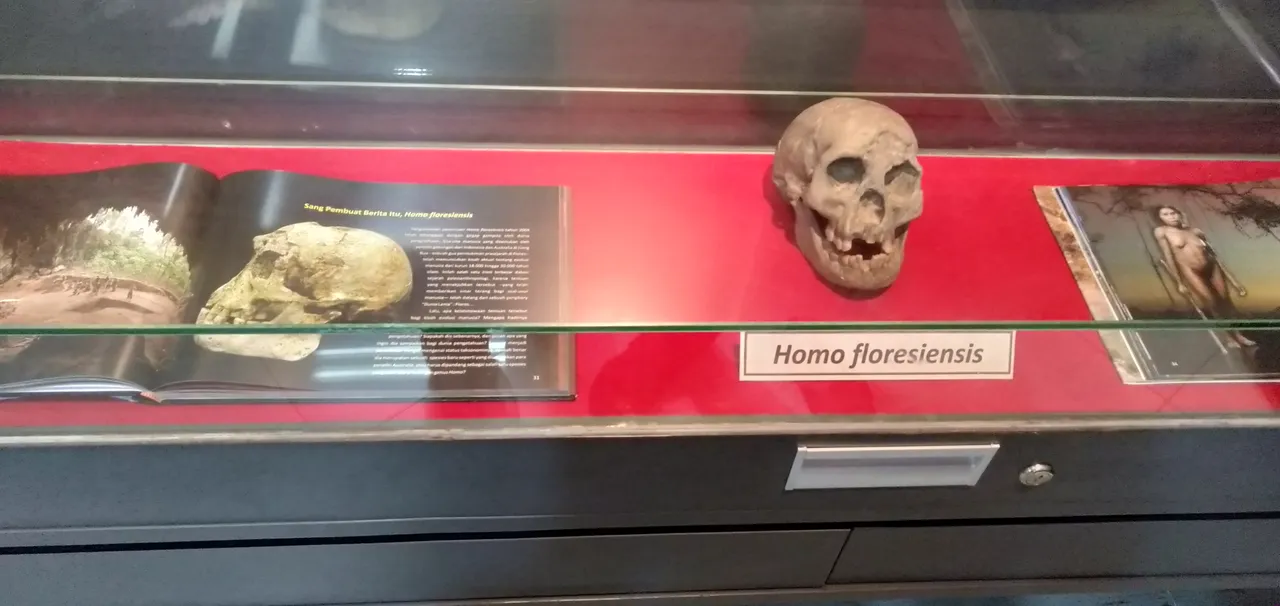
c. Homo Floresiensis (a small ancient human species that inhabited the island of Flores.)
d. Cornu Sinistra Bibos paleosondacius (ancient bull's left horn.)

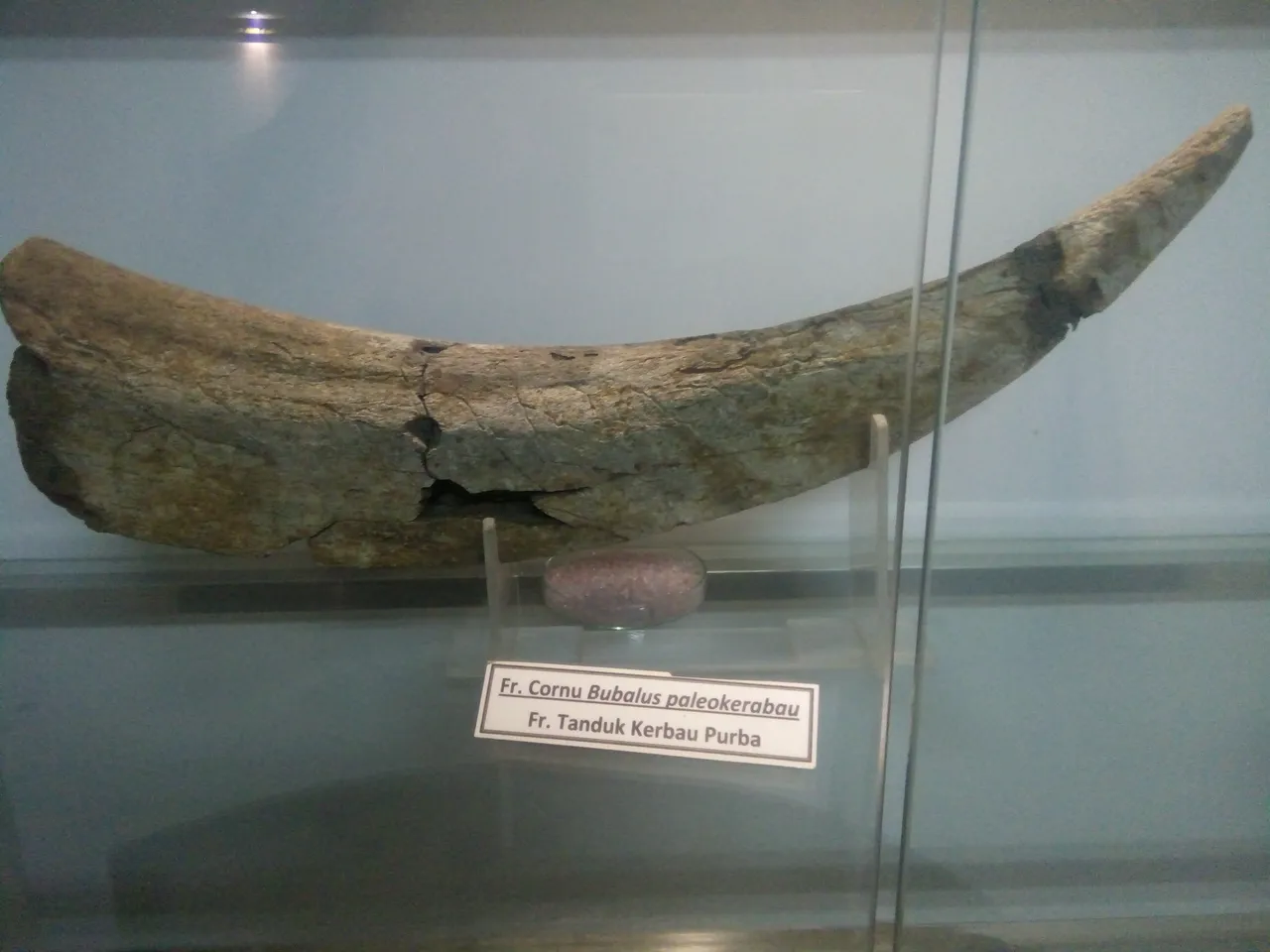
e. Cornu Bubalus paleokerabau (ancient buffalo horn.)
f. Homo Sapiens and Australopithecus

how? cheap isn't it? very fitting to be used as a vacation spot for friends who like historical places.
See you in Indonesia, friends.