


Hello everyone! Today I will dedicate this article to one of the most important colonial buildings in terms of Venezuelan History and Social Sciences. We are talking about the Casa Celis. Let's start with it!
The Casa Celis is located in the center of Valencia, near the Casa la Estrella and the Escuela de Artes Plasticas Arturo Michelena, making it one of the best located buildings in the city. Like many of the old buildings in Venezuela, it has a long history of historical situations and changes of administration. Its origin dates back, according to the documentation found in inheritance wills, to 1826, when it belonged to the Spaniard Diego Ibarrolaburu after being ceded by his deceased wife. Later the house was active as a hospital and residence for the wounded during the War of Independence and the Battle of Carabobo. In the same house were kept vigil the heroes Manuel Cedeño and Ambrosio Plaza. After this situation, the House was taken over by the government as a Military Hospital.
¡Hola a todos! El día de hoy dedicaré este artículo a uno de los edificios coloniales más importantes en cuanto a Historia de Venezuela y sus Ciencias Sociales. Se trata pues de la Casa Celis ¡Comencemos con ello!
La Casa Celis está ubicada en el centro de Valencia, cerca de la Casa la Estrella y la Escuela de Artes Plásticas Arturo Michelena, por lo que es uno de los edificios mejor ubicados de la ciudad. Cómo muchos de los edificios antiguos de Venezuela, tiene un largo antecedente de situaciones históricas y de cambios de administración. Su origen data (según la documentación encontrada de testamentos de herencia) desde el año 1826, perteneciendo al español Diego Ibarrolaburu luego de ser cedido por su ya fallecida esposa. Luego la casa estuvo activa como un centro hospitalario y de residencia para los heridos durante la Guerra de Independencia y la Batalla de Carabobo. En él mismo fueron velados los próceres Manuel Cedeño y Ambrosio Plaza. Pasada está situación, la Casa fue tomada por el gobierno como un Hospital Militar.


It was not until 1839 that the house was bought by the Celis family, where Colonel Pedro Celis propitiated some remodeling to the place after it suffered some changes during the occupation of the different owners. Some of the restorations and remodeling were to enlarge the house with new rooms, two central gardens and a stable. It became a family residence again. It was not until 1960 that it became a National Historic Monument (returning to be property of the state) and in 1964 the Celis family ceded (in mutual agreement with the government) the house to be used as a study center and headquarters of the Institute of Anthropology and History of the State of Carabobo. From then on it remained in the hands of the anthropologist and historian, Henriqueta Peñalver. In 1976 the Lisandro Alvarado Foundation was created.
The architecture of the house belongs, as mentioned above, to the colonial style of Venezuela. It is specifically of a civil and urban type, characterized by the use of large windows and doors due to the great height of the walls, eaves, corridors, central patio, use of large columns, rustic floors, hallway (as an entrance), roofs composed of beams and beams and covered by clay tiles. The aesthetics of this type of architecture is sober, robust and simple. The materials usually used were adobe, wood, tapia, clay and iron. The reasons behind this type of architecture have to do with the social context of the time, since access to more elaborate and expensive materials and resources was difficult for civilians. One depended only on what was at hand and the concept was quite clear: a place to serve as a shelter, moderately decorated. That is why the houses were so big, the families were thinking about the future and what it would serve as an inheritance.
No fue hasta el año 1839 que la casa fue comprada por la familia Celis, dónde el Coronel Pedro Celis propicia algunas remodelaciones al lugar luego de que está sufriera algunos cambios durante la ocupación de los diferentes dueños. Algunas de las restauraciones y remodelaciones son la de ampliar la casa con nuevas habitaciones, dos jardines centrales y una caballeriza o establo. Volviendo así a ser una residencia familiar. No fue hasta el año 1960 que pasa a ser Monumento Histórico Nacional (volviendo a ser propiedad del estado) y en 1964 la familia Celis cede (en mutuo acuerdo con la gobernación) la casa para que sea usada como un recinto de estudio y sede al Instituto de Antropología e Historia del Estado Carabobo. De aquí en más quedó en manos de la antropologa e historiadora, Henriqueta Peñalver. En 1976 se crea la fundación Lisandro Alvarado.
La arquitectura de la casa pertenece, como mencione arriba, al estilo colonial de Venezuela. Está en específico, de tipo civil y urbano, se caracteriza por el uso de grandes ventanales y puertas debido a la gran altura que tenían las paredes, aleros, corredores, patio central, uso de grandes columnas, suelos rústicos, zaguán (como entrada), techos compuestos de vigas y viguetas y cubiertos por tejas de barro. La estética de este tipo de arquitectura es sobria, robusta y sencilla. Los materiales usualmente utilizados eran el adobe, la madera, la tapia, la arcilla y el hierro. Los motivos detrás de este tipo de arquitectura tiene que ver con el contexto social de la época, ya que el acceso a materiales y recursos más elaborados y costosos era difícil para los civiles. Se dependía únicamente de lo que se tenía a mano y el concepto era bastante claro: un lugar que sirva de resguardo, cómodo y medianamente decorado. Aunque uno de los motivos detras de sus paredes altas, era el de otorgar frescura en las épocas de calor. También las casas eran tan grandes porque las familias eran numerosas, se pensaba en el futuro y que dicha casa sirviera de herencia.

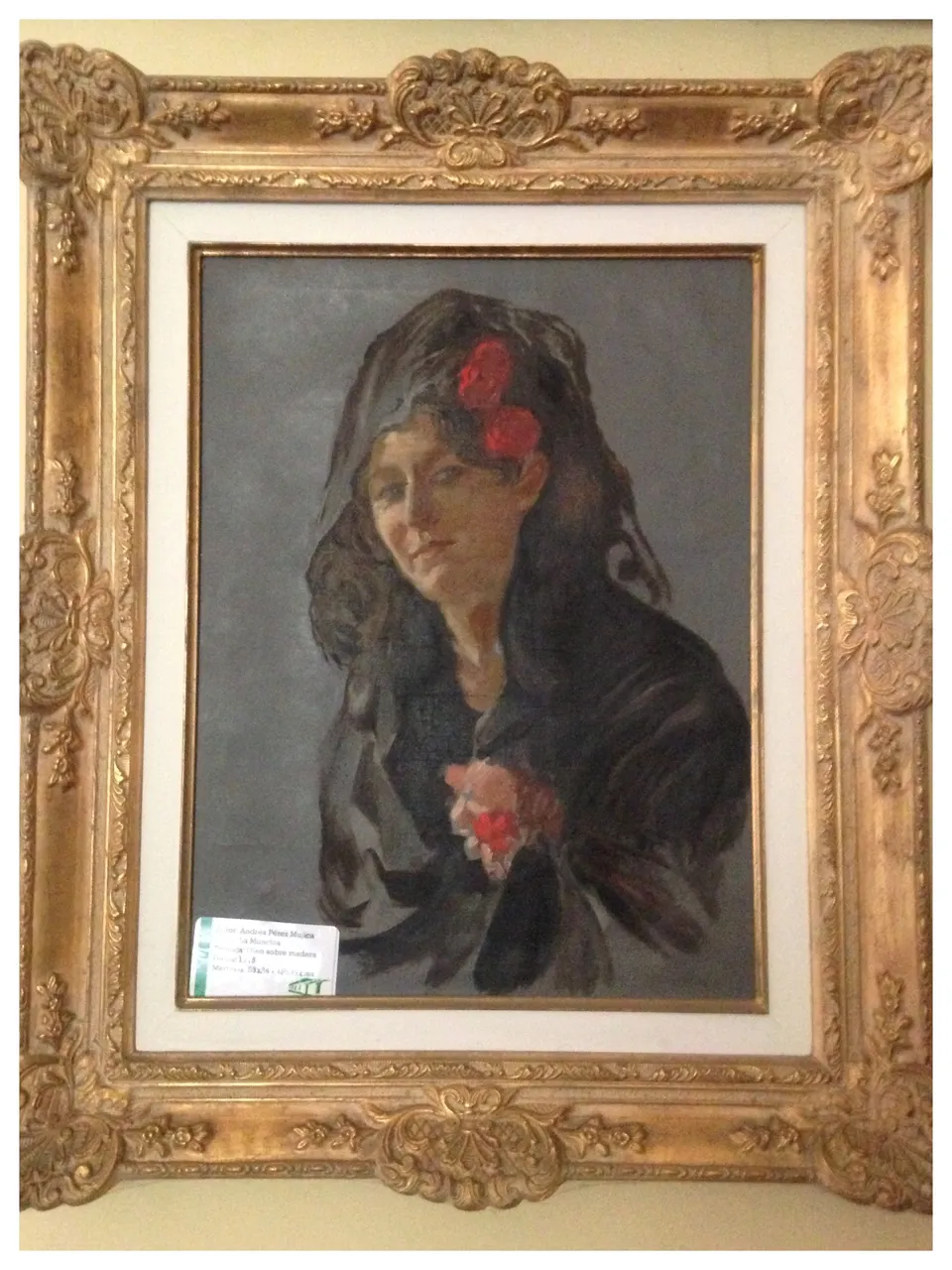


During my visit to the Casa Celis Museum, I was able to see a number of historical articles, archives and documentation and artistic works of great value. The museum has two Art Rooms where paintings by artists Andrés Pérez Mujica and Antonio Herrera Toro, both exceptional Valencian painters, are housed. One of the relics that caught my attention is a palette of Arturo Michelena that was a gift to Mujica and then given to the museum by his wife. There is also a collection of anonymous religious (sacred) works from the 17th to 18th centuries. The room to which the house owes its name today and the title of monument (in addition to the Lisandro Alvarado Foundation) is the Anthropology room. In it Enriqueta Peñalver managed to document the existence of Mammoths, Sloths and some prehistoric animals that she discovered in the deposits of the basin of the lake of Valencia. A mind-blowing evidence. He also managed to rescue articles from native tribes, such as fetishes (naked Venus), funeral bowls, ceremonial pipes, musical instruments, weapons and daily utensils. That is why the place itself and what is inside it is really valuable.
As you can see in the photographs, the place is in good condition despite the fact that it is a few years since the last restoration and it is expected that the maintenance of this will continue in order to avoid damage to the house and the objects. The last time I visited it was closed and I learned from some contacts that it will not reopen until further notice. Hopefully this building will be able to serve the public again in the future. I can only say thank you to those who stop by and support my work. I appreciate it from the bottom of my heart. I hope this article helps you to know a little about my country, Venezuela. I send you a big hug and see you next time!
Durante mi visita en el Museo Casa Celis, pude comprobar una cantidad de artículos históricos, archivos y documentación y obras artísticas de gran valor. El museo cuenta con dos Salas de Arte dónde se alojan pinturas de los artistas plásticos Andrés Pérez Mujica y Antonio Herrera Toro, ambos excepcionales pintores valencianos. Una de las reliquias que más llamó mi atención es la de una paleta de Arturo Michelena que fue obsequiará a Mujica y luego cedida al museo por la esposa de él. Así como también hay una colección de obras anónimas de tipo religioso (sacro) que pertenecen al siglo XVII a XVIII. La sala a la que la casa debe su nombre actualmente y el título de monumento (además de la Fundación Lisandro Alvarado) es la de Antropología. En ella Enriqueta Peñalver consiguió documentar la existencia de Mamuts, Perezosos y algunos animales prehistóricos que descubrió en los yacimientos de la cuenca del lago de Valencia. Una evidencia alucinante. Así como también logró rescatar artículos de tribus nativas, tales como fetiches (Venus desnudas), cuencas fúnebres, pipas ceremoniales, instrumentos musicales, armas y utensilios cotidianos. Es por ello que el lugar en sí mismo y lo que alberga dentro de él, es realmente valioso.
Cómo podrán observar en las fotografías, el lugar se encuentra en buen estado a pesar de que tiene algunos años desde la última restauración y se espera que el mantenimiento de esta siga en pie para evitar que la casa y los objetos sufran daños. La última vez que la visite se encontraba cerrada y supe por algunos contactos que efectivamente no volverá ha abrir sus puertas hasta nuevo aviso. Esperemos que este edificio pueda volver a servir al público en un futuro. No mr queda más que decir gracias a quienes pasan por acá y apoyan mi trabajo. Lo agradezco de corazón. Espero que este artículo sirva de ayuda para conocer un poco sobre mi país, Venezuela. Les envío un fuerte abrazo y ¡Nos vemos en la próxima!
All photographs are my property/Todas las fotografías son de mi propiedad


