
Walking through the center of St. Petersburg along the famous Nevsky Prospect, an unusual building caught my attention. Located next to the Griboyedov water channel, this house will stand out among the neighboring ancient architecture. On the facade of the building is the inscription "Singer's House". Seeing these words, I realized that in front of me was not just a house, but a historical value worthy of attention. Singer Corporation is a world famous American corporation. It turns out that the eminent company had a private building in the northern capital of the Russian Empire. The Singer House in St. Petersburg was built in 1904 on the site of previous buildings. By this time, the corporation had 3,000 stores throughout Russia. Initially, it was planned to build a skyscraper similar to the one that was being built in New York, but Peter's architectural regulations forbade the construction of tall buildings.


First of all, an elegant corner tower with a glass globe with a diameter of about three meters catches the eye. One gets the impression that the tower seems to be floating in the air on an attic and six floors - this decision gives the building a majestic look. A large glass globe symbolizes the intention of the Singer Corporation to cover the entire planet with a trading network. "Keep the planet" are two stone sculptures of sailors, and during the First World War, on the dome of the Singer's house, there was an image of the American coat of arms - a bald eagle. At night, the name of the company, located along the equator of the globe, was illuminated by electric lamps.


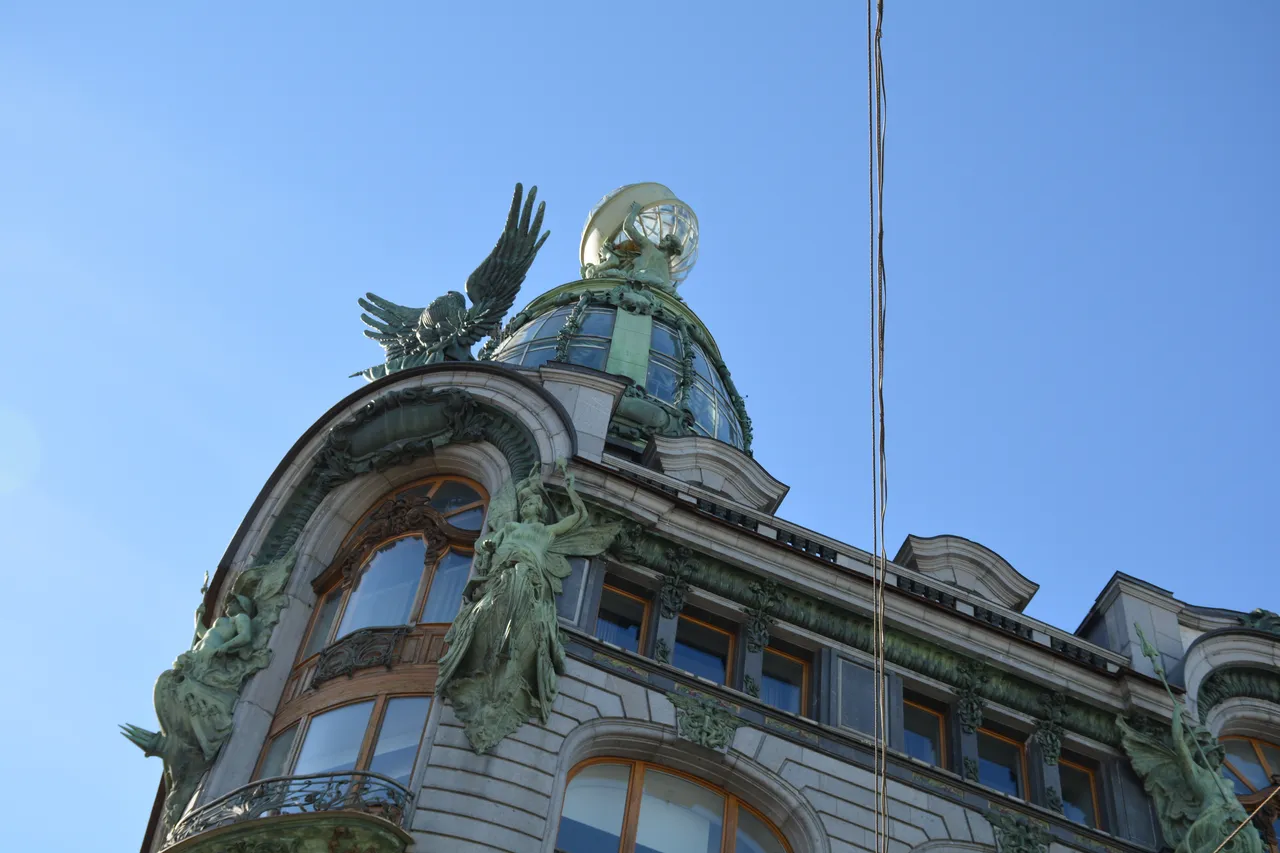
The main architect of the project was Pavel Suzorov, who undertook a number of innovative and atypical solutions for the beginning of the 20th century. Singer's house was the first in Russia to have walls with a metal frame. Thanks to this, huge stained-glass windows are built into the building, and inside the atrium is a courtyard with a glass roof. But this is not all the ingenious solution of the architect Suzorov. Hidden drainpipes and ventilation shafts for steam heating are built into the walls of the building. This was done in order not to spoil the decor of the house and not to overload the facade. The second steam system, designed by the architect, automatically cleared the roof of clothing and snow. To emphasize the innovativeness and high cost of construction in the Singer building, German Otis elevators were used. Another significant part of the exterior decoration are numerous sculptures and stucco. This building is a prime example of St. Petersburg's Art Nouveau architecture.


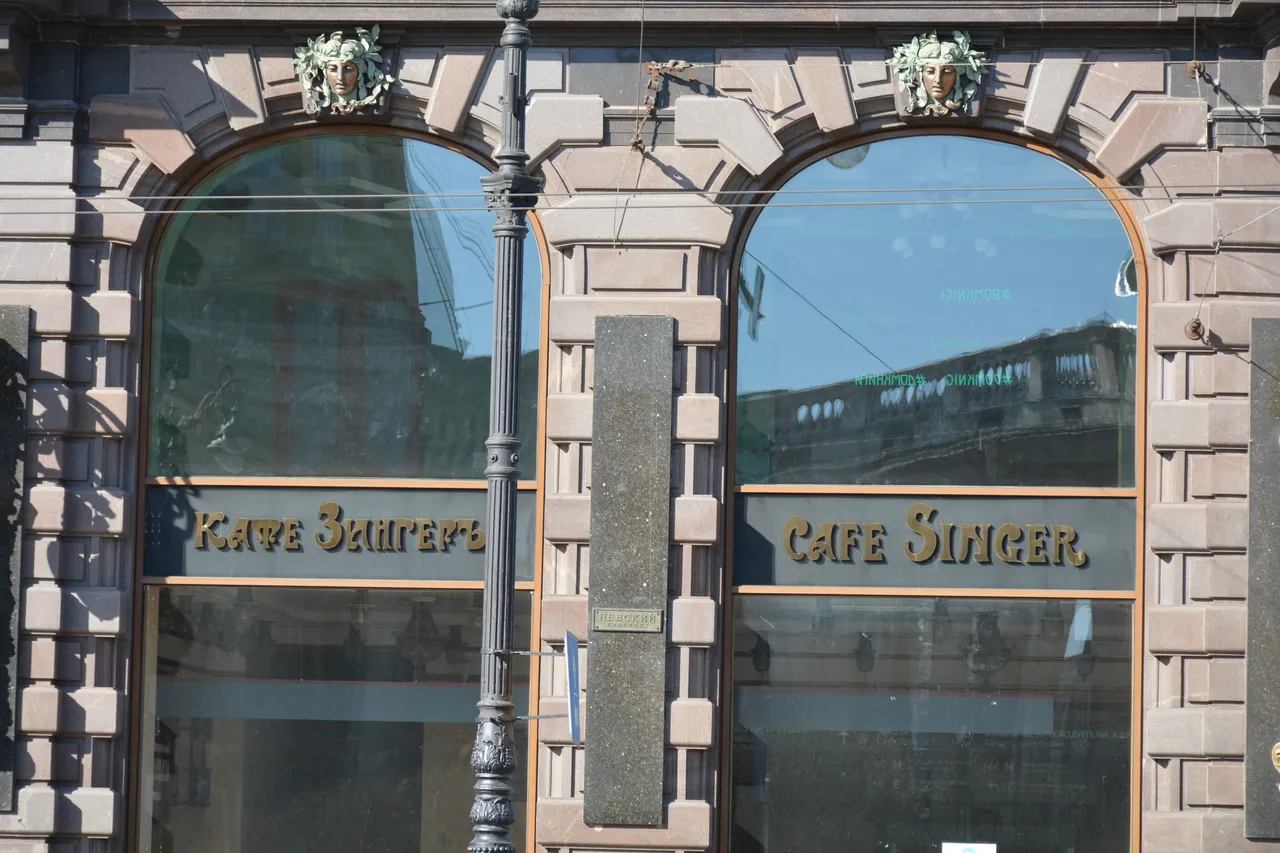


The lower floors housed a Singer store, the American consulate, ethnographic exhibitions, and a bank. Above them were large premises of sewing workshops. Singer Corporation supplied all of Russia with sewing machines and was also the first to sell its products on credit. Surprisingly, this company also sewed clothes for the Russian army. However, after the October Revolution, when the power in the country passed into the hands of the Bolsheviks, the Singer company closed production in Russia. In 1919, the "Petrogosizdat" publishing house was located in this building and the largest bookstore in the country was opened. The work of the bookstore did not stop even during the Second World War. However, the building was damaged. Only in 1965 the Singer House was restored.


In 2004, the building underwent a massive and expensive restoration. The Singer House has regained its historical appearance: interior and exterior details and elements have been restored. Without violating the harmony of the interiors, the architects managed to install modern fire extinguishing and life support systems into the walls. At present, the Singer House, or to be more precise, the Book House, is the largest bookstore in Russia and one of the largest in Europe. Curious tourists are unlikely to be able to pass by this architectural masterpiece.


Did you like the Singer House?
All photos taken by me during my trip. Thank you for your attention!