
Centuries pass, one after another. We are also passing. But some buildings remain and endure as witnesses of the past, present and future. 690 years have passed since the construction of the monastery of St. Nicholas located in the town of Vranje in the south of Serbia. Every time I visit this town, I like to go to this monastery because it is one of the symbols of the town and deserves special attention.

I was there recently and I was amazed again by the harmony, intertwined with old and new influences. The monastery dates back to the 14th century, but was destroyed and rebuilt during the wars. Today's appearance is not authentic, but it is certainly good that it has been preserved from oblivion through its reconstruction.

At the entrance to the monastery there is a tower with a large wooden door and above the door it is written that the monastery is 690 years old. It is a long period and it intrigues you to see what is behind the door.


Behind the door are steps that lead to a large plateau where the church is located.

The present appearance of the church dates from the 20th century.

Then a house for priests was built in the typical style of Serbian houses from the south of that period, with a wooden terrace and small connected windows.

Stone stairs lead to the house. Under the house there are decorations, such as wood carvings in the shape of saints.

There are also three fountains with holy water, which is believed to cure many diseases and has a beneficial effect on health, so everyone usually drinks a little or washes their face when they come here.

The fountains are decorated with stone and above them are icons of saints. The stones that decorate the fountains are not evenly arranged, they seem both chaotic and harmonious at the same time. I like the design. It fits perfectly into the ambience of the monastery. And the icons above the fountains also look very harmonious.


It is not known exactly when and by whom it was built, but it is known that after its construction in the 14th century, the monastery was donated to the Hilandar monastery and became part of its community.

The facade of the monastery is simple and decorated with memorial plaques.

There is also the thomb stone replica of the founder of Saint Nicholas monastery.

And now, let's take a peek inside.

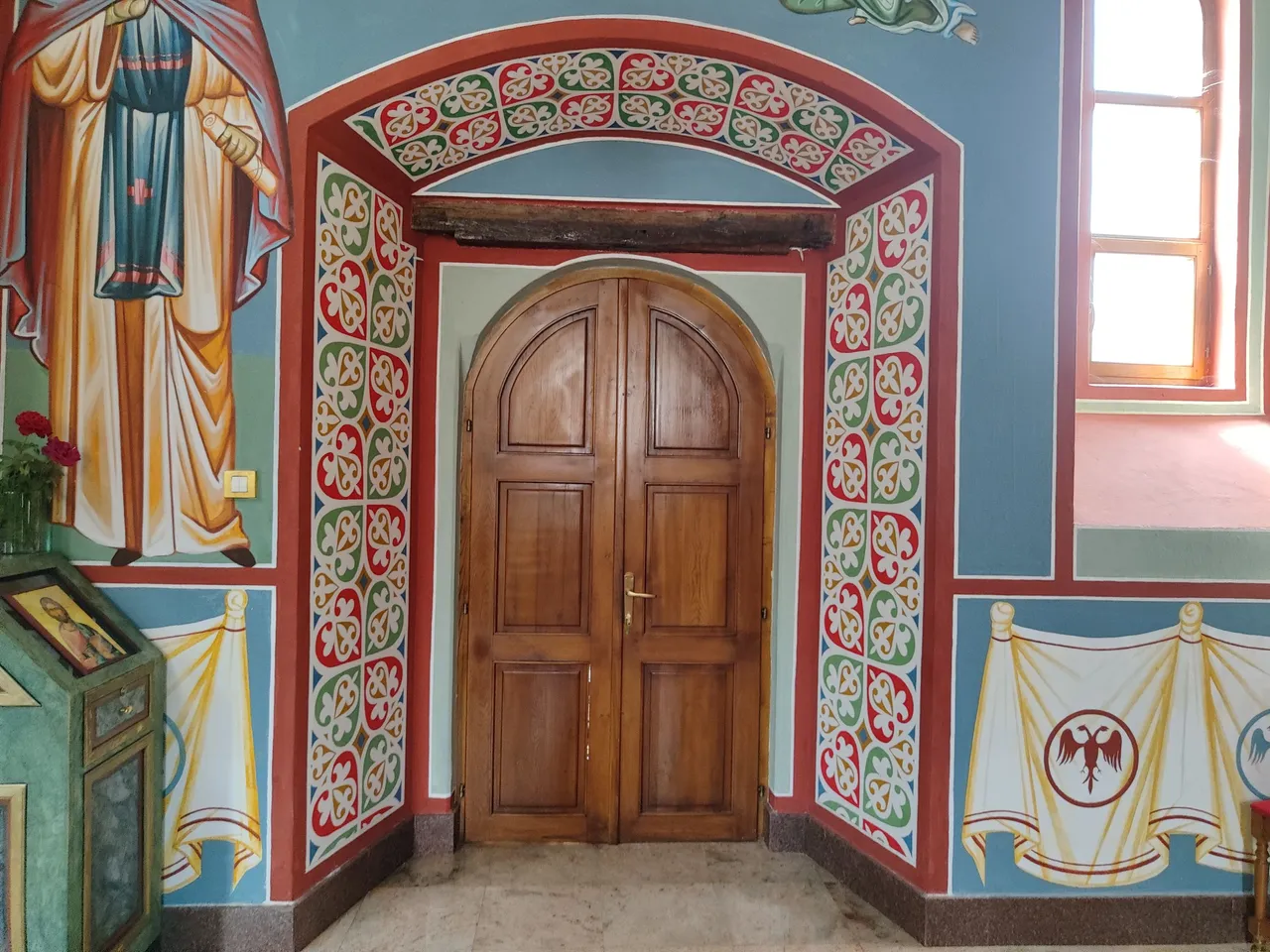
The interior walls are decorated with brightly colored frescoes, so the ambience is very picturesque. Light pours in through tall, narrow semi-circular windows.


The window frames are painted red and are very intense.

There is also a large chandelier next to the main dome.

And low wooden chairs with high backs and handrails.

And what particularly caught my attention was the decorative painting around the front door. I don't think I've ever been to such a colorful church before and I loved it.
There are also benches in front where you can sit in a peaceful environment and think about the past 690 years that have left a mark of architecture and design in this place.


Thank you very much for reading.
The images and writing are original and mine.
Greetings!
Jelena