[ENG] The silence. From a suburb to a monumental urban complex.
[ESP] El Silencio. De arrabal a complejo urbanístico monumental.

[ENG] Fountain. O'Leary Square. The Silence Urbanization.
Photography property of the author  Hive account@marcosmilano71. Caracas, Saturday June 26, 2021.
[ESP] Fuente. Plaza O'Leary. Urbanización El Silencio.
Fotografía propiedad del autor Hive account@marcosmilano71. Caracas, sábado 26 de junio de 2021.
[ESP]
Hola comunidad, les saludo con respeto y cariño desde la República Bolivariana de Venezuela, reciban un fuerte abrazo virtual cargado de energía positiva y mucha luz. Espero que todos estén muy bien de salud en compañía de sus seres queridos. Bendiciones infinitas para ustedes.
Hoy traigo para ustedes una historia muy interesante, se trata de la Urbanización El Silencio, ubicada en la Parroquia Catedral del Municipio Libertador, Caracas - Venezuela.
[ENG]
Hello community, I greet you with respect and affection from the Bolivarian Republic of Venezuela, receive a strong virtual hug full of positive energy and lots of light. I hope that everyone is in very good health in the company of their loved ones. Infinite blessings to you.
Today I bring you a very interesting story, it is about the El Silence Urbanization, located in the Cathedral Parish of the Libertador Municipality, Caracas - Venezuela.

[ESP]
La conquista del territorio venezolano no fue fácil, debido a la gran resistencia que opusieron los pueblos aborígenes originarios, pueblos guerreros prehispánicos que al final fueron vencidos por el fuego de los arcabuces españoles, quienes los conquistaron y se establecieron en su territorio, fundando ciudades hasta llegar al Valle de los Caracas. La Ciudad de Caracas, Capital de la República Bolivariana de Venezuela, fue fundada por el conquistador español
Diego de Losada, el 25 de julio de 1567 con el nombre de Santiago de León de Caracas. El nombre de la Capital de Venezuela proviene de la tribu que habitaba la parte Norte costera del valle donde hoy se erige imponente la ciudad, conocidos como Los Caracas.
[ENG]
The conquest of the Venezuelan territory was not easy, due to the great resistance that the original aboriginal peoples opposed, pre-Hispanic warrior peoples who were finally defeated by the fire of the Spanish arquebuses, who conquered them and established themselves in their territory, founding cities until get to the Valley of the Caracas. The City of Caracas, Capital of the Bolivarian Republic of Venezuela, was founded by the Spanish conqueror
Diego de Losada, on July 25, 1567 with the name of Santiago de León de Caracas. The name of the Capital of Venezuela comes from the tribe that inhabited the northern coastal part of the valley where today the city stands imposing, known as Los Caracas.

[ENG] Table illustrating the Caracas Foundation.
[ESP] Cuadro que ilustra la Fundación de Caracas. Source / Fuente
[ENG]
Once the tribes of the original peoples were subdued and Caracas founded by the Spanish conquerors, the colonization stage began, so immediately after the foundation in 1567, they divided the valley into 25 blocks, being the original demarcation of the Caracas territory. Later, the Spanish conqueror
Garcí González de Silva decided to buy a field to the west of the 25 original city blocks from the town council of the time which he baptized with the name of El Tartagal, due to the number of plants of Tártago that were in that place, little by little that sector was filled with inhabitants until a tragedy wiped out almost all the inhabitants who had settled in those lands .
In 1658, an unknown epidemic broke out in El Tartagal that hit all of Caracas. So many people died that the temple bells stopped ringing because there was no one to ring them. The Cabildo sent a commission to El Tartagal, and that commission wrote in a record what it witnessed: "There is only silence, a profound silence." And since then the place was called like this: El Silencio.

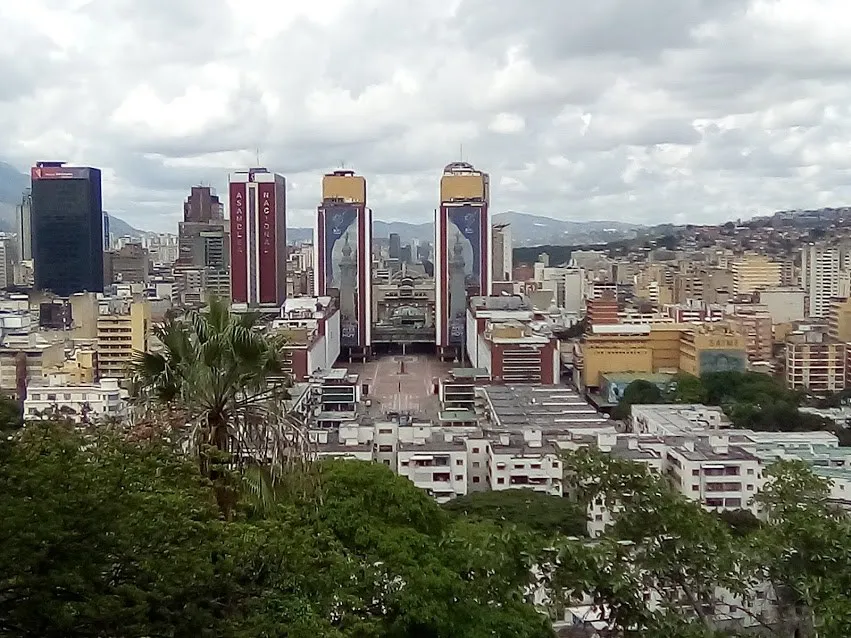
[ESP] Vista de las icónicas Torres del Silencio, desde la Plaza O'Leary. Fotografía propiedad del autor Hive account@marcosmilano71.
Caracas, sábado 26 de junio de 2021.
[ENG] View of the iconic Torres del Silencio, from Plaza O'Leary. Photography property of the author Hive account@marcosmilano71. Caracas, Saturday June 26, 2021.
[ESP]
Por cierto, existe información documentada que asegura que la negra
Hipólita Bolívar, esclava y nodriza del Libertador Simón Bolívar, vivió en El Silencio, para ese momento la zona era un antro de miseria y de dolor, pobreza extrema era lo que se veía; sin embargo, presencia de la negra Hipólita, según cuentan, le daba esperanza a los abandonados de ese inhóspito lugar porque ella nunca sufrió de abandono ya que la hermana del Libertador,
María Antonia Bolívar, la visitaba constantemente y la ayudaba a sobrellevar la carga. Lo cierto fue que El Silencio continuó por muchos años siendo un lugar de miseria, pobreza y calamidad hasta el siglo XX cuando en el año 1942 el entonces Presidente de la República General
Isaías Medina Angarita ordenó la demolición de todas las edificaciones para construir lo que él llamó la reurbanización de El Silencio. Para ello contó con la extraordinaria colaboración del Arquitecto y Urbanista venezolano
Carlos Raúl Villanueva quien se esmeró en solucionar el problema de aquel barrio pobre y desamparado, lleno de burdeles y antros de perdición. Villanueva contó con el apoyo del artista y escultor Francisco Narváez y en el año 1945 se inauguró la reurbanización El Silencio: siete bloques, dos plazas: la plaza O´Leary en el centro de la zona y la plaza Miranda al este de la urbanización.
[ENG]
By the way, there is documented information that ensures that the black woman
Hipólita Bolívar, slave and nurse of the Liberator Simón Bolívar, lived in El Silence, for that moment the area was a den of misery and pain, extreme poverty was what was seen; However, the presence of the black Hipólita, as they say, gave hope to the abandoned of that inhospitable place because she never suffered from abandonment since the Liberator's sister,
María Antonia Bolívar, visited her constantly and helped her bear the burden. The truth was that El Silencio continued for many years to be a place of misery, poverty and calamity until the 20th century when in 1942 the then President of the General Republic
Isaías Medina Angarita ordered the demolition of all the buildings to build what he called the redevelopment of El Silencio. For this he had the extraordinary collaboration of the Venezuelan Architect and Urban Planner
Carlos Raúl Villanueva who took pains to solve the problem of that poor and abandoned neighborhood, full of brothels and dens of perdition. Villanueva had the support of the artist and sculptor Francisco Narváez and in 1945 the El Silencio redevelopment was inaugurated: seven blocks, two squares: the O'Leary square in the center of the area and the Miranda square to the east of the urbanization.

[ESP] La Placa dice textualmente lo siguiente, cito: "Día Nacional del Arquitecto, 4 de julio de 1974, BLOQUE CARLOS RAÚL VILLANUEVA, Urbanización El Silencio, Banco Obrero" fin de la cita. Fotografía propiedad del autor Hive account@marcosmilano71. Caracas, sábado 26 de junio de 2021.
[ENG] The plaque reads the following verbatim, I quote: "National Architect's Day, July 4, 1974, CARLOS RAÚL VILLANUEVA BLOCK, El Silencio Urbanization, Banco Obrero" end of quote..Photography property of the author Hive account@marcosmilano71. Caracas, Saturday June 26, 2021.
[ESP]
Como mencioné en el párrafo anterior, el gobierno del General Isaías Medina Angarita decide ordenar la demolición de todas las casas, bares y prostíbulos que se encontraban en la zona para dar paso a la reurbanización de El Silencio. Las labores de construcción se iniciaron el 4 de enero de 1943. El Bloque N° 1 fue iniciado en febrero de 1944. El primero de los bloques en ser inaugurado fue el N° 7, eso ocurrió el 5 de julio de 1944. El 26 de agosto de 1945 es inaugurada la Reurbanización El Silencio. En 1969 el proyecto recibió el Premio Construcción otorgado por la Cámara Venezolana de la Construcción. En 1999 El Silencio es declarado bien de interés cultural. Desde 2003 la Alcaldía de Libertador recupera el área de lo que desde entonces se llama Urbanización El Silencio.
Source /Fuente
[ENG]
As I mentioned in the previous paragraph, the government of General Isaías Medina Angarita decides to order the demolition of all the houses, bars and brothels that were in the area to make way for the redevelopment of El Silencio. Construction work began on January 4, 1943. Block No. 1 was started in February 1944. The first of the blocks to be inaugurated was No. 7, that happened on July 5, 1944. On July 26, August 1945, the El Silencio Redevelopment was inaugurated. In 1969 the project received the Construction Award granted by the Venezuelan Chamber of Construction. In 1999 El Silencio was declared a site of cultural interest. Since 2003, the Mayor's Office of Libertador has recovered the area of what has since been called Urbanización El Silencio.
Source / Source

[ENG] O'Leary Square. The Silence Urbanization..Photography property of the author Hive account@marcosmilano71. Caracas, Saturday June 26, 2021.
[ESP]
La Reurbanización El Silencio marca pauta de Arquitectura moderna, Ingeniería Civil y paisajismo urbano en Caracas conservando elementos característicos de la arquitectura colonial y la arquitectura ecléctica que se manejaba en esa época en la ciudad. El Arquitecto venezolano Carlos Raúl Villanueva toma esos elementos dando como resultado una construcción mas estilizada y funcional dando a Caracas una hermosa y moderna Urbanización totalmente opuesta a la barriada de miseria que existió en aquel lugar. Él reestructura todo el espacio y diseña siete Bloques de la siguiente manera, el Bloque 1, es el de mayor altura que equivale al talón de fondo y culmina en el eje de la Avenida Bolívar. Los Bloques 2 y 3 se disponen cimetricamente en ambos lados de la Avenida Bolívar dando paso a la vialidad subterránea que verán en la fotografía que acompaña este párrafo. Los Bloques 4 y 6 cierran lateralmente y dan escala a la Plaza O'Leary. El Bloque 5 está desarrollado en terrazas y enmarca una expresiva calle curva y ascendente y el Bloque 7 se extiende perimetralmente sobre un patio y antecede a la Plaza Miranda la cual van a ver en otra fotografía.
[ENG]
The El Silencio Redevelopment sets the standard for modern architecture, civil engineering and urban landscaping in Caracas, preserving characteristic elements of colonial architecture and eclectic architecture that was used in the city at that time. The Venezuelan architect Carlos Raúl Villanueva takes these elements resulting in a more stylized and functional construction, giving Caracas a beautiful and modern Urbanization totally opposite to the slum that existed in that place. He restructures the entire space and designs seven Blocks in the following way, Block 1, is the highest one that is equivalent to the bottom heel and culminates in the axis of Avenida Bolívar. Blocks 2 and 3 are arranged cimetrically on both sides of Avenida Bolívar giving way to the underground road that you will see in the photograph that accompanies this paragraph. Blocks 4 and 6 close laterally and give access to Plaza O'Leary. Block 5 is developed in terraces and frames an expressive curved and ascending street and Block 7 extends perimeter over a patio and precedes the Plaza Miranda which you will see in another photograph.

[ESP] Por donde viene la Moto se observa la vialidad subterránea, debajo de las Torres de El Silencio.. Fotografía propiedad del autor Hive account@marcosmilano71. Caracas, sábado 26 de junio de 2021.
[ENG] Where the motorcycle comes from, you can see the underground road, below the Torres de El Silencio. Photography property of the author Hive account@marcosmilano71. Caracas, Saturday June 26, 2021.
[ESP]
En cuanto a las viviendas familiares o multifamiliares el Arquitecto Carlos Raúl Villanueva desarrolla un concepto humanista donde la gente interactúe con el paisaje natural y urbano en completa armonía. Los edificios están dispuestos de tal manera que protejan a la gente del Sol del trópico, tengan ventilación suave y cruzada, zonas para la interacción social, comercios, oficinas, espacios de recreación y calles y avenidas amplias para la circulación del tráfico automotor y el seguro desplazamiento de los peatones. Áreas verdes con vista variada desde los apartamentos y desde cada edificio. Los apartamentos fueron diseñados para que las habitaciones o dormitorios reciban la luz solar cada mañana, al despuntar el alba las personas pueden aprovechar los primeros rayos del Sol despertando con energía. Los balcones están orientados a los jardines y a las plazas. Lo cierto es que la hoy llamada Urbanización El Silencio fue pensada para la vida, pensando en la estabilidad emocional de las personas que ahí habitan o transitan dándoles seguridad y resguardo a la hora de aguaceros torrenciales. El sábado pasado, 26 de junio mi esposa y yo visitamos la Urbanización y quedamos maravillados porque el gobierno Nacional invirtió en el embellecimiento de toda la zona en lo que ellos han denominado Caracas Bella.
[ENG]
Regarding family or multi-family homes, Architect Carlos Raúl Villanueva develops a humanistic concept where people interact with the natural and urban landscape in complete harmony. The buildings are arranged in such a way as to protect people from the tropical sun, have soft and cross ventilation, areas for social interaction, shops, offices, recreation spaces and wide streets and avenues for the circulation of motor traffic and insurance movement of pedestrians. Green areas with varied views from the apartments and from each building. The apartments were designed so that the rooms or bedrooms receive sunlight every morning, at dawn people can take advantage of the first rays of the Sun by waking up with energy. The balconies are oriented to the gardens and the squares. The truth is that the now called Urbanización El Silencio was designed for life, thinking about the emotional stability of the people who live or walk there, giving them security and shelter at the time of torrential downpours. Last Saturday, June 26, my wife and I visited the Urbanization and we were amazed because the National government invested in the beautification of the entire area in what they have called Caracas Bella.

[ESP] Mi esposa tomando fotografías del lugar. Fotografía propiedad del autor Hive account@marcosmilano71. Caracas, sábado 26 de junio de 2021.
[ENG] My wife taking pictures of the place. Photography property of the author Hive account@marcosmilano71. Caracas, Saturday June 26, 2021.
[ENG] PHOTO REVIEW / [ESP] RESEÑA FOTOGRÁFICA


[ESP] Yo, sentado en la Plaza Miranda de Caracas. Urbanización El Silencio.
Fotografía propiedad del autor Hive account@marcosmilano71. Caracas, sábado 26 de junio de 2021.
[ENG] Me, sitting in the Plaza Miranda in Caracas. El Silencio Urbanization.
Photography property of the author Hive account@marcosmilano71. Caracas, Saturday June 26, 2021.

[ESP] Yo, en la Plaza Miranda, Caracas. Urbanización El Silencio.
Fotografía propiedad del autor Hive account@marcosmilano71. Caracas, sábado 26 de junio de 2021.
[ENG] Me, in the Plaza Miranda, Caracas. El Silencio Urbanization.
Photography property of the author Hive account@marcosmilano71. Caracas, Saturday June 26, 2021.

[ESP] Plaza Miranda, Caracas. El Silencio Urbanization.
Fotografía propiedad del autor Hive account@marcosmilano71. Caracas, sábado 26 de junio de 2021.
[ENG] Plaza Miranda, Caracas. Urbanización El Silencio.
Photography property of the author Hive account@marcosmilano71. Caracas, Saturday June 26, 2021.

[ESP] Parque infantil en la Plaza Miranda, Caracas. Urbanización El Silencio.
Fotografía propiedad del autor Hive account@marcosmilano71. Caracas, sábado 26 de junio de 2021.
[ENG] Playground in Plaza Miranda, Caracas. El Silencio Urbanization.
Photography property of the author Hive account@marcosmilano71. Caracas, Saturday June 26, 2021.

[ESP] Parque infantil en la Plaza Miranda, Caracas. Urbanización El Silencio.
Fotografía propiedad del autor Hive account@marcosmilano71. Caracas, sábado 26 de junio de 2021.
[ENG] Playground in Plaza Miranda, Caracas. El Silencio Urbanization.
Photography property of the author Hive account@marcosmilano71. Caracas, Saturday June 26, 2021.


Author, Autor:Marcos E. Milano R
