
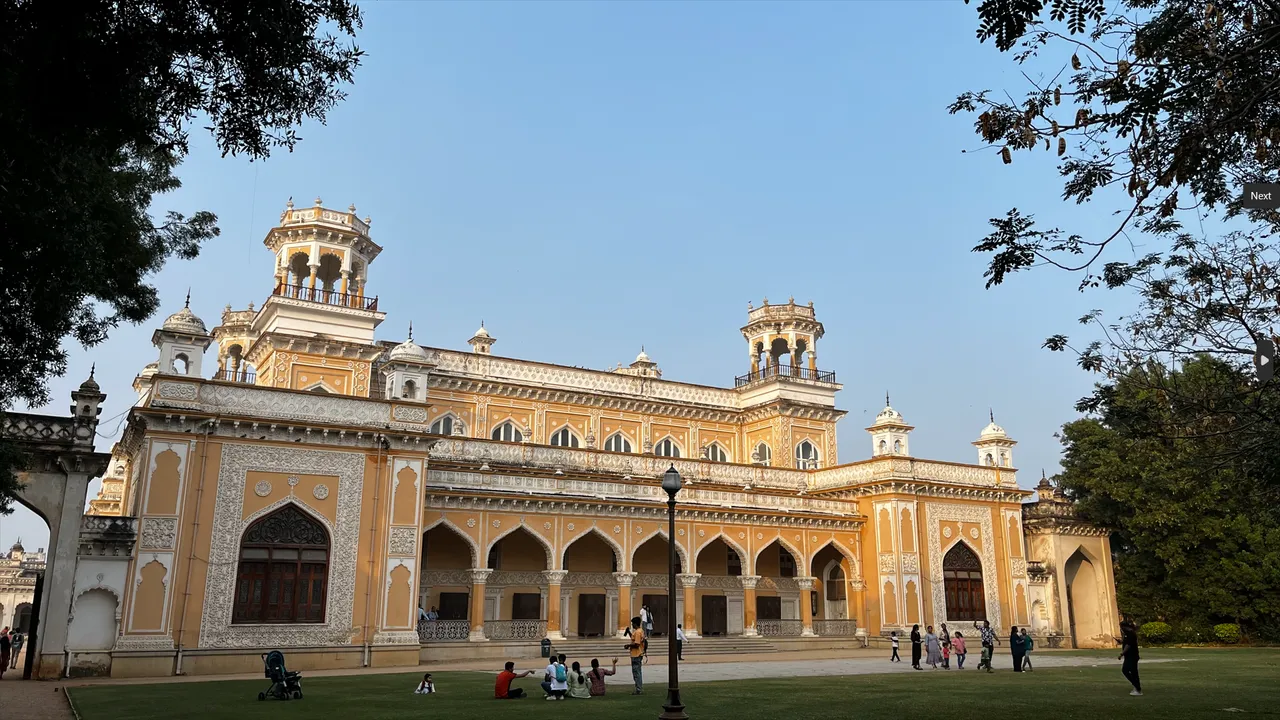
The Aftab Mahal
The Aftab Mahal
The Chowmahalla palace is located in Hyderabad, India. Bulit in the 18th century, it was the official residence of the Nizams of Hyderabad. Chowmahalla basically means "Four Palaces" since it is comprised of four elegant buildings - Afzal Mahal, Mahtab Mahal, Tahniyat Mahal and Aftab Maha built symmetrically opposite each other in Neoclassical style. Each displaying intricate designs befitting the grandeur of royalty. It reflects a complex blend of Persian, Rajasthani, and European architecture.


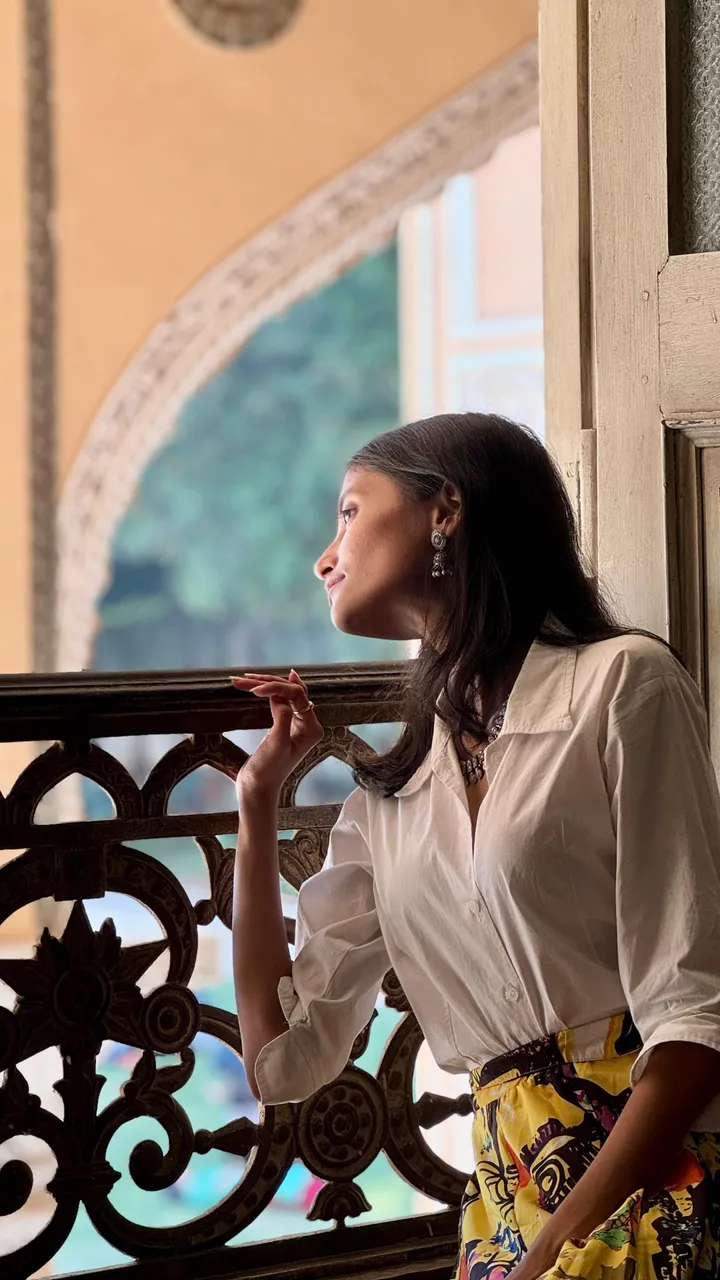
A Little Photoshoot
A Little Photoshoot
Neoclassical architecture is a style that became popular in the 18th and 19th centuries. It focuses on simplicity, symmetry, and grandeur, inspired by the buildings of ancient Greece and Rome.You know it is built in a neoclassical style when it has large columns, symmetrical design, and a grand, balanced look. The buildings are with simple but elegant decorations. It may have triangular tops (pediments), tall windows, and a stone or marble finish. The most prominent examples of this kind of architecture include the White House, The Pantheon, The Bolshoi theatre.

Entrance to the Khilwat Mubarak
Entrance to the Khilwat Mubarak
I was absolutely bedazzled looking at the gorgeous construction. Felt like a princess myself roaming around these grand halls, having a glimpse into the life of 18th century royalty.
Khilwat Mubarak
This is the "Khilwat Mubarak", considered to be the heart of Chowmahalla palace. I mean? Obviously! These exquisite Belgian crystal chandeliers add to the splendor of the beautiful halls. This was the place where all the important stuff happened, where the Nizams held their court, official ceremonies and other state affairs. This hall was naturally a symbol of power and great prestige witnessing coronations and grand celebrations.

Royal Seating
Royal Seating

Great Hall with Belgian Chandeliers
Great Hall with Belgian Chandeliers

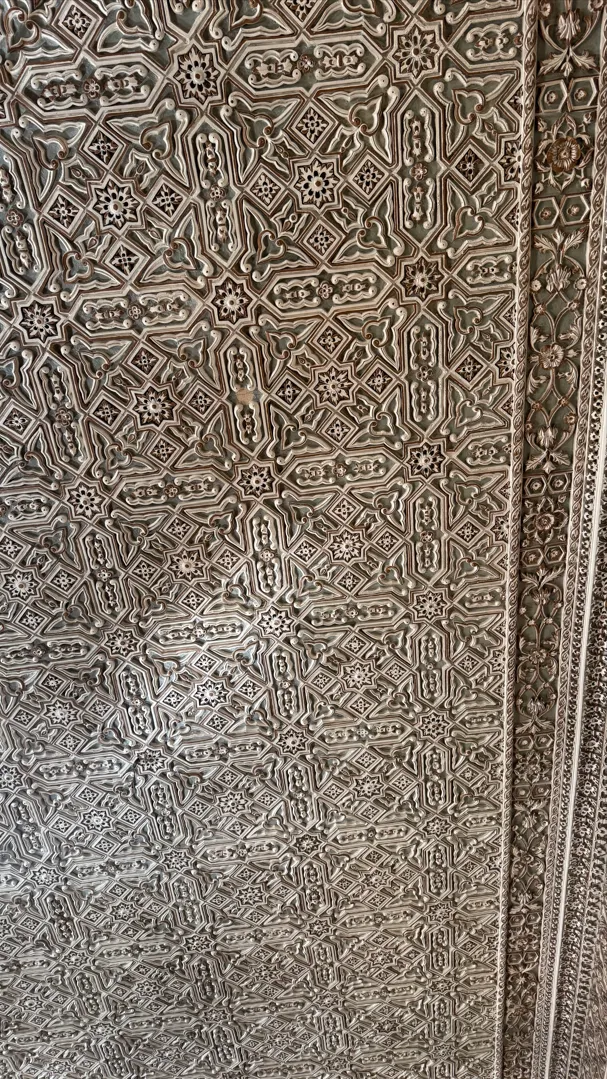
Roof Designs
I went absolutely crazy admiring the breathtakingly intricate designs on the roof. It depicts elaborate geometric patterns and floral motifs typical of Islamic art and architecture. While I do appreciate modern, minimalist architecture and its clean aesthetics, there's something about this lavish, no-detail-spared, every-corner-adorned grandeur that truly lights me up.
|

|
|---|
The Mahallat
The next room was a gallery that displayed rare photographs and paintings of various royal families that lived in the palace. These were very well preserved.

The Royal Families
The Royal Families

Porcelain Craftsmanship
A few rooms hosted crockery and dinner sets, which too were obviously beyond beautiful. The collection includes fine porcelain and ceramic dinnerware from France, England, and Japan. All of these are hand-painted which makes them all the more valuable. There were even cups with portraits of various Nizams! Many pieces have gold rimmed edges or silver designs flaunting the luxury of these rulers. Some crockery sets have European-style floral patterns while some showcase display Mughal motifs, blending Western and Indian aesthetics together.

Royal Cutlery
Royal Cutlery
The Seileh Khana - Armoury
Moving on from the pretty and delicate porcelain sets , next we have a room filled with weapons. However, this exhibit was just as striking and impressive. The collection includes ornate swords, daggers, spears and shields. Many of them were decorated with gold and silver or bedecked with precious stones. One would not want to go to battle holding a jewel studded dagger, so these were mostly ceremonial used for gifting and grand occassions. But others were actual war weapons and naturally very lethal.

Weapons Display
Weapons Display

|

|
|---|
Vintage Cars
The palace houses an impressive collection of vinatge cars that reflect the luxury and technological interests of the Nizams eras. It was a little hard clicking pictures of the cars kept in display as they were placed in glass and the reflections did not help. One good picture that I managed to click is of the 1953 Packard Clipper. Clearly the Nizams had exquisite taste when it came to automobiles.

1953 Packard Clipper
1953 Packard Clipper
Clock Tower
This clock tower is known as "Khilafat clock" and it is situated at the Western main gateway to the Chowmahalla palace. The tower is three storeys high high and has balconies or "Jharokhas" of Mughal style. The clock was been ticking since the 1750, and a family of horologists winds the clock occassionally. Heard an anecdote that people across the kingdom came here to correct their wrist watches and match the timings with the clock tower.

Royal Living Room
This display imagines and depicts how a drawing room of a royal family might have looked like. And I feel it is pretty accurate in terms of its grandeur. I can very well imagine the Nizams lounging here sipping on their teas, on the days they were not out strategizing for wars and shaping history.


Afzal Mahal
It is located in the Southern courtyard with the three other palaces, positioned symmetrically around a central pool and fountain. It is a two-storied structure, again built in the Neoclassical style. It served as the royal drawing room during the time of the fifth Nizam.

All in all, the Chowmahalla palace museum was a journey through 18th century Mughal history and a sight to behold. The efforts taken behind it's restoration and preservation are truly commendable and India needs many more projects like these.
The history and architecture are sourced from the museum website

Hope you Enjoined this Post!
Hope you Enjoined this Post!