
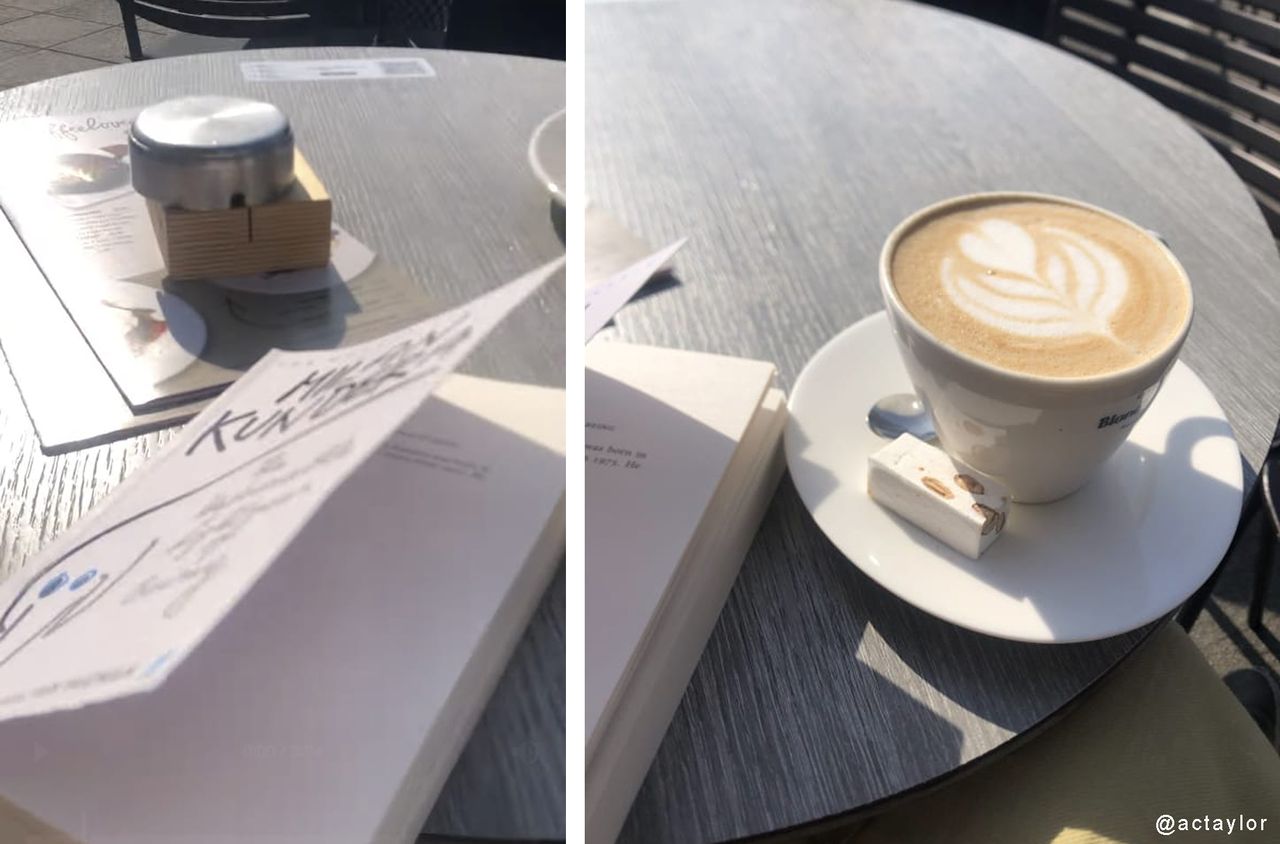
The Unbearable Lightness of Being came wrapped in brown crepe paper. The man who gave it to me said it was his favourite book, and the way he described it… how it had sat with him over the years… made me feel this could possibly be one of the most precious, special gifts I’d ever received.
Now that I have finished The Unbearable Lightness of Being, and sat with its reflections, I feel certain of what I sensed the day I received it: indeed, this is one of the most precious gifts anyone has ever given me.
Let me try my best to explain why…
Date complete | Title | Author | Rating |
|---|---|---|---|
11.01.26 | The Unbearable Lightness of Being | Milan Kundera | 5 |

When The Unbearable Lightness of Being appeared in 1984, it did so into a world taut with ideology. The Cold War had not yet thawed; Orwell’s shadow still stretched long across Europe, and the Soviet grip on Prague remained a recent memory rather than a historical footnote. Kundera, by the book’s debut, had long exiled to France and was writing from a distance that, I believe, must have sharpened his vision. He listened, as only the displaced can, for the faint creak of a collapsing order. If the novel spoke directly to its contemporary moment, it did so by posing the following unsettling question: what weight, if any, does a human life possess?
“The idea of eternal return is a mysterious one…to think that everything recurs as we once experienced it, and that the recurrence itself recurs ad infinitum! What does this mad myth signify?”
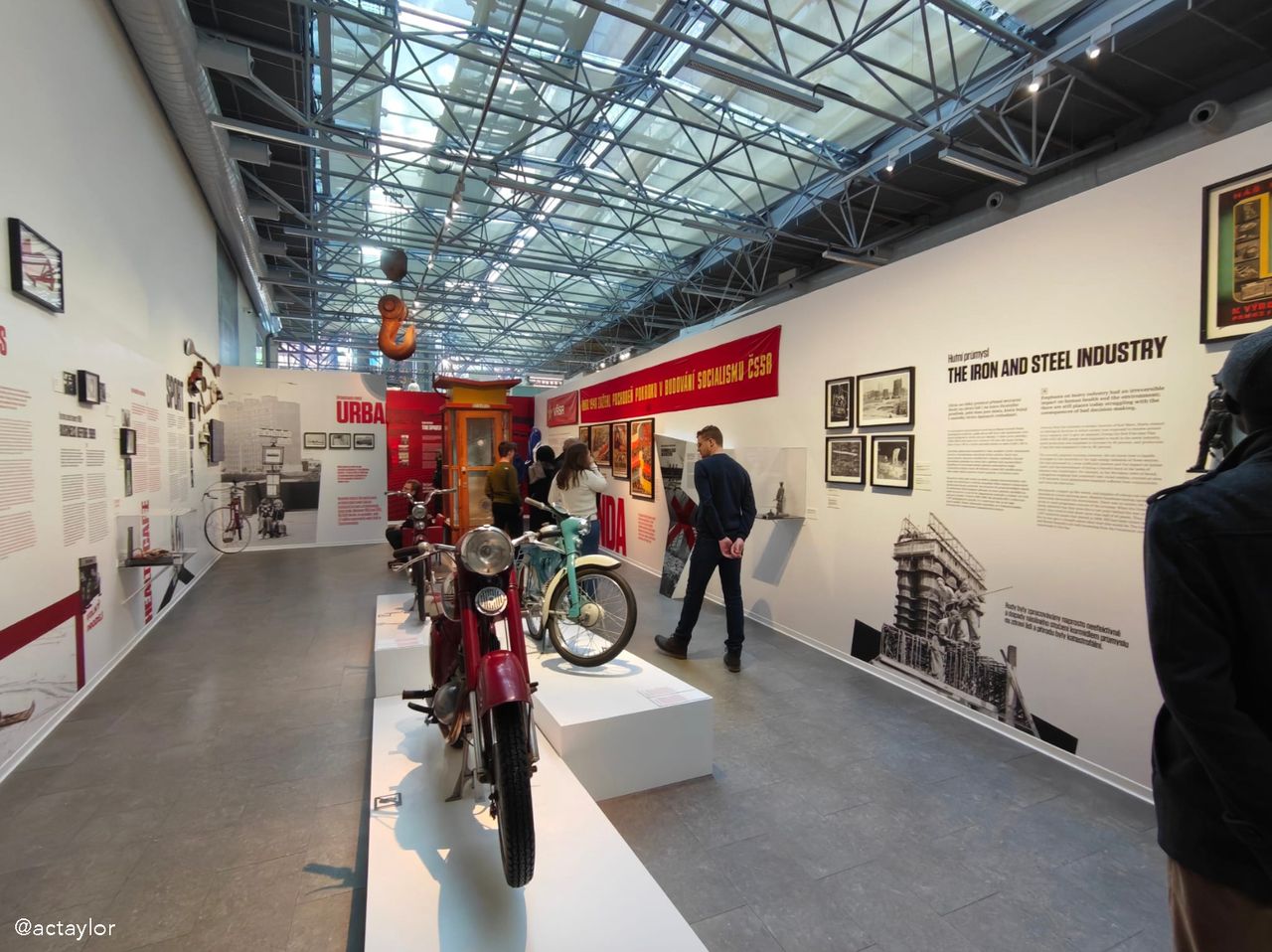
(If you’re ever in Prague and are interested in Czech history, make a point of visiting the Muzeum komunismu. As the homepage reads, “The museum offers a vivid view of the communist era, especially during the totalitarian regime from the February coup in 1948 until November 1989. The exhibition depicts communist education, army, police, militia, history, the Stalin monument in Letná, propaganda, censorship and everyday life of the time”. It also places you in context - for better grasping where the Unbearable Lightness of Being took shape.)

Kundera toys with Nietzsche’s myth of eternal return only to invert it: if life does not recur, if each action happens once and vanishes forever, then it is “like a shadow, without weight, dead in advance.” A massacre in sixteenth-century Africa, however catastrophic at the time, now lies flattened by history. Horror and beauty alike dissolve. Our choices cannot be rehearsed or compared; there is no second life against which to measure the first. We step onto the stage cold. In such a world, lightness (this absence of eternal consequence) ought to liberate… “But is this heaviness truly deplorable and lightness splendid?”
“The heaviest of crushes us, we sink beneath it, it pins us to the ground. But in the love poetry of every age, the woman longs to be weighed down by the man’s body. The heaviest of burdens it therefore simultaneously an image of life’s most intense fulfilment. The heavier the burden, the closest our lives come to the earth, the more real and truthful they become.”
What then shall we choose? Weight or lightness?
Around this philosophical axis turn four characters: Tomas, Tereza, Sabina, and Franz. I believe that Tomas, the gifted surgeon demoted first to provincial doctor and then to window-washer after publishing a subversive newspaper letter, embodies lightness. Cerebral, fastidious, and erotically compulsive. He is clinical in his deviancy, applying rules for his many mistresses as he would were they patients on an operating table. For him, sex is recreation; attachment is encumbrance. “Since he longed to take possession of something deep inside them, he needed to slit them open”.
Yet he discovers, almost against his will, that love is not the desire to possess a body but the desire to share sleep. Tereza, who arrives with a heavy suitcase and a head full of symbols (Beethoven, Anna Karenina, to name a few), represents weight. She assigns meaning to everything. Where Tomas seeks dispersal, she seeks destiny.

Their union unfolds against the Soviet invasion of Prague in 1968. Tereza photographs tanks in the streets, only later realising her images may serve the secret police. The couple flee to Switzerland, then return… theirs is a turbulent tale. And yet they hold steadfast to one another throughout. Over the course of the book you learn to understand that their bond is a conflict of weights, of betrayal and jealousy, and the “es muss sein” paradox – despite wanting freedom, Tomas feels compelled to return to Tereza and stay with her, arguing that his love for her is a “must be” decision.
Tereza I felt so heartsore for… Tomas’ philandering constantly wounds her - again and again - compassion is her burden. She is weighed down by her need for him. Tomas’ unrepentant infidelities break her confidence, leading to nightmares and a deep emotional struggle that defines her existence. Whilst Tomas, unable to abandon his detachment, is drawn to the vulnerability of Tereza. Tomas cares for her deeply, seeing Tereza as a child in a basket sent to him. But this compassion binds him, too. Over time Tomas eventually chooses the gravity of love over the buoyancy of exile, and this opens up to… what are perhaps… the most beautiful passages in the book. And through this turning point you learn that true love can exist without creating burdensome, heavy weight.
“The woman in the dream, he thought, was unlike any he had ever met. The woman he felt he knew most intimately of all had turned out to eb a woman he did not even know. And yet she was the one he had always longed for. If a personal paradise were ever to exist for him, then in that paradise he would have to live by her side. The woman from his dream was the “Es muss sein!” of his love… The trouble is, man does not find the other part of himself. Instead, he is sent a Tereza in a bulrush basket. Bit what happens if he nevertheless later meets the one who was means for him, the other part of himself? Whom is he to prefer? The woman from the bulrush basket or the woman from Plato’s myth?
[He] knows that time and again he will abandon the house of his happiness, time and again abandon his paradise and the woman from his dream and betray the “Es muss sein!” of his love to go off with Tereza, the woman born of six laughable fortuities. All this time he was sitting up in bed and looking at the woman who was lying beside him and holding his hand in her sleep. He felt an ineffable love for her.”

Sabina, the Czech painter turned émigré, offers another register of lightness: betrayal as aesthetic principle. She recoils from what Kundera famously terms “kitsch”; that sentimental consensus by which humanity congratulates itself. She leans into betrayal, to break away from the norm. Whilst Franz, Sabina’s lover, stands for earnest weight: fidelity, grand causes…. Their relationship, anatomised in a section poignantly titled “Words Misunderstood,” reveals how language itself fractures under private definitions. For example, the bowler hat. While Sabina uses the bowler hat as a symbol of her individuality, artistry, and independence – the “motif” of her life, a mixture of her nostalgic family history and rebellion – Franz misinterprets it as her need for self-expression, seeing it as an odd, masculine object that makes him feel uneasy. He removes it and stifles the very thing that she cherishes, missing the point entirely, and highlighting yet again their inability to truly communicate. But there are many more instances like this throughout the book...
When Sabina asks Franz why he doesn’t use his strength on her (a submissive, erotic desire), Franz replies, “Because love means relinquishing strength”, thinking that he is being noble and gentle. Sabina interprets this sentiment as a total weakness, causing her to lose sexual interest in him. Another misunderstanding lies in the way they approach parades and political activism. Franz, living a quiet academic life, sees parades as liberating. While Sabina, having lived under a communist regime, despises parades – associating them with coerced, forced, theatrical “kitsch”. When Franz joins the “Grand March” to Cambodia, she would have hated it, yet he does it believing she would approve. Sabina sees cemeteries as peaceful, Franz as a “bone and stone dump”; Sabina sees music as unpleasant noise, Franz as Dionysian beauty; Sabina sees darkness as a refusal to see and Franz a place to melt with the infinite.
Woman, betrayal, music, lightness - each term contains incompatible worlds. Franz marches for distant revolutions while Sabina slips away from all banners. I think, in a way, that their failure mirrors the larger disjunction between public idealism and private desire. Their relationship ends because Sabina refuses to be the anchor for Franz’s ideals, preferring the empty freedom of her solitary “lightness” over his devoted love. Franz idealises Sabina as a romantic idol, which suffocates Sabina who prefers detachment. His devotion is what drives her away. Franz, in a way, does not love the real Sabina at all but rather the “cult” of her he created in his mind… often confusing her actions and ideals. He treats her with an adoration that she finds restrictive.

For all the talk of politics and philosophy, the novel’s most affecting episode concerns the death of Karenin, Tomas and Tereza’s dog. This is a pivotal point in the text. Here, Kundera merges morals tenderly. True human goodness, he suggests, appears only when directed toward those without power. Our treatment of animals is the fundamental test we repeatedly fail. It is a moment of pathos in a book otherwise wary of easy emotion.
I’m sure there’s more to elaborate upon… but hopefully this hints at my curious experience reading The Unbearable Lightness of Being. The narrative itself, being deliberately episodic, self-interrupting, essayistic, is jumbled. But it works, somehow. The dream sequences, the erotic charge, the slipping between reality and hallucination (particularly as Tereza edges toward psychological fracture) produce a disorientation that is wholly intentional. The absence of stylistic rails is part of the book’s atmosphere, I think. Although this might frustrate some more traditional readers.
There is, undeniably, politics; the novel is rooted so firmly in its historical hour that one might expect it to date. Yet it has not. The regimes have shifted but the tension between lightness and weight, freedom and responsibility, feeling and reason, remains intact. The result is a novel where it’s less about what happens than about what it means that anything happens at all.
It's neither heavy enough to anchor us nor light enough to release us… this really is a book that moves.
Disclaimer Blogger: /@actaylor
Photographs: unless otherwise noted, all images were taken by my partner and myself with a pixel pro 9 xl, iphone 8, POCO f7