

Luis Esteban Ramírez Cabrera Poeta, novelista, cuentista, periodista, militar e investigador folclórico, quién fuera miembro de la Uneac y de la Asociación Cultural Yoruba de Cuba.
Tuvo la posibilidad de que sus trabajos hayan sido publicados en diversas editoriales, revistas y periódicos. Por lo que encontrarme con este libro Diccionario de la Regla de Osha o Santería en su primera edición del año 2012 por la editorial Mecenas, ha sido una excelente opción como libro de consulta.

La Regla de Osha, de origen Yoruba, es una de las más extendidas entre las religiones de origen africano en Cuba, con una multiplicidad de ritos y sistemas adivinatorios que el autor trato de recoger en buena medida en este libro.
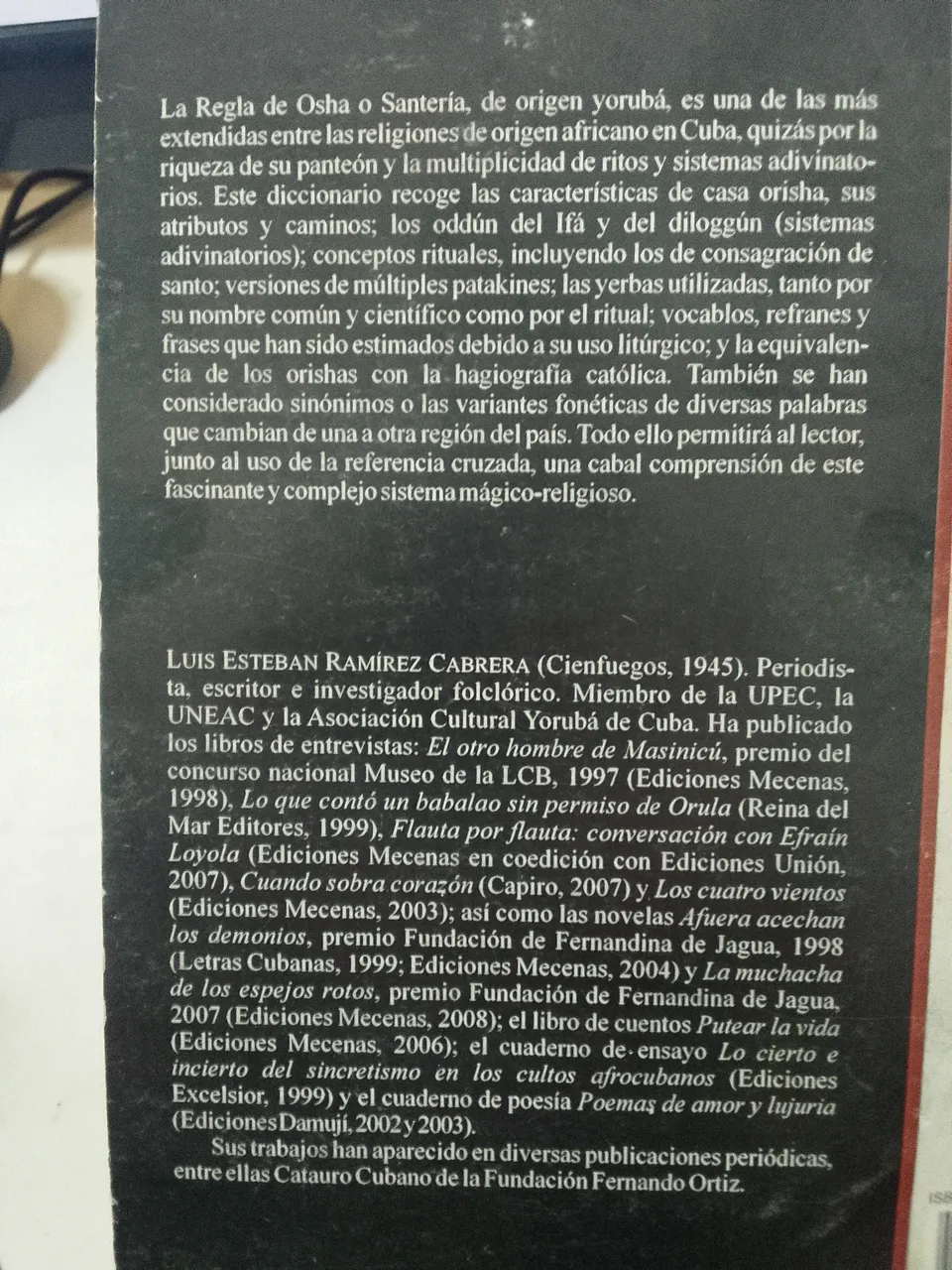
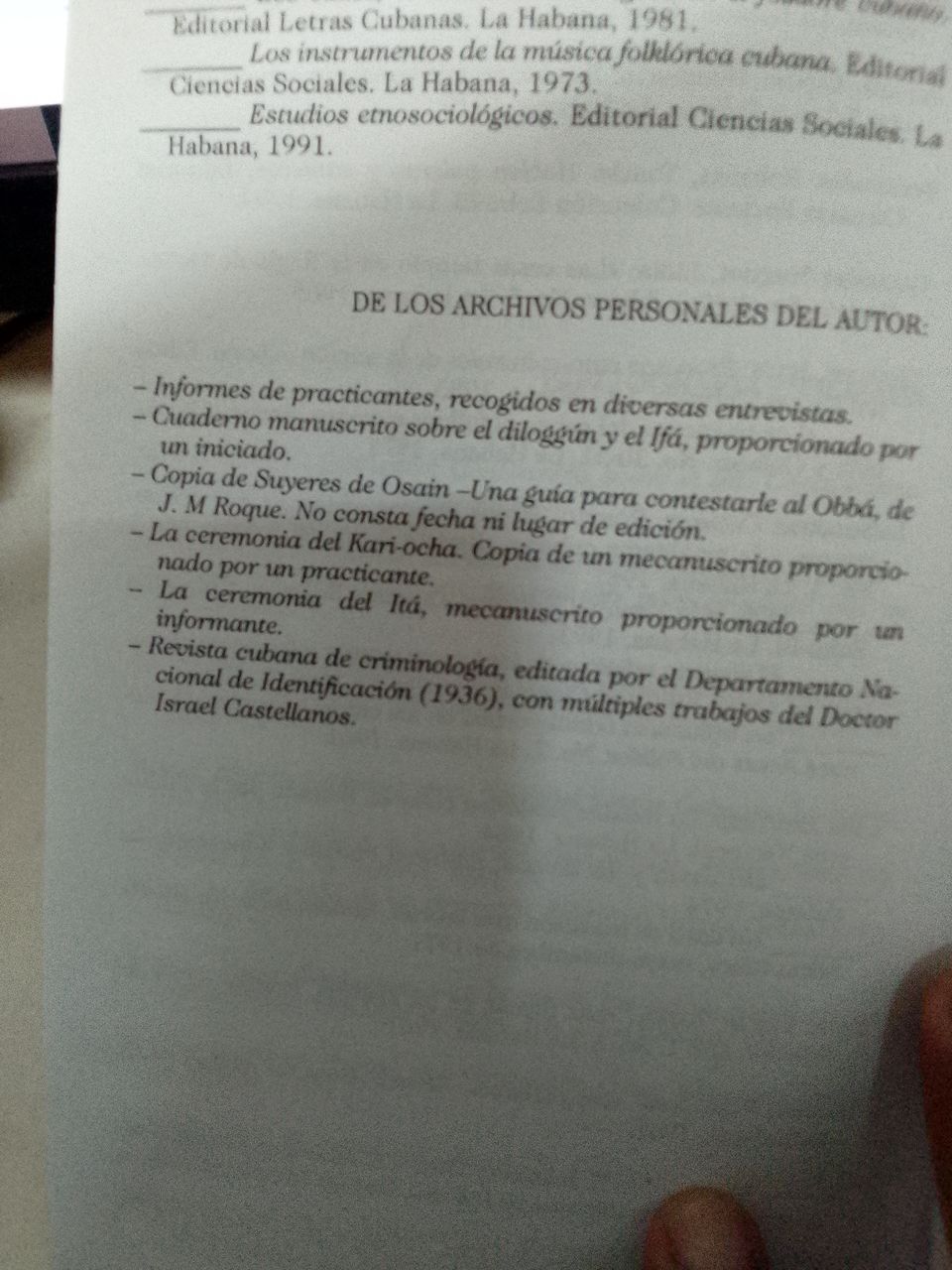
La tarea de recopilar muchos de los conceptos que integran el diccionario requirió consultar más de una treintena de libros y decenas de artículos de una variedad de autores entre los que se pueden mencionar a Don Fernando Ortiz, Rómulo Lachatañeré, Lidia Cabrera, Natalia Bolívar, Miguel Barnet y otros que se aventuraron a investigar y dejar constancia de sus pesquisas de aquellos traídos desde África y de sus descendientes, toda información que luego fue confrontada con varios practicantes para precisar diversos detalles.

El Yoruba, como lengua de la regla de Osha, es amplio en expresiones que se transmitieron de forma oral entre varias generaciones hasta que aparecieron las libretas de santos donde los iniciados copiaban los secretos de sus padrinos.

Este libro no intenta suplir estas libretas, ni la cubanización de las voces, ni la imbricación de los distintos grupos étnicos con sus diferencias fonéticas o ramas de culto, se trata, como su título lo indica, de un muy interesante y útil texto que reúne parte considerable de la diversidad de ritos iniciáticos y propiciatorios, sistemas adivinatorios, tabúes o leyendas vinculados a ese panteón, fruto de una minuciosa labor de búsqueda en un número considerable de libros y documentos y del cotejo de lo encontrado con practicantes, lo cual le aporta un notable valor agregado.

Esta obra, ambiciosa por su alcance, es un paso necesario hacia la sistematización de las voces y términos propios de cada uno de los cultos.
El autor ha logrado reunir el léxico de los practicantes de la santería, el palo monte, los arará, ñáñigos, gangá longota, hiedristas, rastafaris y vuduistas, al plasmar las variantes que en el medio suele tener una palabra o frase ritual.
Sirva, pues, este volumen a creyentes, investigadores y curiosos de una de las raíces principales de la cubanía.

ENGLISH VERSION
Luis Esteban Ramírez Cabrera is a poet, novelist, short story writer, journalist, soldier, and folklore researcher who was a member of UNEAC and the Yoruba Cultural Association of Cuba.
His work has been published in various publishing houses, magazines, and newspapers. Therefore, coming across this book, Diccionario de la Regla de Osha (Dictionary of the Rule of Osha or Santería), in its first edition from 2012 by the publishing house Mecenas, was an excellent resource.
The Regla de Osha, of Yoruba origin, is one of the most widespread religions of African origin in Cuba, with a multitude of rites and divination systems that the author attempts to capture in this book.
The task of compiling many of the concepts that make up the dictionary required consulting more than thirty books and dozens of articles by a variety of authors, including Don Fernando Ortiz, Rómulo Lachatañeré, Lidia Cabrera, Natalia Bolívar, Miguel Barnet, and others who ventured to investigate and record their research on those brought from Africa and their descendants. This information was later compared with various practitioners to clarify various details.
Yoruba, as the language of the Osha rule, is rich in expressions that were transmitted orally through several generations until the appearance of the saints' notebooks where initiates copied the secrets of their godparents.
This book does not attempt to replace these notebooks, nor the Cubanization of the words, nor the interweaving of the different ethnic groups with their phonetic differences or branches of worship. It is, as its title indicates, a very interesting and useful text that brings together a considerable part of the diversity of initiation and propitiatory rites, divinatory systems, taboos, and legends linked to that pantheon. It is the result of painstaking research in a considerable number of books and documents and the comparison of what was found with practitioners, which gives it considerable added value.
This work, ambitious in its scope, is a necessary step toward the systematization of the words and terms specific to each of the cults.
The author has managed to compile the vocabulary of practitioners of Santería, Palo Monte, the Arará, Ñáñigos, Gangá Longota, Hiedrists, Rastafarians, and Voodooists, capturing the variations that a ritual word or phrase often presents in their context.
This volume, then, serves believers, researchers, and those curious about one of the main roots of Cuban identity.
The text is AI-free
The photos were taken with my phone