

Siempre se ha dicho que la pelota es redonda y viene en caja cuadrada. No se si la frase es cierta en su metáfora, pero como cada cubano, o casi todo cubano, he tenido un pelotero dentro de mi. No importa si está en el círculo de espera o ahogando los gritos de los espectadores en el momento más crucial. Lo cierto, es que desde niño, adolescente y joven, siempre busque los terrenos vacíos de la ciudad para poder inaugurar un partido de béisbol.

La calidad del espacio nunca fue importante, lo que define un buen juego es la identidad cultural que nos acompaña y hace el swing de homerun que cierra el tiempo de distracción, alegría, ocio y regocijo, o enciende el deseo de ganar cuando está casi listo el punto de la derrota.

El terreno es solo el lugar donde dejar correr la bola, no ha importado nunca la inexistencia del césped, o los lugares asfaltados, las carreteras que obligan hacer la pausa para dar el permiso a los autos que solicitan la vía o las piedras que en el camino hacen desviar la pelota haciéndote quedar como un novato sin defensas al mejor jugador.


Lo importante del béisbol es saber que forma parte de nuestra cultura, de nuestra identidad y cuando se juega o se disfruta de un partido de tu equipo preferido, sientes que el terreno que pisas es el espacio de todos los estadios del mundo, y en ese instante alucinado, cuando la conexión con el juego te hace sobresaltar, gritar, o sufrir, te das cuenta que formas parte de la historia de un deporte apasionante, un deporte con el cual puede soñar todo adolescente.

Una vez leí en el periódico, que la Doctora cubana Graciela Pogolotti (intelectual Cubana) había escrito: “La animación de la vida cultural concierne a la sociedad”. Creo que no se ha equivocado, porque a ese compuesto sociocultural pertenece el béisbol, deporte que condiciona el estado de animo, crea formas de actuar, pensar y vivir y envuelve, como lo hace en Cuba y en Cienfuegos, los sentimientos de una nación o de una región histórica y cultural como la nuestra, como sello inconfundible de nuestra identidad.


Y en ese sello inconfundible que es tanto pasión e identidad he descubierto que podemos volver a sentirlo a partir del libro publicado por la editorial Reina del mar Los elefantes verdes: el club de béisbol de cienfuegos1926-1961, ensayo histórico de la autoría de la joven periodista y desaparecida físicamente Darilys Reyes Sánchez, quien fuera periodista del periódico 5 de septiembre y redactora de su pagina deportiva.


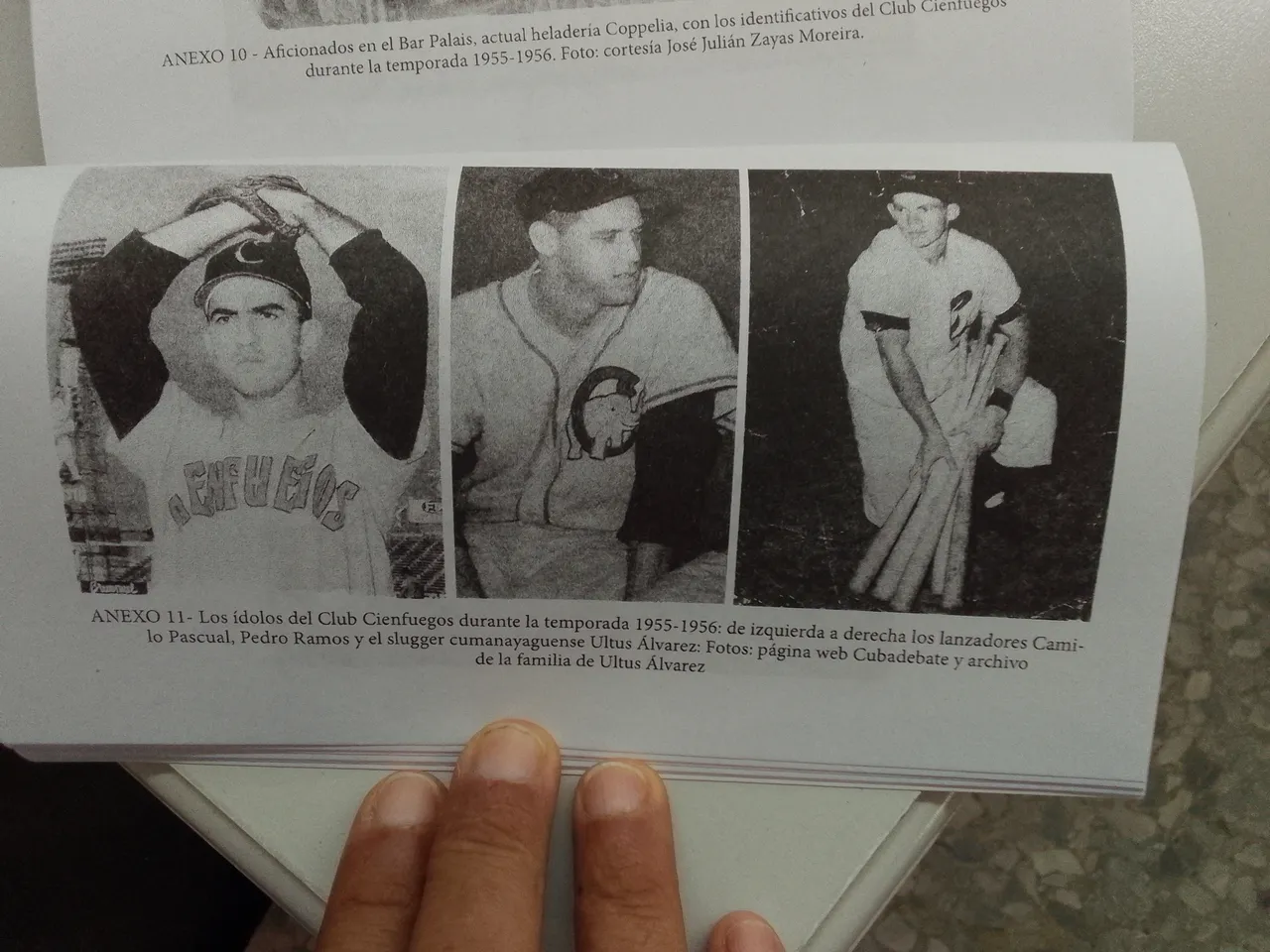
Este es un texto que nos atrapará en un instante de nuestra identidad, el surgimiento del club de los elefantes y sus avatares hasta 1961, además de su participación en series del caribe, el libro se conformó con diversas entrevistas y goza como lo hace la historia de este deporte, de una serie de importantes fotografías de peloteros del club y de incluso el mismísimo bárbaro del ritmo Benny Moré, disfrutando de este equipo.


Los elefantes verdes ha llegado para recuperar esa parte de la historia que sentimos, amamos pero de la que muchos de los que llenan el estadio en una buena temporada de los elefantes actuales, desconocen y que leyendo podrían llenarse de orgullo, con este fragmento de historia construida en un libro que resguarda la memoria de este club o franquicia de paquidermos.



Así es y ha sido, como escribiera José Lezama Lima “La suerte de la esfera voladora”, la suerte de llenar nuestra vida en ese abismo de cosas trascendentes que es el béisbol y que en un partido, la multitud puede hacer convertir a un pelotero en héroe, mártir o el gran villano de la historia. Solo queda regresar al estadio y junto a la multitud, sentir el pelotero que desde niño ha crecido conmigo o contigo, mientras la sangre hierve en cada lanzamiento y el swing que la multitud espera, nace del swing, nace de la conga que percutea con pasión el impulso del bate, en la bola que desaparece detrás de la cerca sabiendo ella misma que no regresara al césped, y que ahora también nace con este libro los elefantes verdes donde quizás se puedan ver reflejados aquellos niños que luego vemos jugando a la pelota y soñando con que este, sea su modo de vida desde este lado del mundo.
ENGLISH VERSION
It's always been said that the ball is round and comes in a square box. I don't know if the phrase is true in its metaphor, but like every Cuban, or almost every Cuban, I've had a baseball player inside me. It doesn't matter if it's in the on-deck circle or drowning out the screams of the spectators at the most crucial moment. The truth is that, ever since I was a child, adolescent, and young adult, I always sought out the city's empty fields to open a baseball game.
The quality of the space was never important; what defines a good game is the cultural identity that accompanies us and makes the homerun swing that closes the time of distraction, joy, leisure, and rejoicing, or ignites the desire to win when the point of defeat is almost ready.
The field is simply the place to let the ball run. The lack of grass, the paved areas, the roads that force you to pause to give way to cars requesting access, or the rocks in the road that deflect the ball, making you look like a rookie without defenses against the best player, have never mattered.
The important thing about baseball is knowing that it is part of our culture, of our identity, and when you play or enjoy a game of your favorite team, you feel that the field you step on is the space of every stadium in the world. And in that hallucinatory moment, when the connection with the game makes you jump, scream, or suffer, you realize that you are part of the history of a fascinating sport, a sport that every teenager can dream of.
I once read in the newspaper that Cuban Doctor Graciela Pogolotti (a Cuban intellectual) had written: "The animation of cultural life concerns society." I think he's not mistaken, because baseball belongs to that sociocultural complex, a sport that shapes our mood, creates ways of acting, thinking, and living, and envelops, as it does in Cuba and Cienfuegos, the feelings of a nation or a historical and cultural region like ours, as an unmistakable seal of our identity.
And in that unmistakable seal that is both passion and identity, I have discovered that we can feel it again through the book published by Reina del Mar, "The Green Elephants: The Cienfuegos Baseball Club 1926-1961," a historical essay by the young journalist and now physically missing Darilys Reyes Sánchez, who was a journalist for the newspaper 5 de septiembre and editor of its sports page.
This is a text that will capture us in a moment of our identity, the emergence of the Elephants club and its ups and downs until 1961, in addition to its participation in the Caribbean Series. The book is comprised of various interviews and, as the history of this sport does, features a series of important photographs of the club's players and even the rhythm master Benny Moré himself, enjoying this team.
The Green Elephants has arrived to recover that part of history we feel, we love, but that many of those who fill the stadium during a good season for the current Elephants are unaware of. Reading it could fill us with pride, with this fragment of history constructed in a book that safeguards the memory of this club or franchise of pachyderms.
This is how it is and has been, as José Lezama Lima wrote in "The Luck of the Flying Sphere," the luck of filling our lives in that abyss of transcendent things that is baseball, and that in a single game, the crowd can turn a player into a hero, a martyr, or the great villain of history. All that's left to do is return to the stadium and, alongside the crowd, feel the baseball player who has grown up with me or with you since childhood, while the blood boils with each pitch and the swing that the crowd awaits, born from the swing, born from the conga line that passionately strikes the impulse of the bat, in the ball that disappears behind the fence, knowing that it will never return to the grass, and that now, with this book, the green elephants are also born, where perhaps those children we later see playing ball and dreaming that this will be their way of life on this side of the world can be reflected.

El texto es libre de IA
Las imagenes de Beisbol fueron tomadas de Pinterest
Las imagenes del libro fueron tomadas por mi teléfono
The text is AI-free
The baseball images were taken from Pinterest
The images in the book were taken with my phone