
Hello friends of #hivebookclub, after a break from the Spiral Collection, I'm back today with another artist featured in it, continuing the challenge I've set for myself, although I'll take some breaks to discuss other interesting books that have made a big impression on me.


The book I'm talking about today, number 26, focuses on the work of Alfredo Juan González Rostgaard, better known by his pseudonym Alfredo Rostgaard, who is a painter, advertising illustrator, graphic designer, and professor.


One of the key aspects the book highlights is that we are dealing with an artist who has made history through posters and graphic design, best known for creating the famous poster that accompanied the Cuban trova movement, the poster for "La Rosa y la Espina" (The Rose and the Thorn), as well as the documentary "Now!".


Alfredo was born in Guantánamo, in what was then the province of Oriente, and graduated from the School of Fine Arts in Santiago de Cuba. His posters have explored diverse social, cultural, and political themes.


It's important to know that the artists in this collection always present us with a kind of walking catalog or exhibition, making art accessible to us, whether through the artist's history or because we haven't had the opportunity to see one of their exhibitions. This is one of the collection's fundamental achievements and purposes.


In Rostgaard's case, it's clear that he developed his own style, blending it with avant-garde movements like Pop Art. This resulted in works with a certain chromatic diversity and highly figurative expressions, always conveying that subliminal message that artists leave us through symbolism, which in this case, he masterfully implemented until his death in 2004 from a malignant tumor.


The first article, “An Approach to Some of His Works,” discusses the technical skill, conceptual agility, and ethical values that the artist managed to embody in his graphic works. These often eclectic works, however, generated thought and new ways of acting, and have now become biographical and ideographic documents of the country's history, film, television, and other fundamental sociocultural events, processes, and phenomena.


Also, as a kind of educator, the book explains the importance of balance in his works, ideal for the proper distribution of the image and its more formal elements. It also emphasizes that the essential element of his work is the use of symbols, which fosters a new way of thinking and raising awareness.


This is therefore an authentic and highly tangible graphic work, introducing new stylistic approaches to the sign-symbol relationship, thus breaking with the codes previously used in the country. His work has become study material for any design or visual arts student, encouraging them to create new aesthetics and to be daring, as art often demands in order to communicate or enhance its capacity to suggest.


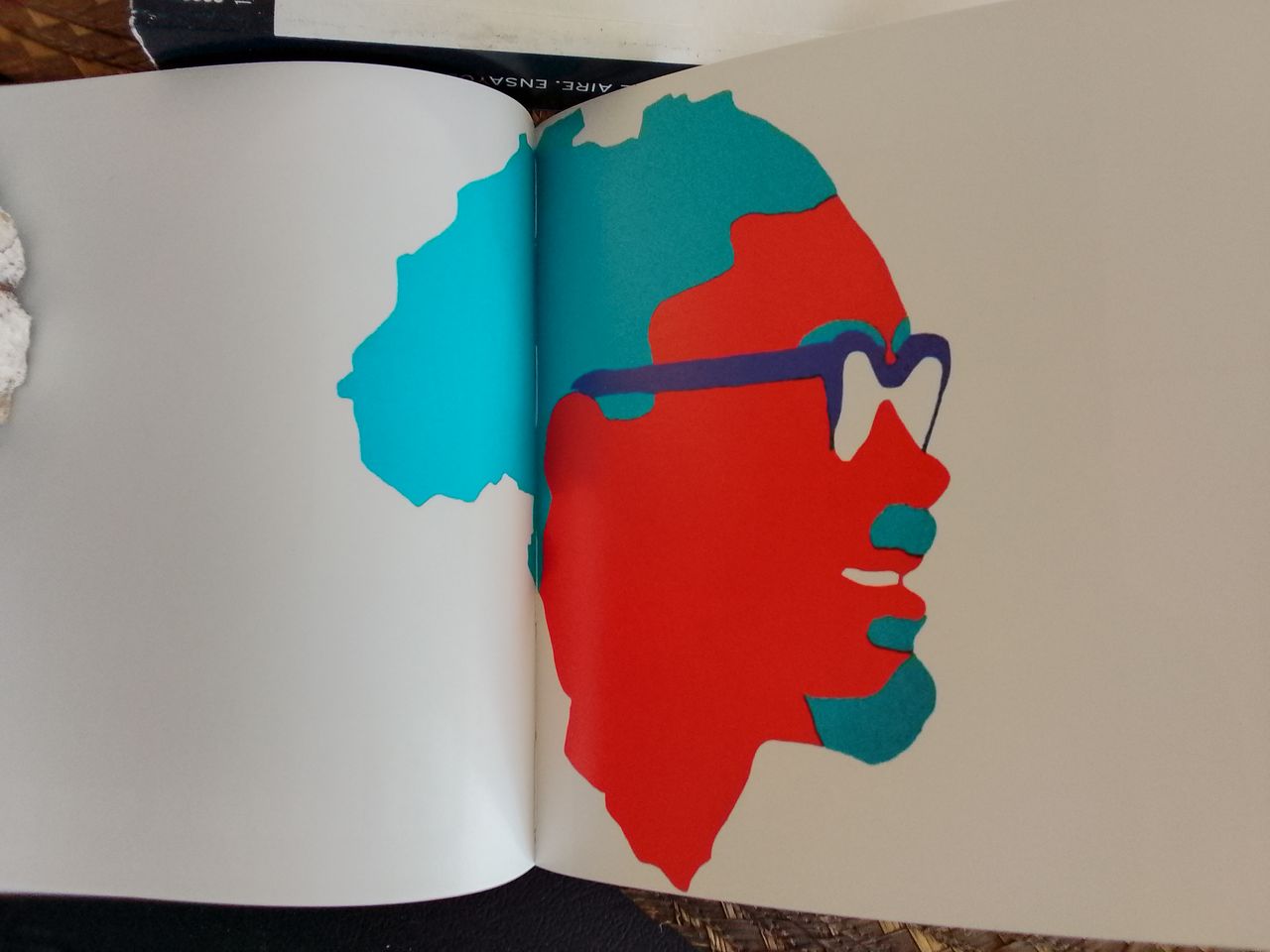


I believe the Espiral Collection made a wise decision in featuring Rostgaard in one of its books, given what he represents. Some of his images have become emblems, not only in Cuba but also around the world. I hope, friends, that we will meet again soon to continue connecting, growing, and writing about the books that impact us. Thank you for stopping by and enjoying the post.


Hola amigos de #hivebookclub, luego de una pausa con la Colección Espiral hoy regreso con otro artista reflejado en la misma, y de esta forma continuar con el reto que me ha impuesto aunque tomaré algunas pausas para seguir conversando sobre otros libros interesantes que han causado en mi una gran sensación.

El libro del que les hablo hoy con el número 26, se vuelca hacia el trabajo de Alfredo Juan González Rostgaard, más conocido por el seudónimo de Alfredo Rostgaard, quien es pintor, dibujante publicitario, diseñador gráfico y profesor.
Uno de los aspectos fundamentales en el que el libro hace referencia es que estamos ante un artista que ha hecho historia a través de los carteles y el diseño gráfico, muy conocido por elaborar el afamado cartel que ha acompañado al movimiento de la trova cubana, el cartel de La Rosa y la espina, así como el documental Now!.
Alfredo nació en Guantánamo, en lo que se denominaba la antigua provincia de Oriente y se graduó de la Escuela de Artes Plásticas de Santiago de Cuba. Sus carteles han sabido ocupar diversas temáticas entre sociales, culturales y políticas.
Es importante saber que los autores de esta colección, siempre nos muestran esa especie de catálogo o exposición andante que facilita que el arte llegue a nuestras manos ya sea por la historia del artista o porque no hemos podido llegar para disfrutar alguna de sus exposiciones y ese es uno de los logros fundamentales y propósitos de la colección.
Para el caso de Rostgaard, queda bien claro que el autor desarrolló un estilo propio que supo mezclarse con algunas vanguardias como el Pop-art, lo que favoreció la aparición de obras con cierta diversidad cromática y expresiones muy figuradas, siempre con ese mensaje subliminal que nos dejan los artistas a través de la simbología, que en este caso, supo implementar con maestría, hasta la llegada de su muerte en 2004, victima de un tumor maligno.
En el primer artículo “Acercamiento a algunas de sus obras” se nos habla de la destreza técnica, la agilidad conceptual y los valores éticos que el artista logró plasmar en sus obras gráficas, muchas veces eclécticas pero generadoras de pensamientos y nuevas formas de actuación y que en la actualidad se han convertido en documentos biográficos e ideo-gráficos de la historia del país, del cine, la televisión y otros hechos, procesos y fenómenos socioculturales fundamentales.
También como especie de educador, en el libro se nos explica la importancia del equilibrio en sus obras, ideal para la adecuada distribución de la imagen y sus elementos más formales, sin obviar que lo esencial en su obra es la utilización de los símbolos, lo que favorece una nueva forma de pensar y concienciar.
Esta es entonces una obra gráfica auténtica y muy tangible, introduciendo nuevas modalidades estilísticas en la relación signo-símbolo por lo que rompe con los códigos que anteriormente se utilizaban en el país, convirtiéndose, su obra, en material de estudio para cualquier estudiante de diseño o de las artes visuales, para lograr crear nuevas estéticas y ser arriesgados en si mismo como muchas veces lo amerita el arte para comunicar o incrementar su capacidad de sugerir.
Creo que la Colección Espiral tuvo una acertada idea al presentar a Rostgaard dentro de uno de sus libros por lo que representa, porque algunas de sus imágenes han llegado a convertirse en emblemas, no solo en Cuba sino también en el resto del mundo. Espero entonces amigos que pronto nos volvamos a encontrar para seguir conectando, creciendo y escribiendo sobre los libros que nos impactan, gracias por pasar y disfrutar del Post.

The text is AI-free, Google translated and proofread by me.
The cover, language separator, and closing text were created in Canva
The photos are my property
El texto es libre de IA, traducido en Google y revisado por mí
La portada, el separador de idiomas y la despedida fueron creados en Canva
Las fotos son de mi propiedad