
"This is a good sign,"
I thought when a message came to me from my daughter, who had stopped speaking to me.
I read the message.
"You have to read this book," she said. "The mother reminds me so much of you."
The book was a memoir, a best seller translated into many languages, a "Tell All" -- the sordid, sad, awful things a child can survive.
Ok. This was not a good sign.
It was a BAD SIGN.

".... a family at once deeply dysfunctional and uniquely vibrant. When sober, Jeannette’s brilliant and charismatic father captured his children’s imagination, teaching them physics, geology, and how to embrace life fearlessly. But when he drank, he was dishonest and destructive. Her mother was a free spirit who abhorred the idea of domesticity and didn’t want the responsibility of raising a family."
The Glass Castle: A Memoir by Jeannette Walls
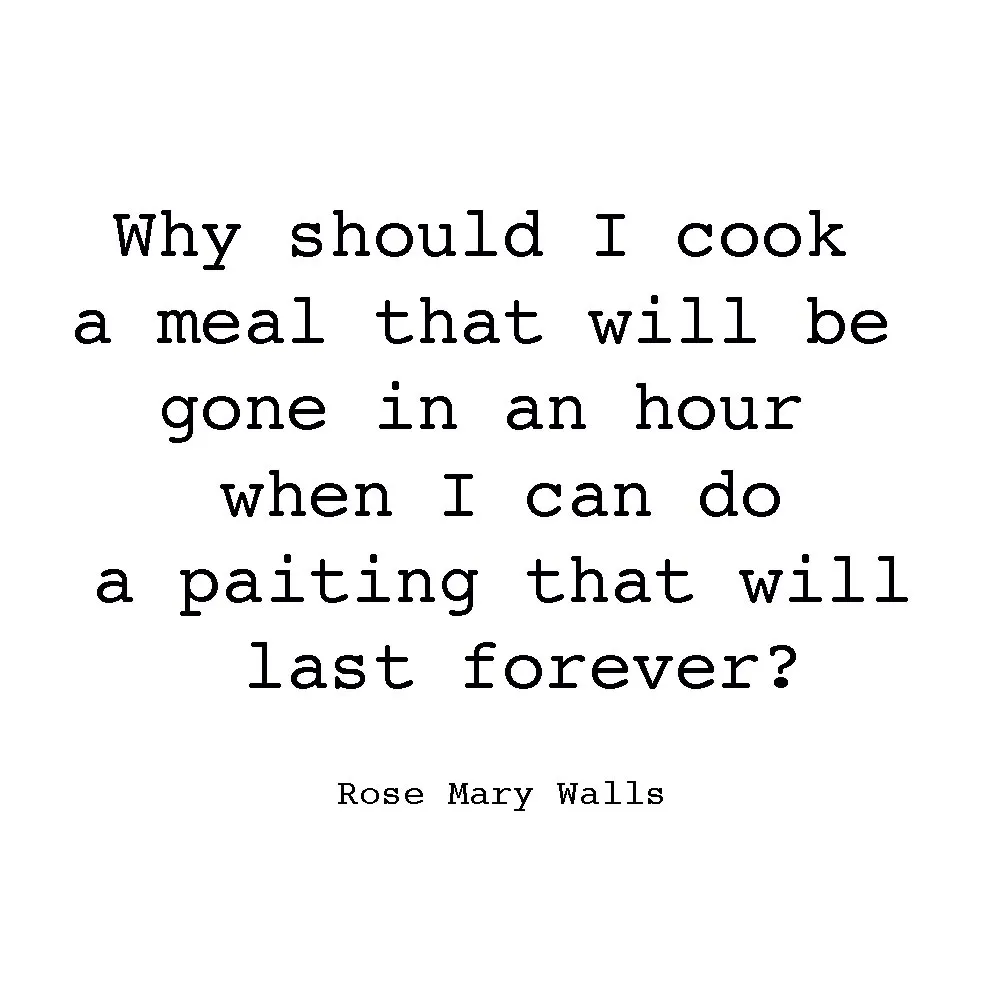
Jeannette Walls grew up with parents whose ideals and stubborn nonconformity were both their curse and their salvation. Rex and Rose Mary Walls had four children. In the beginning, they lived like nomads, moving among Southwest desert towns, camping in the mountains. Rex was a charismatic, brilliant man who, when sober, captured his children's imagination, teaching them physics, geology, and above all, how to embrace life fearlessly. Rose Mary, who painted and wrote and couldn't stand the responsibility of providing for her family, called herself an "excitement addict." Cooking a meal that would be consumed in fifteen minutes had no appeal when she could make a painting that might last forever.
Later, when the money ran out, or the romance of the wandering life faded, the Walls retreated to the dismal West Virginia mining town -- and the family -- Rex Walls had done everything he could to escape. He drank. He stole the grocery money and disappeared for days. As the dysfunction of the family escalated, Jeannette and her brother and sisters had to fend for themselves, supporting one another as they weathered their parents' betrayals and, finally, found the resources and will to leave home.
What is so astonishing about Jeannette Walls is not just that she had the guts and tenacity and intelligence to get out, but that she describes her parents with such deep affection and generosity. Hers is a story of triumph against all odds, but also a tender, moving tale of unconditional love in a family that despite its profound flaws gave her the fiery determination to carve out a successful life on her own terms.
First, I looked for the good things. Mary Walls is a free spirit, zany, imaginative, never dull.
But. She's an artist who takes her work very seriously. Sadly, she her career is derailed by having to care for her four children. In one scene, she has collapsed on the sofa, sobbing, because the inconvenience of all these kids wanting her time and attention has kept her from her artistic endeavors.
The father is a real piece of work. Brilliant man, but tormented by demons (it seems he was molested by his own mother and is in denial about it but damaged, psychologically).
The horrible neglect! Oh, there were good scenes and happy memories, and books, lots of books. The kids were as brilliant as their parents. Their parents didn't provide food, but they provided stories and knowledge and lots of library books. Dirt-poor, underfed, under-estimated by new teachers, these kids were exceptional!
Jeanette Walls became a best selling author!
Here's the thing:
However awful these parents were, Jeanette forgave them.
She loved them. Unconditionally.
The kids would work and earn money for groceries. Rex Walls would steal money from his own children and get drunk.
Jeanette's sister, the oldest child, moved to New York as a teenager, living in the city, on her own.
Jeanette left home early and moved in with her sister and soon began earning a paycheck too. Something their father could never sustain for long. Their mom would get work, but the dad would blow her paychecks on drink, not food or adequate housing for the kids, who at one point live in a house with no indoor plumbing, no shower, no toilet - and this goes on for a long time, in the 1970s, in a time when it was unthinkable to live like this.
[Both grandmothers are alive, and financially secure, but they do not help. Rex Walls will just blow any money they offer as support, so they let the four kids suffer all kinds of neglect.]
Each of the siblings, one by one, moved to New York to escape the unstable home life with their parents. The youngest was not even an adolescent when they took him in, too.
What did the parents do?
They found their way to New York and tried to move in with the kids who were trying to escape them.
The parents were homeless, Dumpster-diving derelicts.
When I closed the book, I searched online for more information about the family. The awful mother? After so many years, Jeanette took her in. She and her partner lived in a house with enough land for a separate cottage for her mom to live in. Her mom died with this daughter close at hand, caring for her, despite all the ways her mom had failed to care for her children.
What an act of forgiveness and mercy.
Months ago, I started a review of this book, right here at Hive, intending to post in the books community. I could not get any farther than this:
How can anyone's memoir be of such interest to anyone, it makes the New York Times Best Seller list - for 260 weeks?
Published in 2005, "The Glass Castle" also became a movie starring Brie Larson, Naomi Watts, and Woody Harrelson.
Of all the memorable and quotable lines in the book - this one, for example -
This is the one that really stayed with me:
"You know, it's really not that hard to put food on the table if that's what you decide to do,"
says the brother.
"Now, no recriminations," says the eldest of the four.
Today, 2-January 2024, I will keep going with this review.
One thing I can say of my own childhood: the food was good. We never went hungry.
We may have hungered for our dad's esteem, craved his praise, longed for his approval - but the food was good!
Unlike the Walls family, we were rooted to one place, a rural community where generations had held onto the home place and some had "Century Farm" signs posted at their driveways.
We all have our stories. The stories that make up our life. Some of us dwell on the "bad" things, while others remember only the good times.
Most of us romanticize the past.
Where exactly on this scale Jeannette Walls' story falls is debatable, but the facts are that her life story is the foundation for a best-selling book and now a high-profile movie.
The Christmas chapter is famous for the father who had no money to buy presents for the kids, so he took each one out under the night sky, one-on-one, and told them to pick out a star, and it would be their own, and this gift would last forever, long after all the other kids had their toys worn out and broken.
source: collegemoviereview.com

source: https://thehousethatlarsbuilt.com/

Way to put a positive spin on it!
Scene after scene in this novel is harrowing and heartbreaking.
These kids turned out well, except the youngest, who became a drug addict. (By now, I trust she is in recovery. I haven't searched online.)

Study Guide: The Glass Castle by Jeannette Walls (SuperSummary)
FOOD is a whole other topic.
Like my own mom and my dad's mother, I made sure our kids were well fed.
Cooking, baking, inviting friends over for dinner, creating favorite recipes - this is an art, as worthy an art as painting some landscape or writing a story.
Even though I had aspirations as a novelist and artist, I put the kids first, always, and put my own interests last. It's what mothers do, right? All too soon, they grow up and leave home.

I really cannot dwell on this another minute.
Some parents can be truly awful, yet their kids forgive them and love them unconditionally.
#Forgiveness and #Reconcilation are topics for another day.
photo source: 'The Glass Castle' Author Jeannette Walls On Reconciling with Her Once-Homeless Mother

Thank you 
2 January 2025, @mariannewest's Freewrite Writing Prompt Day 2605: bad sign
Good sign: she's speaking to me! Bad sign: what she's saying is worse than the Radio Silence.