
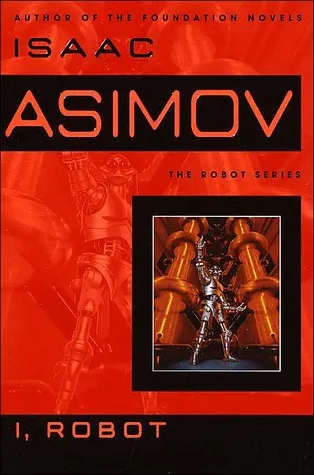
Yo, robot es un libro de cuentos escrito por Isaac Asimov. En él, el escritor y científico formuló las famosas leyes de la robótica, que aplican a su universo de ficción, pero también al mundo real. Son cuentos divertidos, con algo de humor pero que no deja de mostrar las posibilidades que ofrece el uso de estas máquinas en la vida diaria y en los avances de la ciencia.

Cuando pensamos en Asimov, pensamos en un visionario que nos dejó su propia perspectiva de lo que sería el futuro. Asimov, imagina, intuye y recrea un futuro donde los robots está al servicio de la humanidad y que, gracias a las tres leyes de la robótica, no pueden hacer daño a ningún ser humano. Sin embargo, en estos cuentos se plantean cuestiones morales que afectan dichas leyes.
Reseña
Para empezar, “un robot no debe dañar a un ser humano o, por su inacción, dejar que un ser humano sufra daño”; “Un robot debe obedecer las órdenes que le son dadas por un ser humano, excepto cuando estas órdenes están en oposición con la primera ley”; y, “un robot debe proteger su propia existencia, hasta donde esta protección no esté en conflicto con la primera o segunda ley”.
Así comienza el libro, y la introducción viene a ser la excusa perfecta para introducirnos a los cuentos, o relatos, que la doctora Susan Calvin le cuenta a un periodista. La doctora Calvin es especialista en psicología robótica, y es una de las personas que más conocimientos tiene sobre el comportamiento de los robots. Es la misma doctora que, en una serie de entrevistas, va construyendo la narración del libro, trayendo a colación a dos personajes que son figuras importantes para la “U.S. Robots & Mechanical Men, Inc.”, y estos son: Gregory Powell y Mike Donovan, quienes son ingenieros y que, debido a su experiencia en el campo de la robótica, son los encargados de probar los robots, viviendo situaciones insólitas.

El libro se compone de 9 relatos, y no hablaré de todos, más bien destacaré aquellos que más llamaron mi atención. Sin embargo, debo acotar que todos los cuentos son muy buenos y que vale la pena leerlos con detenimiento.
En el cuento “Sentido giratorio”, ambos expertos se encuentran en Mercurio, planeta que es descrito como el propio infierno. Allí surge un problema con un robot nuevo que estaban usando para extraer selenio. Al parecer, el robot se pierde. Luego de deliberaciones y de buscar la manera de recuperarlo, deciden emplear los robots que quedaron de la expedición anterior.
Aquí comienza el dilema moral con las tres leyes de la robótica, porque teniendo en cuenta que el planeta es muy caliente, con los trajes especiales que tenían podían sobrevivir solo 20 minutos. Por eso, al ir a buscar al robot perdido, y poner en riesgo sus vidas, y teniendo en cuenta que un robot debe salvar la vida de un ser humano, los robots que los llevaron quisieron ponerlos a salvo; pero los hombres se las ingeniaron para inducir a Speedy a salvarlos, ya que el robot tenía que cumplir con las leyes ya conocidas. Ahora, el dilema que presenta el relato es cómo inducir al robot a cumplir con su deber, sin exponer la vida de cada uno y la existencia del propio robot, puesto que el mismo robot se encuentra en su propio dilema con dichas leyes.
El siguiente relato es “¡Embustero!” y trata de un robot que puede leer la mente. La propia doctora Calvin es protagonista en esta historia, a quien le encargan averiguar por qué el robot en cuestión lee el pensamiento.
El conflicto está en que el robot hace que los personajes se dejen llevar por sus propias emociones y ambiciones, creando un dilema interno en ellos y una especie de contradicción en las tres leyes de la robótica, porque si bien un robot no puede dañar físicamente a un ser humano, en este caso, tiene la capacidad de lastimarlos emocionalmente.

Así, el dilema está en cómo les afecta que un robot con la capacidad de leer la mente puede usar esta habilidad para manipular a los seres humanos, diciéndoles lo que estos quieren escuchar, y al mismo tiempo, no interferir con las leyes que debe cumplir.
El penúltimo cuento de la serie, titulado "La prueba", va de un hombre que es investigado porque supuestamente es un robot. En este relato se nos muestra cómo los intereses políticos mueven a las sociedades para protegerlos y sacarles el mayor provecho; en este caso, se trata de investigar a un candidato porque es acusado de ser un robot.
Últimas consideraciones
Yo, robot es un libro que nos muestra el lado positivo del uso de Robots. Asimov estaba en contra de las consideraciones apocalípticas o destructivas que supondría utilizar este tipo de tecnología. Si pensamos en historias de robots, tanto en el cine como en la literatura, podemos ver cómo el imaginario colectivo se enfoca hacia el aspecto negativo, desde películas como Terminator o Robocop; y no hablemos de la que lleva el mismo título del libro.
Porque la película nos muestra una visión diferente a la que propone Asimov en este libro. Es cierto que los robots, y las IA (Inteligencias Artificiales) están en pleno desarrollo, y todavía queda mucho camino por descubrir y mejorar en cuanto a tecnología; pero el futuro, en este sentido, es indeterminado.

¿Llegará a ser dominada la sociedad humana por este tipo de Inteligencias, o seguirán bajo nuestro control? Por otro lado, el uso de esta tecnología también genera cierto dilema en cuanto al aspecto moral: ¿tienen derechos los robots? ¿Deben ser considerados como seres “pensantes”, tal como los seres humanos? ¿Deben ser respetados y no ser convertidos en esclavos? (es curioso que la palabra robot, que proviene del checo, significa trabajo forzado).
Hay un largo camino por recorrer, y mientas más nos adentramos en el futuro, el presente pareciera quedarse algo obsoleto. Mientras, esperemos a ver hasta dónde nos llevan los adelantos tecnológicos: hacia un apocalipsis robótico o un futuro donde la tecnología esté al servicio de la Humanidad.
English version
I, Robot is a book of short stories written by Isaac Asimov. In it, the writer and scientist formulated the famous laws of robotics, which apply to his fictional universe, but also to the real world. They are funny stories, with some humor but that do not fail to show the possibilities offered by the use of these machines in everyday life and in the progress of science.
When we think of Asimov, we think of a visionary who left us his own perspective of what the future would be. Asimov imagines, intuits and recreates a future where robots are at the service of humanity and, thanks to the three laws of robotics, cannot harm any human being. However, these stories raise moral questions that affect these laws.
Review
To begin with, "a robot must not harm a human being or, by its inaction, let a human being come to harm"; "A robot must obey orders given to it by a human being, except when these orders are in opposition to the first law"; and, "a robot must protect its own existence, to the extent that this protection does not conflict with the first or second law."
So begins the book, and the introduction is the perfect excuse to introduce us to the tales, or stories, that Dr. Susan Calvin tells a journalist. Dr. Calvin is a specialist in robotic psychology, and is one of the most knowledgeable people about robot behavior. It is the same doctor who, in a series of interviews, builds the narrative of the book, bringing up two characters who are important figures for the "U.S. Robots & Mechanical Men, Inc.", and these are: Gregory Powell and Mike Donovan, who are engineers and who, due to their experience in the field of robotics, are in charge of testing the robots, living unusual situations.
The book is made up of 9 stories, and I will not talk about all of them, but rather highlight those that caught my attention the most. However, I must point out that all the stories are very good and worth reading carefully.

In the story "Revolving Sense", both experts are on Mercury, a planet that is described as hell itself. There, a problem arises with a new robot they were using to extract selenium. Apparently, the robot gets lost. After some deliberation and searching for a way to retrieve it, they decide to use the robots left over from the previous expedition.
Here begins the moral dilemma with the three laws of robotics, because taking into account that the planet is very hot, with the special suits they had they could survive only 20 minutes. Therefore, when they went to look for the lost robot, and put their lives at risk, and taking into account that a robot must save the life of a human being, the robots that took them wanted to put them to safety; but the men managed to induce Speedy to save them, since the robot had to comply with the already known laws. Now, the dilemma presented by the story is how to induce the robot to do its duty, without exposing the life of each one and the existence of the robot itself, since the robot itself is in its own dilemma with such laws.
The next story is "Ambusher!" and deals with a robot that can read minds. Dr. Calvin herself is a protagonist in this story, who is tasked with figuring out why the robot in question reads thought. The conflict lies in the fact that the robot makes the characters get carried away by their own emotions and ambitions, creating an internal conflict in them and a kind of contradiction in the three laws of robotics, because while a robot cannot physically harm a human being, in this case, it has the ability to hurt them emotionally.
Thus, the dilemma is how it affects them that a robot with the ability to read minds can use this ability to manipulate humans, telling them what they want to hear, and at the same time, not interfere with the laws it must comply with.
The penultimate story in the series, entitled "The Test," is about a man who is investigated because he is supposedly a robot. In this story we are shown how political interests move societies to protect them and make the most of them; in this case, it is about investigating a candidate because he is accused of being a robot.
Final Thoughts
*I, Robot is a book that shows us the positive side of the use of Robots. Asimov was against the apocalyptic or destructive considerations of using this type of technology. If we think of robot stories, both in cinema and literature, we can see how the collective imaginary is focused towards the negative aspect, from movies like Terminator or Robocop; and let's not talk about the one with the same title of the book.
Because the film shows us a different vision from the one proposed by Asimov in this book. It is true that robots and AI (Artificial Intelligences) are in full development, and there is still a long way to go to discover and improve technology; but the future, in this sense, is undetermined.
Will human society be dominated by this type of intelligence, or will they remain under our control? On the other hand, the use of this technology also generates a certain dilemma regarding the moral aspect: do robots have rights, should they be considered as "thinking" beings, just like human beings, should they be respected and not turned into slaves (it is curious that the word robot, which comes from Czech, means forced labor), and should they be respected and not turned into slaves (it is curious that the word robot, which comes from Czech, means forced labor).
There is a long way to go, and the further we go into the future, the more the present seems to become obsolete. In the meantime, let's wait and see where technological advances will take us: towards a robotic apocalypse or a future where technology is at the service of humanity.
Translated with www.DeepL.com/Translator (free version)