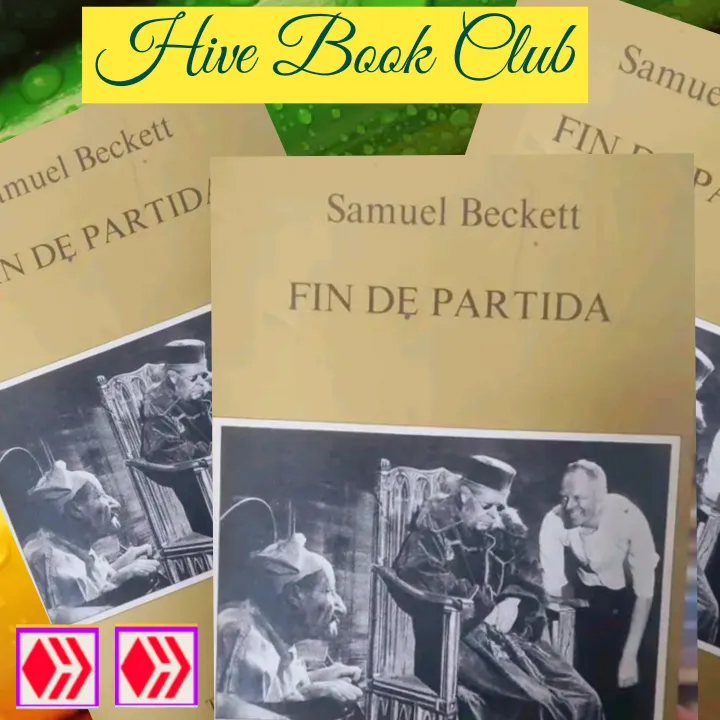

En la sala de teatro El Cabildo en Santiago de Cuba, hace ya unos años, vi por primera vez una obra de Samuel Beckett y me gustó tanto que corrí a buscar sus libros. Esperando a Godoy, se llama la pieza.
Ahora te hablaré de Final de partida y tal vez en otra ocasión vuelva a hablar sobre Samuel Beckett, un imprescindible.
Lo que me impactó de Final de partida fue su atmósfera claustrofóbica. Beckett construye un microcosmos donde la existencia se ha reducido a su expresión mínima y repetitiva.
Hamm y Clov, atrapados en su simbiosis de dependencia y resentimiento, me parecieron la representación más cruda de las relaciones humanas cuando solo queda la costumbre y el hábito de existir juntos.
En la sinopsis descubrimos un espacio claustrofóbico, donde Hamm, un amo ciego e inmóvil, y su sirviente Clov, quien no puede sentarse, llevan una existencia repetitiva y de mutua dependencia.
Nagg y Nell, los padres de Hamm, seres sin piernas, viven en cubos de basura. Ahí la obra explora la infelicidad y la mezcla con el humor absurdo.
Beckett tan genio en su escitura r logra que esta situación, en apariencia estática y desesperanzadora, esté cargada de un humor negro y una tensión que te mantiene en vilo.
La imposibilidad física de Clov para sentarse y de Hamm para ponerse de pie se convierte en una potente metáfora de nuestra propia condición: todos cargamos con limitaciones que nos definen, que nos atan.
La relación entre Hamm y Clov me hizo reflexionar sobre la naturaleza del poder y la sumisión. Beckett parece decir: "tanto el que manda como el que obedece son prisioneros del mismo juego".
El título del libro alude no solo a la partida de ajedrez a la que se juega entre ellos, sino a la vida misma, donde a menudo seguimos moviendo piezas por inercia, incluso cuando sabemos que el desenlace está decidido.
Los padres aportan una visión de melancolía conmovedora y los recuerdos, como el paseo en tándem por Las Ardenas, parecen destellos de una humanidad y una felicidad que ya no están.
Aunque Beckett rechazaba las interpretaciones alegóricas, no pude evitar leer la obra como un eco de la Europa devastada tras la Segunda Guerra Mundial.
Esa sensación de vivir en un búnker, con los recursos escaseando y un mundo exterior que quizás ya no existe, vuelve con una fuerza aterradora.
La posible visión del niño al final, tan debatida, es como un símbolo de esperanza, o como la perturbadora llegada de lo desconocido a un sistema cerrado y estancado.
Final de partida no es una obra que se "disfrute" en el sentido convencional. Es una experiencia que se admira.
En Beckett no hat respuestas ni consuelos, sino un reflejo , una búsqueda implacable de nuestra propia condición: lo absurdo de la existencia cuando el significado se ha ido, y la terrible, cómica y patética necesidad que tenemos los unos de los otros para sobrellevar el vacío.
Es esa mezcla de desolación y humor, de precisión lingüística y desesperanza existencial, lo que me atrae de Beckett.
EN ENGLISH
Samuel Beckett: Endgame | MARABUZAL REVIEW (SPANISH-ENG)
In the El Cabildo theater in Santiago de Cuba, a few years ago, I saw a play by Samuel Beckett for the first time, and I liked it so much that I rushed to find his books. The play was called Waiting for Godoy.
Now I'll tell you about Endgame, and perhaps another time I'll talk about Samuel Beckett again—an essential figure.
What struck me about Endgame was its claustrophobic atmosphere. Beckett constructs a microcosm where existence has been reduced to its minimal and repetitive expression.
Hamm and Clov, trapped in their symbiosis of dependence and resentment, seemed to me the rawest representation of human relationships when only custom and habit remain of existing together.
In the synopsis, we discover a claustrophobic space where Hamm, a blind and immobile master, and his servant Clov, who cannot sit down, lead a repetitive and mutually dependent existence.
Nagg and Nell, Hamm's parents, who are legless, live in garbage cans. There, the play explores unhappiness and blends it with absurdist humor.
Beckett, such a genius in his writing, manages to imbue this seemingly static and hopeless situation with a dark humor and a tension that keeps you on the edge of your seat.
Clov's physical inability to sit and Hamm's to stand become a powerful metaphor for our own condition: we all carry limitations that define us, that bind us.
The relationship between Hamm and Clov made me reflect on the nature of power and submission. Beckett seems to be saying: "both the one who commands and the one who obeys are prisoners of the same game."
The book's title alludes not only to the chess game they play, but to life itself, where we often continue moving pieces out of inertia, even when we know the outcome is already decided.
The parents offer a poignantly melancholic perspective, and the memories, like the tandem bike ride through the Ardennes, seem like glimpses of a humanity and happiness that are no longer there.
Although Beckett rejected allegorical interpretations, I couldn't help but read the play as an echo of a Europe devastated after the Second World War.
That feeling of living in a bunker, with dwindling resources and an outside world that perhaps no longer exists, returns with terrifying force.
The child's possible vision at the end, so debated, is like a symbol of hope, or like the unsettling arrival of the unknown into a closed and stagnant system.
Endgame is not a play to be "enjoyed" in the conventional sense. It is an experience to be admired.
In Beckett there are no answers or consolations, but rather a reflection, a relentless search for our own condition: the absurdity of existence when meaning is gone, and the terrible, comical, and pathetic need we have for one another to cope with the void.
It is this mixture of desolation and humor, of linguistic precision and existential hopelessness, that draws me to Beckett.
🎭 Traducción en Google
Imagen de mi propiedad. Composición en Banner Maker
Algunos de mis libros publicados son: Convite de Cenizas (2002), Tras la piel (2004), En este lado de la muerte (2014), El orden natural de las cosas (2015), La Sangre del Marabú (2020), La Sexta Caballería de Kansas (2024) y La Nada Infinita (2024)