
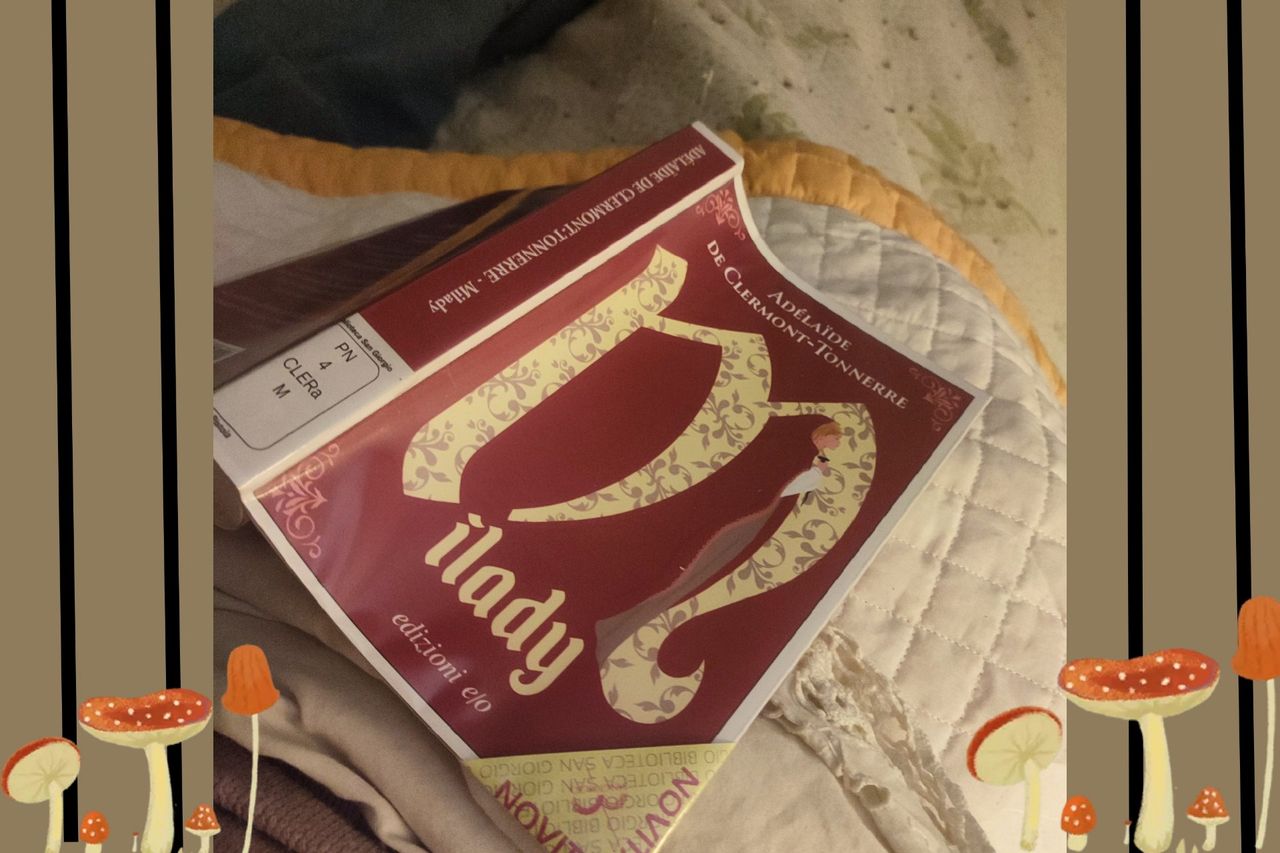
Happy Sunday, blog friends! Here I am to review another book. How many of you know the Three Musketeers? I think we all do, idealizing the characters and loving each one, but who among us knows the female figure that binds them? A female character often depicted poorly: treacherous, treacherous, seductive Milady. This novel revisits the Three Musketeers in a feminist way, reversing the narrative and making the musketeers appear as men and not as ideals, not always noble men. With this novel, the author wanted to give voice to one of the most hated female characters in French literature, but here Milady has a new life, a new narrative. After the tragic death of her parents and nurse, Milady is taken in by a friar who raises her with affection and love as his own daughter, instructing her in the skills of healing and herbalism. However, her traumatic childhood continues to torment her, as does her female status, which forces her not to indulge too much in swords, horses, or other hobbies considered masculine. Milady changes her identity and goes to a convent, where her rebellious nature immediately emerges. She is a beautiful and intelligent child, two qualities that are extremely dangerous, and in the convent they try to suppress these aspects of her.
But Milady rebels, reads books she shouldn't read, manages to gain the favor of some people who allow her entertainment unsuitable for a young lady, and above all, at a certain point, she falls in love with the wrong man, a man promised to God but also possessed by lust, captivated by Milady, who takes her away from the places of her childhood to hide her in a life of sin. But he himself cannot tolerate Milady's independent nature, and she will have to reinvent herself and find love again—an all-encompassing, passionate, unique love for a man called a nobleman, later known as Athos. But Milady bears the marks of her infamy on her body, a branding that makes her never show her naked body to the love of her life. A love that ends in a marriage that is based on lies because Milady pretended to be someone else, ended up surviving her virginity using subterfuge and hiding the terrible secret of the brand on her body.
¡Feliz domingo, amigos del blog! Aquí estoy para reseñar otro libro. ¿Cuántos de ustedes conocen a Los Tres Mosqueteros? Creo que todos, idealizando a los personajes y amándolos a cada uno, pero ¿quién de nosotros conoce a la figura femenina que los une? Un personaje femenino a menudo mal representado: la traicionera, seductora y traicionera Milady. Esta novela revisita a Los Tres Mosqueteros de una manera feminista, invirtiendo la narrativa y haciendo que los mosqueteros aparezcan como hombres y no como ideales, no siempre hombres nobles. Con esta novela, la autora quiso dar voz a uno de los personajes femeninos más odiados de la literatura francesa, pero aquí Milady tiene una nueva vida, una nueva narrativa. Tras la trágica muerte de sus padres y su nodriza, Milady es acogida por un fraile que la cría con cariño y amor como a su propia hija, instruyéndola en las habilidades de la curación y la herboristería. Sin embargo, su infancia traumática continúa atormentándola, al igual que su condición de mujer, que la obliga a no entregarse demasiado a las espadas, los caballos u otros pasatiempos considerados masculinos. Milady cambia de identidad y entra en un convento, donde su naturaleza rebelde aflora de inmediato. Es una niña hermosa e inteligente, dos cualidades extremadamente peligrosas, y en el convento intentan reprimir estos aspectos de ella. Pero Milady se rebela, lee libros que no debería leer, logra ganarse el favor de algunas personas que le permiten un entretenimiento impropio de una señorita y, sobre todo, en cierto momento, se enamora del hombre equivocado, un hombre consagrado a Dios pero también dominado por la lujuria, cautivado por Milady, quien la aleja de los lugares de su infancia para sumergirla en una vida de pecado.
Pero él mismo no puede tolerar la independencia de Milady, y ella tendrá que reinventarse y encontrar el amor de nuevo: un amor apasionado, único y profundo por un hombre llamado noble, más tarde conocido como Athos. Pero Milady lleva las marcas de su infamia en el cuerpo, una marca que le impide mostrar jamás su cuerpo desnudo al amor de su vida. Un amor que termina en un matrimonio basado en mentiras porque Milady fingió ser otra persona, y acabó sobreviviendo a su virginidad usando subterfugios y ocultando el terrible secreto de la marca en su cuerpo.


Every man Milady has met so far adores her but tries to change her. Her temperament, her beauty, and her intelligence are seen as a threat, and even Athos suffers from unparalleled jealousy. Fortunately, Milady manages to befriend her sister-in-law, a woman who appreciates her intelligence, but this love too will end tragically. Meanwhile, in another era, Milady's trial will be held, where many men who loved, desired, and exploited her condemn her to death. This book, however, retraces the woman's past, revealing how she became "bad," though that's not the right word. Throughout the book, we understand how difficult it is to be a beautiful, intelligent, and curious woman in an era when it's better to be quiet, unattractive, humble, and devout. Milady has suffered all her life at the hands of men ever since they killed her mother. She plots revenge, but also feels love for men who ultimately don't understand her, who want to possess her, tame her, and, failing to do so, accuse her of being a witch, a demon, a seductive witch rather than admit their unbridled lust.
It's always the woman's fault. Milady reveals herself as a strong female character, independent yet cunning, because cunning is the only way to survive in a world ruled by men. But at a certain point, there is one person who doubts herself, D'Artagnan, who begins to wonder who this woman they condemned really was, if she was truly evil, and begins to delve into her history and realize that perhaps Milady isn't the villain of the story. A very interesting book with various points of view, well-written, with a reversal of characters and a different take on one of literature's classic villains, a female perspective on a controversial character in an equally controversial time. I highly recommend it if you love strong, independent female protagonists and novels that blend history and literature. A literary debut appreciated by many.
Todos los hombres que Milady ha conocido hasta ahora la adoran, pero intentan cambiarla. Su temperamento, su belleza y su inteligencia son vistos como una amenaza, e incluso Athos sufre de celos desmedidos. Afortunadamente, Milady logra entablar amistad con su cuñada, una mujer que aprecia su inteligencia, pero este amor también tendrá un final trágico. Mientras tanto, en otra época, se celebrará el juicio de Milady, donde muchos hombres que la amaron, la desearon y la explotaron la condenarán a muerte. Este libro, sin embargo, reconstruye el pasado de la mujer, revelando cómo se volvió "mala", aunque esa no sea la palabra adecuada. A lo largo del libro, comprendemos lo difícil que es ser una mujer bella, inteligente y curiosa en una época en la que es mejor ser callada, poco atractiva, humilde y devota. Milady ha sufrido toda su vida a manos de los hombres desde que mataron a su madre. Ella trama venganza, pero también siente amor por hombres que, en última instancia, no la comprenden, que desean poseerla, domarla y, al no lograrlo, la acusan de ser una bruja, un demonio, una bruja seductora en lugar de admitir su lujuria desenfrenada. Siempre es culpa de la mujer. Milady se revela como un personaje femenino fuerte, independiente pero astuta, porque la astucia es la única forma de sobrevivir en un mundo dominado por hombres.
Pero en cierto punto, hay una persona que duda de sí misma, D'Artagnan, quien comienza a preguntarse quién era realmente esta mujer a la que condenaron, si era verdaderamente malvada, y comienza a indagar en su historia y a darse cuenta de que tal vez Milady no sea la villana de la historia. Un libro muy interesante con varios puntos de vista, bien escrito, con una inversión de personajes y una perspectiva diferente de uno de los villanos clásicos de la literatura, una visión femenina de un personaje controvertido en una época igualmente controvertida. Lo recomiendo encarecidamente si te gustan las protagonistas femeninas fuertes e independientes y las novelas que combinan historia y literatura. Un debut literario apreciado por muchos.


First picture edited by my phone translation with deepl