

African literature
I have read more African literature in the past two years. Literature including Chinua Achebe’s Things Fall Apart, Ngũgĩ wa Thiong'o’s A Grain of Wheat, J.M. Coetzee’s Age of Iron and much more. Purple Hibiscus by Chimamanda Ngozi Adichie, has become one of my favourite books that fall under African Literature. The story and the characters are exquisite. I even wrote my exam paper on this novel. There may be spoilers ahead, if you want to read the book for yourself please read this post at another time.
Structure
The book is structured in different times and it is set around "Palm Sunday". The first part is "Palm Sunday" which are then followed by "Before Palm Sunday", "After Palm Sunday" and it ends with the present. It is a different structure and it does not follow the usual plot of Exposition, Rising Action, and Climax. Rather, the novel opens with a climax then it is followed by the exposition and the rising action leading up to this climax. The novel’s plot makes a zigzag shape and it may seem complex, but when reading it the execution of this is done really well.

Religion and colonialism
When reading this novel, one should read it against the history of Nigeria. It is in a post-colonial setting as the novel takes place after Nigeria gained its independence in 1960. The Eastern part of Nigeria had a lot of missionary activity, particularly Catholic missionaries. If you want to read more about the historical context I recommend Breaking Gods: An African Postcolonial Reading of Chimanda Ngozi Adichie’s “Purple Hibiscus” and “Half of a Yellow Sun” by Lily Mabura (2008). This context is needed to gain a better understanding of the novel as the Catholic religion plays a big role in the Achike’s lives. For instance it is frowned upon and “sinful” to embrace the Igbo language and culture because it is seen as satanic. If one reads the novel with this in mind you will observe the effects of colonialism left behind through religion. I think this novel deserves praise for the elucidation of the effects of colonialism even in a postcolonial time. Especially, the role of religion and what it brought about. In Things Fall Apart colonialism is introduced by the missionaries. It is the beginning of the end. If you think about it, religion seems innocent but is that not really the perfect weapon?
Kambili
Kambili is the main character and the first-person narrator of Purple Hibiscus. She is extremely observant and notices the finest details. There is a lot of inner conflict that she experiences not only because she is a fifteen year old girl, but also because of the dynamics in the family and her experience of an environment different to what she is used to at her home. When she and Jaja go to their aunty Ifeoma she starts to think about her roots from the Igbo culture and starts to question her “normal”. This emotional development is the definition of a Bildungsroman, but it is enriched and rewritten by Adichie’s way in how she connects the Igbo culture to Kambili and how that illuminates the bigger issue of the effects of colonialism that are left behind.
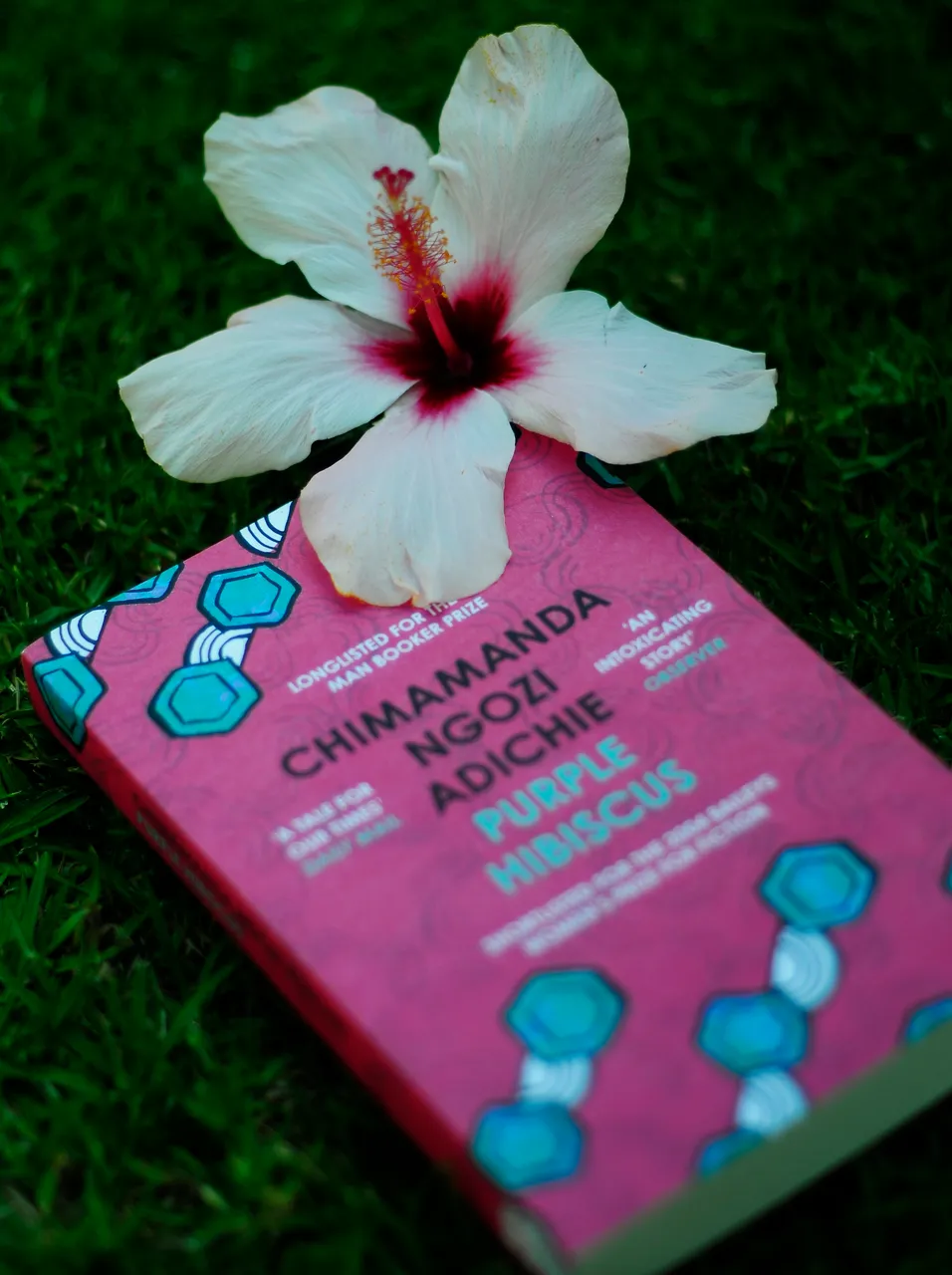
This change in Kambili also connects to the title of the novel, Purple Hibiscus. A purple hibiscus is extremely rare. Aunty Ifeoma grows these purple hibiscuses in her garden. It is significant that she grows them because she is the decolonial figure in the novel and does not follow the patriarchal system like the Achike family. The purple hibiscus denote to independence and freedom from the colonial and patriarchal systems that Kambili is used to. It shows how her perspective has changed and how she grew from her problematic household.

The tea
Eugene gives his daughter, Kambili, and his son, Jaja, sips of tea which may seem like an insignificant act, but there are two aspects which are quite important to the story. Eugene refers to these sips as “[a] love sip […] because you shared the little things you loved with the people you loved” (Adichie 2005:8). Kambili always burned her tongue, but she said that she knew her father’s love was burned into her. This little information that Kambili gives the reader is the introduction to the violence in this novel. There are different types of violence; for instance physical violence at the start of the novel when Eugene throws the missal at Jaja, or the emotional violence when Eugene threatens Kambili because she was not top of her class, or colonial violence in the shape of the effects of colonialism. The tea gives an insight into how the violence in the family are in a sense normalised.

Another aspect of the tea (spoiler incoming) is at the start of the novel Kambili experiences it is a symbol of “love” from her father, but in the end it was the entire opposite. Beatrice, Eugene’s wife, had poisoned him through his tea which led to his death. There are a lot of reasons why she did it, for example Eugene beated her so bad while she was pregnant that she lost the child or how she had to watch how he “disciplined” their children. I think it is brilliant to give the reader the murder weapon at the start of a story because it increases the shock of realisation. It is also such an amazing way to take something and change its meaning completely.
Incomplete
There is a lot to unpack in this novel and I only highlighted some aspects that I find interesting. If you are intrigued please do yourself a favour and read this novel. You have to experience it for yourself.

I hope you enjoyed it just as much as I did and that you are moved enough to go read the novel yourself. I can promise you that you will not be disappointed in the least. Maybe in the future I will read Half of a Yellow Sun...
(The post is my own creation and the photographs were taken with 