

Introduction
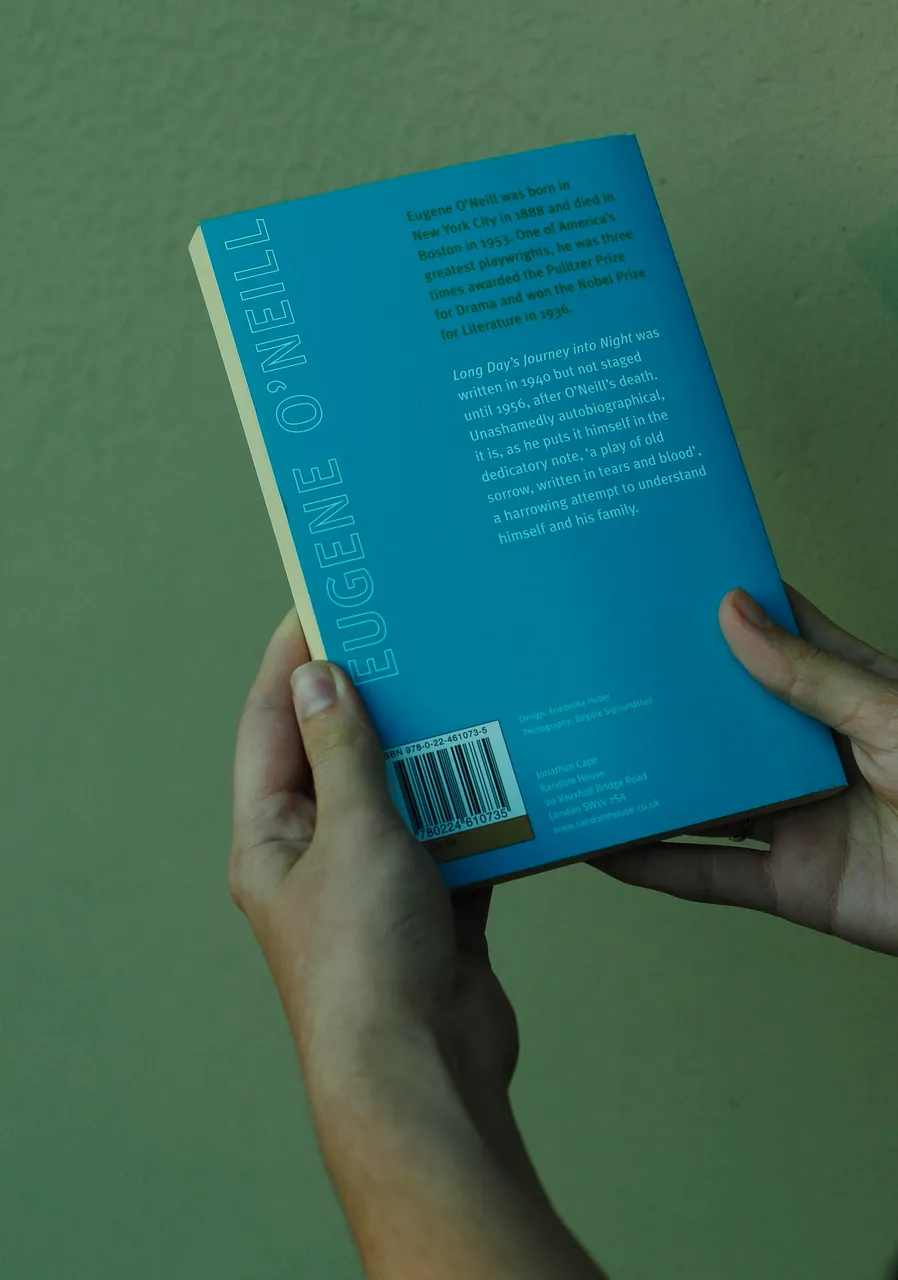
“One of America’s finest plays”. This statement is the usual description of Long Day’s Journey into Night. If you read it for yourself I am sure you would agree. It is carefully constructed and you would see this through the structure, the motifs and the development. Please be advised that this post contain spoilers, if you want to read this play for yourself please read this post at another time.
Background
This play was tough for O’Neill as it was his way of finding peace. It took him two years to write this play. O’Neill gave this play to his wife, Carlotta Monterey, as a present. It may be a strange gift, but it shows how valuable the play was to him. O’Neill wished that this piece would never see the light of day and gave the instruction that it could only be published 25 years after his death. After his passing, his late wife, unfortunately, demanded it to be published and so it was. In 1956 a O’Neill’s closure was printed on paper for the world to see.
A real family
In this drama we come across an intimate window into the lives of the Tyrone family. Imperfect and tragic is what comes to mind when this text is brought up. Long Day’s Journey into Night is a semi-autobiographical play based on Eugene O’Neill’s own family. The raw emotions and real events illuminate the fragility of familial relationships and the struggle with personal burdens.

There are 4 members of the family in the play: James Tyrone (father), Mary Cavan Tyrone (mother), James (Jamie) Tyrone Jr. (eldest son) and Edmund Tyrone (youngest son). O’Neill’s father and brother suffered from alcoholism and his mother from morphine addiction after she gave birth to the author. This is also the case in the drama. It makes this play that more real to know the extent of the actual events that are portrayed. If you read about O’Neill’s life and you compare it to the play, there are a lot of similarities.
Structure
The play is a day in August 1912, divided into four acts. The acts follow chronologically from the first act starting in the morning and the last act ending around midnight on the same day. As the day goes on, each character worsens in their own way. It follows the typical drama structure, namely, exposition, rising action, climax, falling action and resolution. The resolution may not seem like one, but in the context of the play the resolution is that everything is out in the open.

Mary, the isolated tragedy
Mary, the mother, is a heartbreaking character. She blames her husband for never giving her a proper home. The family never stayed at one place, but traveled and lived in various places, none of which they could ever call their own. Mary also blames her husband for her addiction, because she believes if he was not as stingy, she would have had a better doctor delivering better care when she gave birth to Edmund. She blames Jamie for infecting her second-born with measles, resulting in his death. Mary blames everyone around her as she yearns for her past when she was in the convent dreaming of becoming a nun or a concert pianist. This longing may be an indication of a silent cry and a selfish escape from her family.

Dynamics
In the interactions between different members a few things come to light such as tension, suspicion, anxiety, evasion, nervousness and blaming one another. There is a refusal to confront the underlying problems and this is evident in the play. Through the refusal of confrontation, the characters conform to denial, changing of the topic at hand, withdrawal and cynicism to escape the truth. In every conversation it is as if they tease the problem at hand, coming close to exposing their feelings and confronting each other but they never do. It can be described as a pot coming close to boil, stopped just before it happens. It is frustrating indeed, but the tragedy is overwhelming.

Thank you very much for taking the time to read my post. If you are in love with Classic Literature, especially the American Classics, this book is a must.
(The post is my own creation. The photographs were taken by my partner, 