Germany - once the proud nation of high-tech industry and global-exporting factories - now finds itself fringed by tales of what might have been: abandoned innovation parks, ruined industrial halls, and ambitious visions lost to decay.
 It's like a fairytale
For more than 400 years, the Neumühle has stood on the edge of Halle’s inner city and is an important witness to the town’s history. A current art project is drawing attention to the building’s long period of decay, which has served not only as a mill but also as a prison and a storage facility for NVA uniforms.
 Old sign at the house
History and transformation
The Neumühle was first built around 1280 by the monks of the Paulaner monastery. After the dissolution of the monastery in 1529, Cardinal Albrecht transferred the mill to the city of Halle, which commissioned a new building in 1582. For centuries, five mill works operated here, true masterpieces of wood mechanics.
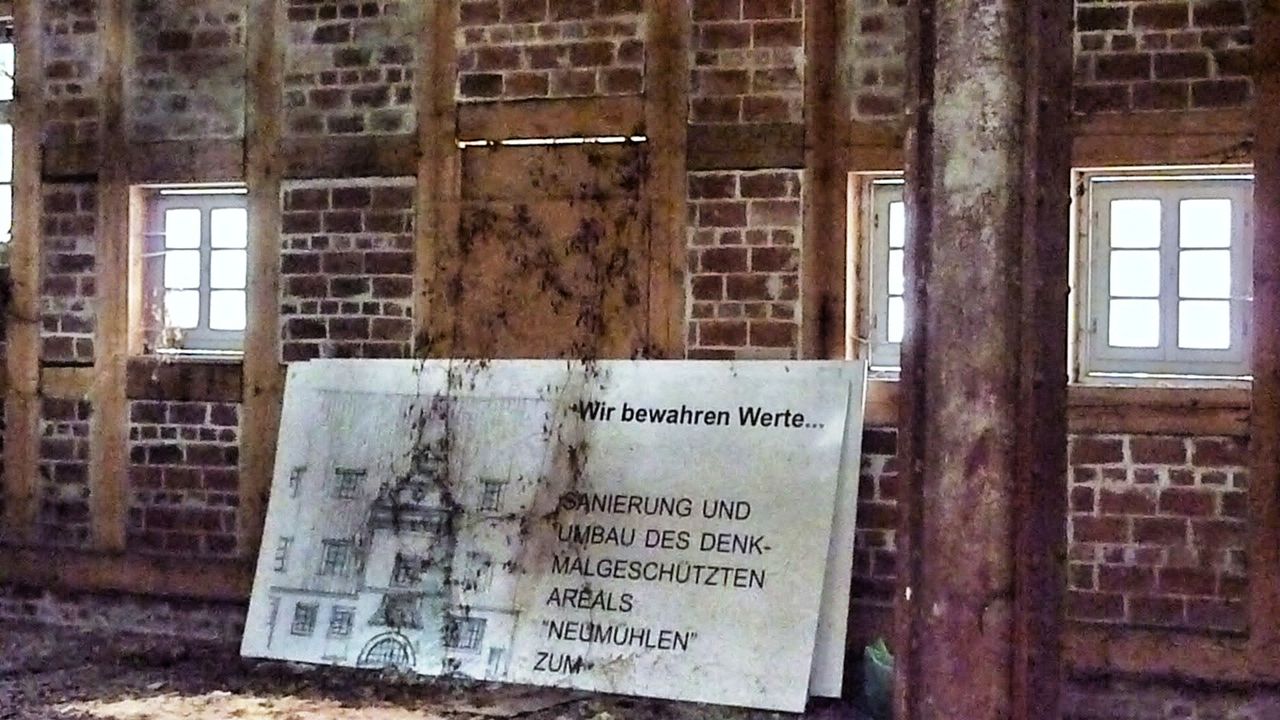 A newer room, repaired 25 years ago
Today, the Neumühle is an outwardly unspectacular structure but remains one of the city’s most important listed buildings. Historic ancillary structures such as the mill clerk’s residence and the donkey stable were demolished years ago, while renovation and conversion work is underway on the site to turn the area between Moritzburg, Neue Residenz and the cathedral into an upscale residential complex – ideally without further demolitions.
 Hig water marks - back to 1601
Current interventions and significance
A condolence book that is currently attracting attention is part of an “urban planning intervention” by students from TU Dresden. It is intended to highlight the decades-long deterioration of the two storey rendered building with its imposing gable and the distinctive entrance portal.
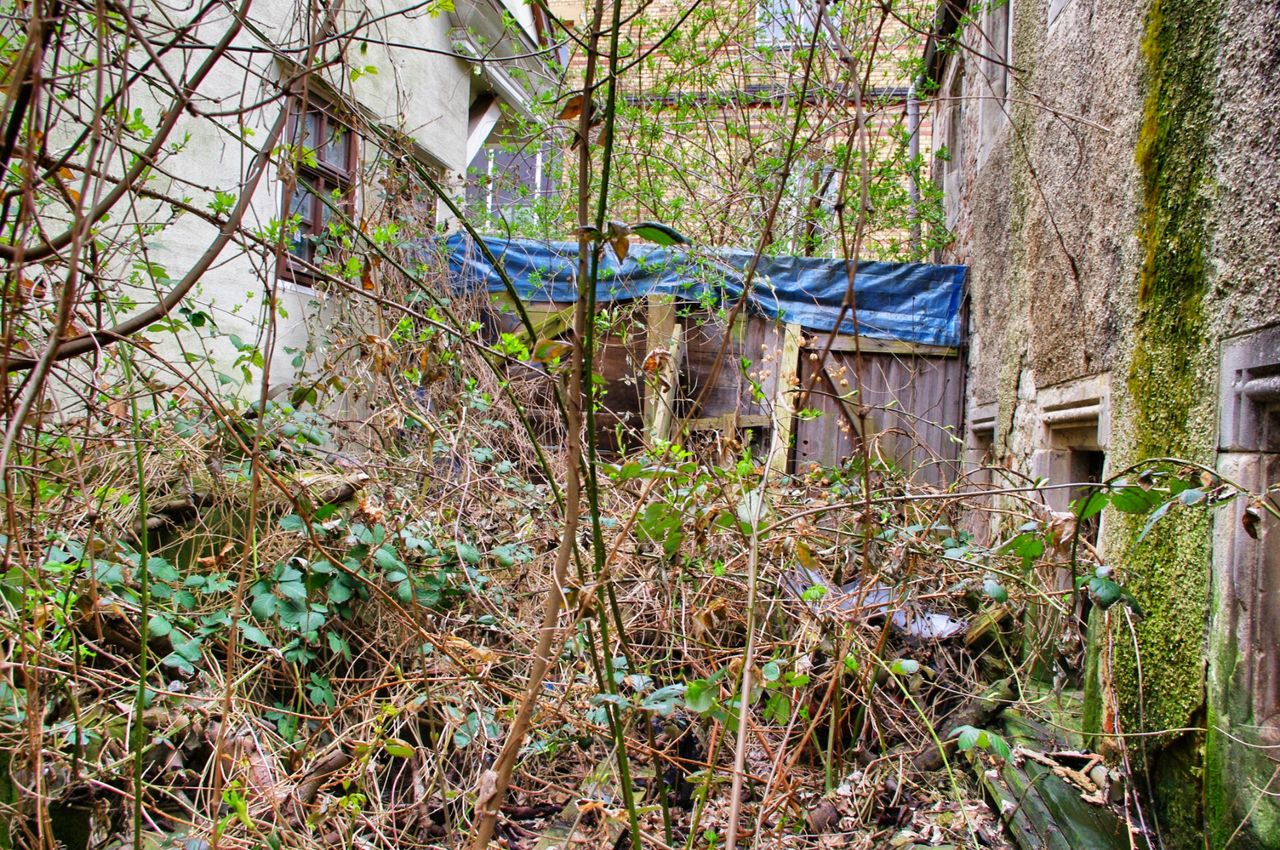
 The yard of the place
The state office for the preservation of monuments has clearly spoken out against any further demolition, as the structure incorporates not only remains of the historic city fortifications from 1465 but also preserves the craftsmanship of the builders Casparus Rost and Andreas Glaser. At least 29 flood marks are recorded in the building, the oldest dating from 1585.
 Inside the building
Use in the 20th century and outlook
After the mill ceased operation in the 1920s, its use changed several times: during the Nazi era it served as an auxiliary prison, and after the Second World War it was expropriated and used in the GDR as a warehouse for uniforms of the National People’s Army.
 Under the bricks are the water
Since reunification there have been repeated efforts to preserve the protected ensemble and put it to new use – so far without lasting success. Only in recent years has an investor been found who is not deterred by the building’s history and intends to renovate it.
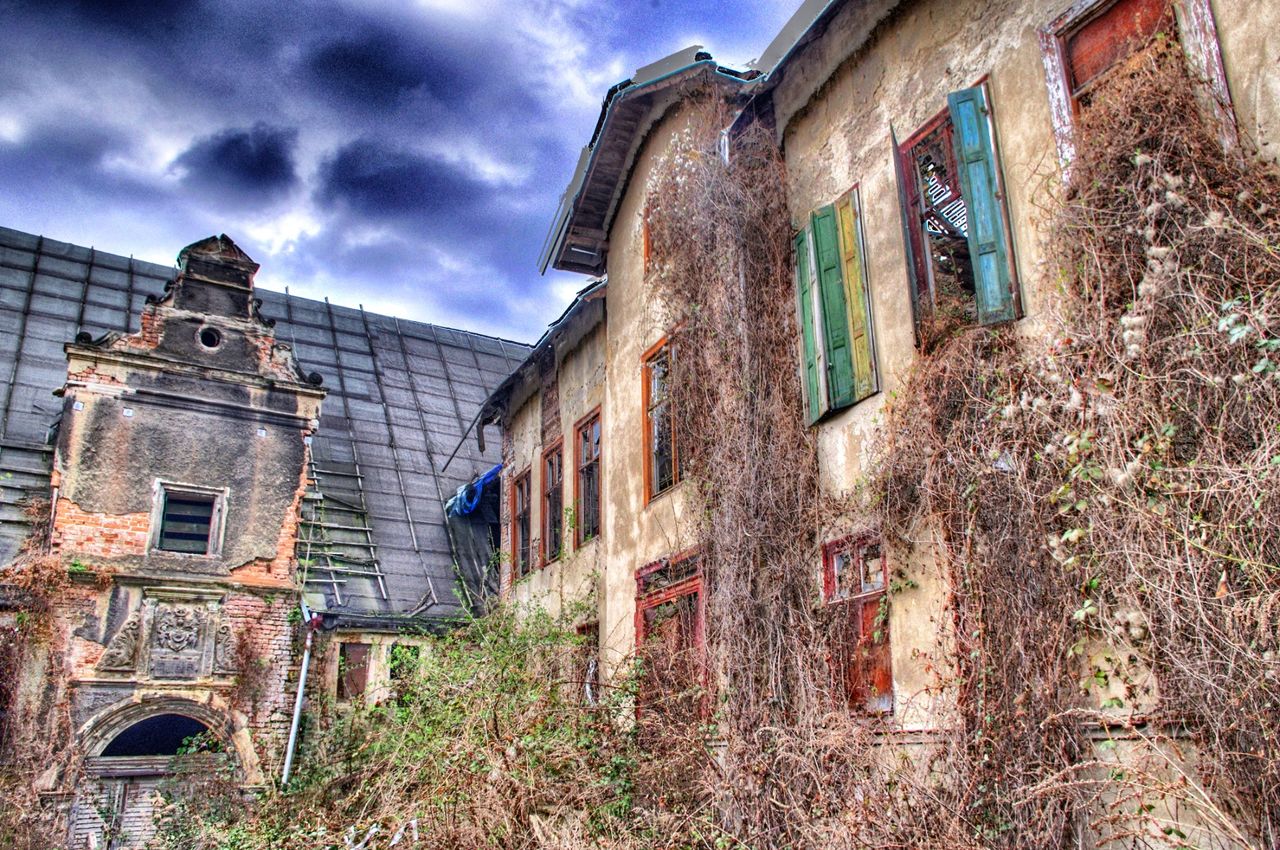 It seems like a small castle