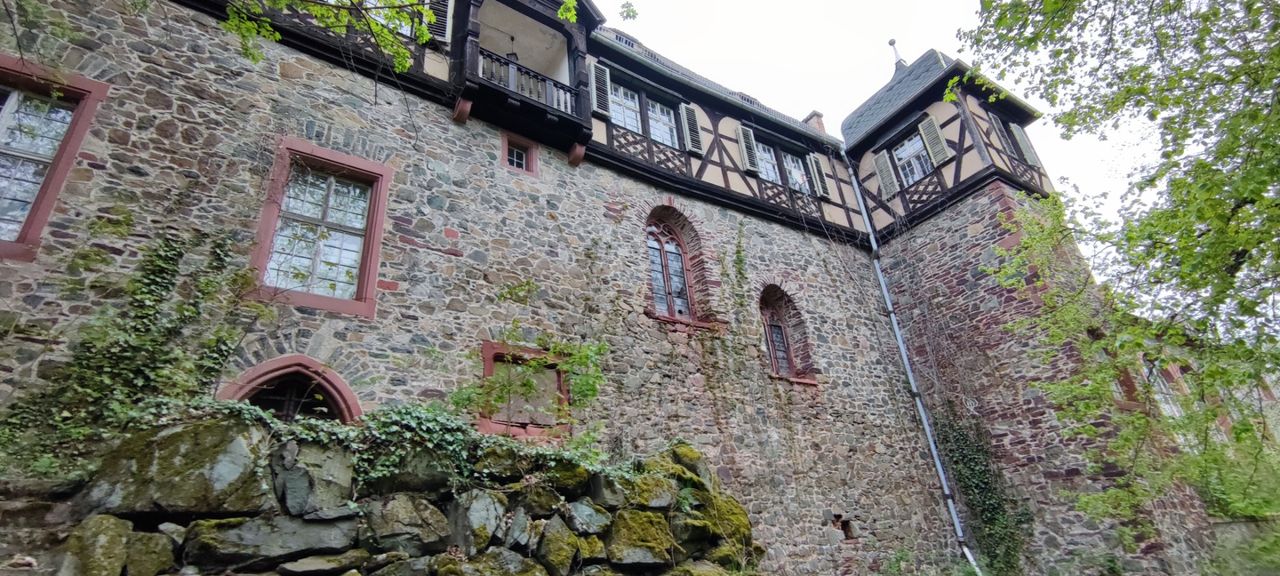
A thousand years ago, in the Wipper Valley, the German Emperor Otto III commissioned the construction of a fortress—a site known to most people today only from an aerial view. Rammelburg Castle, towering high above a valley in eastern Germany, is a stately home that endured a long period of suffering before finally finding a new owner.
 The Castle - maybe Elon Musks
But who exactly is it? Recently, a brown mailbox bearing the inscription "Elon Reeve Musk & Family" appeared beside the ancient stone walls, accompanied by a note reading: "Moved in on February 28th." Excitement rippled through Rammelburg, a small district within the town of Mansfeld.
 Barbed wired fences all around
Wild speculation ran rampant among the village’s few inhabitants. Has the world’s richest man—the head of the electric car manufacturer Tesla and the aerospace company SpaceX—really purchased a residence here, in the middle of nowhere? Or is someone playing a prank?
 The windows of the great hall of Otto III.
No one knows for sure. The magnificent structure has stood for so long that all traces of its former owners have long since vanished into the dust of time. Ingrid Schumann is one of the few people who can still recall—at least in memory—what life used to be like at the Burg (fortress) that is, in reality, a Schloss (stately home).
 Building from younger years
As a young girl, Schumann worked here, behind the doors and gates that are now firmly boarded up. "Our living quarters stretched from the large tower on the left all the way to the small half-timbered tower," she describes, "and right next door lived the chief physician."
 The backyard
She explains that during the era of the castle lords, an orangery occupied the space behind the large arched windows; however, in her day—back in the 1950s—this area was used for "silence cures." Patients admitted for lung ailments were required to lie here every afternoon, strictly forbidden from speaking.
 Remainings of the socialist times
Today, Rammelburg Castle speaks to visitors itself. "Warning: You are being watched!" it calls out from a hidden loudspeaker the moment curious onlookers approach the historic monument, which has stood empty for decades. The castle is private property, the voice booms. Trespassing is strictly forbidden.
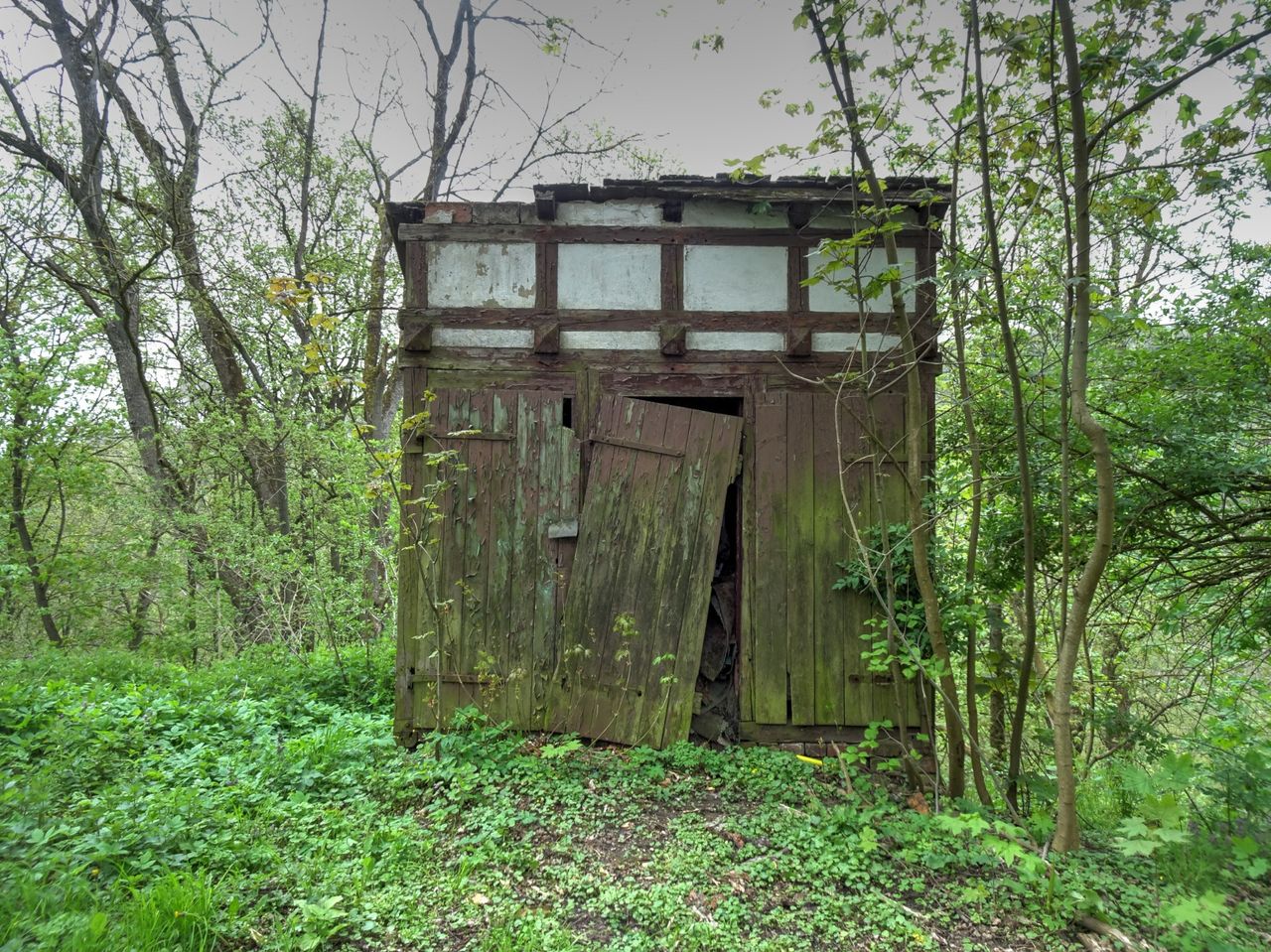
 One of the stables
But who actually owns the structure in the Wipper Valley—the one Emperor Otto III commissioned more than a thousand years ago? Even Jessica Zanner, who runs a website dedicated to the history of Rammelburg, isn't entirely sure.

One thing is certain: in 1995, the castle’s last occupant—a rehabilitation facility—moved out of the building complex, which had taken on its current form back in the 13th century. Since then, the entire ensemble—which owes its name to the Celtic word Rammene, meaning "rock"—has stood empty.

The State of Saxony-Anhalt’s attempt to address the most severe structural damage came to a halt when the von Thurn und Taxis family—whose property had been expropriated after World War II—filed claims for restitution. Work did not resume until 1998—by which time the claim filed by the family (who had ceded the castle to the Nazi regime’s War Victims’ Welfare Office in 1941) had been rejected—and even then, the repairs remained merely provisional.

In the years that followed, the castle—first mentioned in official records in 1259 as "Rammelborgh"—largely faded from public consciousness. To most people living outside the small village of Friesdorf, Rammelburg is known today, if at all, merely as a scenic landmark that can be admired from the Rammelburgblick lookout point situated higher up along Federal Highway 242 (B242).
 Leftovers
Hikers visiting the site find the old walls boarded up, secured with barbed wire, and—for the first time in a thousand years—completely inaccessible. Where noble families once resided for centuries—before the Nazis transformed this magnificently situated site into a sanatorium for disabled veterans and soldiers' widows—a tuberculosis sanatorium moved in after the war.

The "wonderfully pure forest air," as author Hermann Heidenreich described it, was intended to bring about a recovery. Ingrid Schumann, a former resident of the castle, recounts that her father—who was the head of administration at the time—even managed, with the assistance of the pipeworks in Halle, to tap into a new water reservoir; this fed a natural swimming pond as well as a basin located by the castle, where trout were kept.

Upon a recent visit, Ingrid Schumann quickly recognized many familiar spots, though she was dismayed by their lamentable state. The basin, in particular, took her the longest to find. "Today, it is designated as a protected biotope."

Over the years, there have been recurring expressions of interest from potential buyers for the property—which Alfred Reichenberger of the State Office for Monument Preservation describes as a "significant monument of supra-regional importance."

Karin Scharwey, the local mayor of Friesdorf, recalls many grand plans. On several occasions, buyers were indeed found—despite estimated renovation costs amounting to 20 million euros. A real estate firm stepped in; later, a dentist—who subsequently filed for bankruptcy. "Yet nothing was ever truly brought to fruition."

For eight years, Karin Scharwey held the keys to the castle. "I looked after it as best I could." She would check on the property at least once a week, striving to ensure that the situation, at the very least, did not deteriorate further. Recently, however, Scharwey has finally begun to see a glimmer of hope.

"There is now a new owner—one who has immediately invested in structural stabilization measures." Who is it? Silence. The purchaser’s express wish, Scharwey notes, is not yet willing to reveal any details, "that our castle will not remain a 'lost place'." Perhaps it is Elon Musk? Perhaps someone else with deep pockets? All around Otto’s magnificent castle, everyone is hopeful. So far, however, in vain.
Information about the castle: www.schlossrammelburg.de