


Greetings to all members of the Lifestyle community. Today I’m joining you to share another day in my life. This time, we’re back in class in Venezuela after Holy Week, which, if I may say so, was just what we needed. We’re already entering the third quarter, and I believe this is one of the times when it’s most important to reinforce the children’s knowledge and skills. In the drawing workshop, this is just as important, so over the next three months we’ll focus on that and, if possible, incorporate a final activity that will benefit them in the future: learning how to create an art portfolio.
This Monday we started with quick-drawing exercises as a warm-up. The children had to draw a set of objects arranged on the table three times, at different time intervals and from different perspectives. This helps them understand what they observe, step out of their comfort zone, synthesize key information, and so on. In class, I try to make sure everyone understands that drawing beautifully isn’t the way or the mindset to approach things; rather, it’s about doing it well and in their own unique style. Then they did free drawing.
Saludos a todos en la comunidad de Lifestyle. El día de hoy me uno por aquí para compartir con ustedes un nuevo día en mi vida. En esta oportunidad, volvemos a clases en Venezuela luego de la Semana Santa, que si me lo permiten decir, era bien necesaria para nosotros. Ya estamos entrando en el tercer momento pedagógico y creo que es uno de los momentos dónde hay mayor necesidad de reforzar los conocimientos y las habilidades de los chicos. En el taller de dibujo es igual de preciso lograr eso, así que estos tres último meses nos dedicaremos a eso y si está en la posibilidad, integrar una actividad final que resultará beneficiosa para ellos en el futuro: aprender a hacer un portafolio artístico.
Para este lunes comenzamos con ejercicios de dibujo rápido cómo calentamiento. Los niños debían dibujar tres veces un conjunto de elementos dispuestos en la mesa, en diferentes intervalos de tiempo y con diferentes perspectiva. Esto les ayuda a comprender lo observado, a salir de la zona de confort, a sintetizar la información prioritaria y demás. Intento en la clase que todos puedan comprender que dibujar bonito no es el camino o la mentalidad para hacer las cosas, en todo caso es hacerlo bien y con el estilo propio que tenga cada uno de ellos. Luego hicieron dibujo libre.


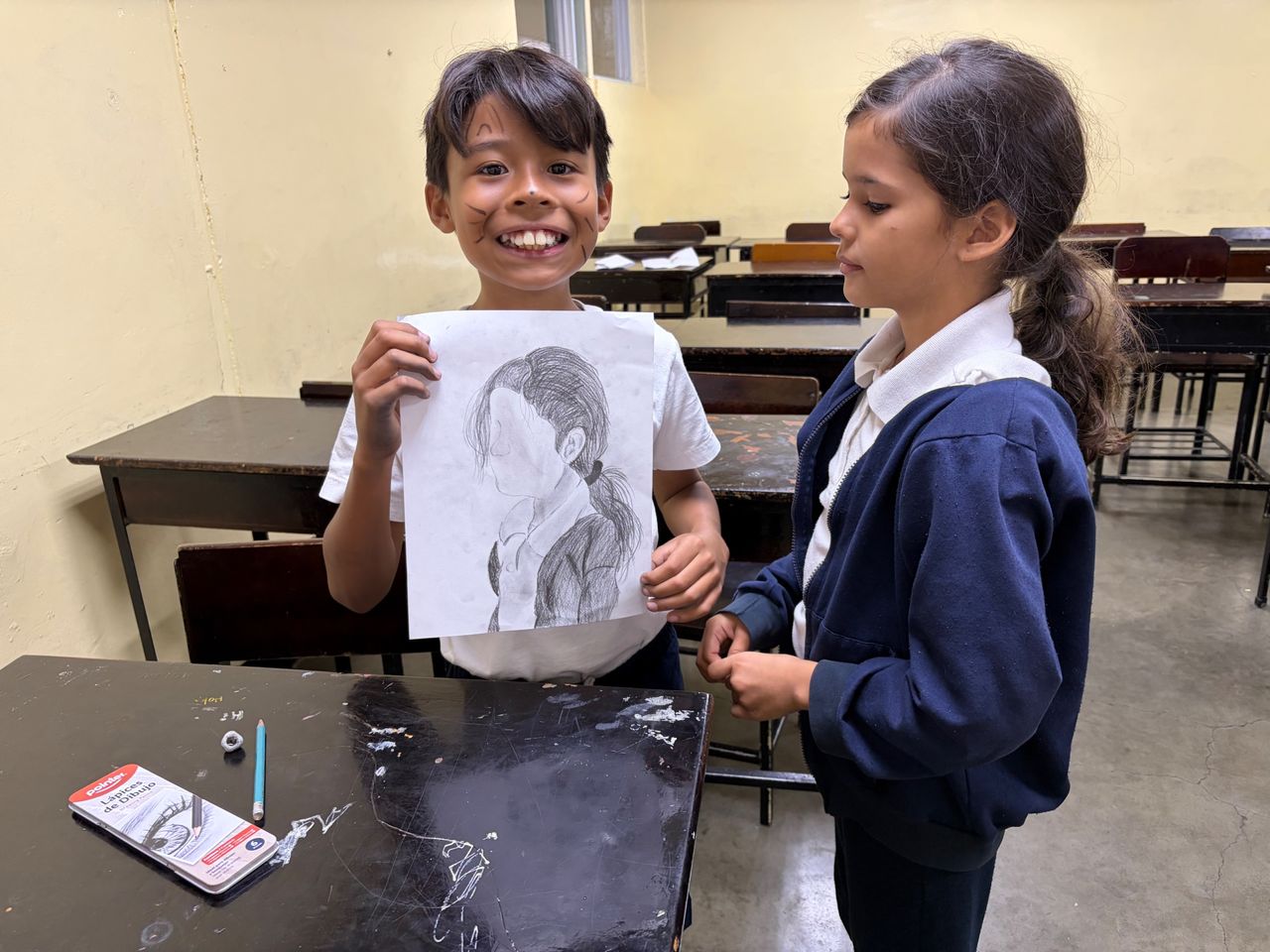


The second group did portraits, and today we had a pretty interesting discussion, since I told the children to try to think of the person in front of them as not being (for example) their classmate Juanita. Why? Because when it’s their turn to draw Pedrito, María, Ernesto, or someone else, they’ll think: “But I’ve never drawn anyone other than Juanita.” That’s where the dilemma arises. Regardless of what’s in front of you, you must adopt (let’s say) the same way of observing and the same technique, regardless of that. When you learn to see like an artist, you don’t think of the elements for what they are (for example: a little bird, a pear, a portrait), but rather in their entirety (where it is, the size of the object, the shape and its parts, the shadows and the light)... Seeking out all of this mentally guarantees a good execution. It’s like the class where I showed you René Magritte’s painting “The Treachery of Images,” which features a painted pipe and a caption stating: this is not a pipe. And, indeed, it isn’t, since everything drawn or painted is merely a representation of our reality; therefore, it helps to be practical and start sketching/painting without limiting ourselves to what we might feel, believe, or understand about what’s in front of us. Without further ado, thank you very much for stopping by.
El segundo grupo hizo retrato y hoy hicimos un debate bastante interesante pues yo le decía a los niños que intenten pensar en que a quién tienen en frente no es (por ejemplo), su compañera Juanita ¿por qué? porque cuando ellos luego les toque dibujar a Pedrito, María, Ernesto u otra persona, pensarán "pero, yo nunca he dibujado a nadie que no sea Juanita". Ahí viene el dilema. Sin importar lo que se tenga en frente, uno debe asumir (digamos) la misma forma de observación y de técnica independientemente de ello. Cuando uno aprende a ver cómo un artista uno no piensa en los elementos por lo que son (ejemplo: un pajarito, una pera, un retrato) sino en su totalidad (dónde está, tamaño del objeto, forma y sus partes, sombras y luces)... Ir buscando todo esto mentalmente garantiza una buen ejecución. Es cómo la clase donde les mostré la pintura de René Magritte "La traición de las imágenes" dónde sale una pipa pintada y una letra que afirma que: esto no es una pipa. Y efectivamente, no lo es, pues todo lo dibujado o pintado es meramente una representación de nuestra realidad por lo que ayuda ser prácticos y comenzar a trazar/pintar sin limitarnos con lo que podamos sentir, creer o entender sobre lo que tenemos en frente. Sin más que decir, muchísimas gracias por pasar por aquí.
