
Una introducción necesaria
Largo ha sido el camino, con muchas victorias, momentos alegres, pero también, muchos han sido los obstáculos y reveses.
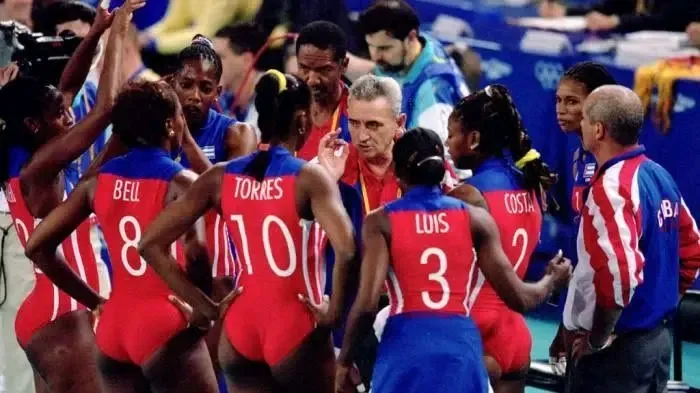
En esta publicación daré mis consideraciones sobre esta fecha, el deporte de la malla alta y otros elementos de interés.
6 de septiembre de 1978
Este día, Cuba se coronó como campeona mundial, al derrotar en la final del sexto campeonato del orbe al equipo de Japón.
Esta final tuvo por sede a San Petersburgo, antiguo Leningrado, en la República Federativa de Rusia.
Fue la conclusión de un trabajo que venían desarrollando los técnicos cubanos que, para ese entonces, habían logrado reunir a un grupo de jugadoras que hicieron historia en el mundo de este deporte.
Fue un logro significativo porque hasta ese momento, solo el béisbol, como deporte de equipo, había logrado alcanzar tal resultado. Por esa razón se decidió designar este día para homenajear a los amantes de este deporte.
Consolidación del deporte
Los años posteriores no resultaron del todo satisfactorios porque, aunque se logró dominar el área centroamericana y estar entre los mejores en América, los resultados alcanzados en los Juegos Olímpicos de 1980 y el campeonato del mundo de 1982 no fueron positivos porque, en ambos casos no logramos alcanzar lugar en el podio y tuvimos que conformarnos con 5to lugares.
Para ser honestos, debemos decir que el equipo venía en franca renovación y, más adelante, se verían los resultados.
Época dorada

A finales de los años 80 del pasado siglo y hasta los primeros años del siglo XXI, Cuba vivió su época dorada.
El primer gran triunfo ocurrió en 1989, cuando los equipos femenino y masculino ganaron la Copa del Mundo. Pocos países han realizado tal hazaña y, no menciono cuántos, porque no estoy muy seguro.
Después de esto, vinieron tres títulos dorados en los juegos olímpicos de Barcelona 1992, Atlanta 1996 y Sídney 2000. También, hay que agregar una medalla de bronce. Todas en el sector femenino. Este equipo, bautizado como “Las Espectaculares Morenas del Caribe”, lograron, además, dos títulos mundiales más y cuatro copas del mundo, unido a títulos importantes en otras competiciones.
Por su parte, el voleibol masculino también tenía sus resultados; aunque no de la valía del femenino. En el caso de los hombres, lograron dos medallas de platas en campeonatos mundiales (1990 y 2010), ganaron la Liga Mundial de 1998 y alcanzaron otros resultados relevantes a escala internacional.
La magia del sacrificio
Muchas veces, en el deporte, como en la vida, se ven los resultados, pero, se obvia o no, se ven a los que ayudan a construir el camino y lograr esos resultados.
En el caso que nos ocupa, es obligatorio hablar de Eugenio George Laffita y de Antonio Perdomo. Los dos, junto a otros que vinieron después, construyeron la Escuela Cubana de Voleibol.
Cuando se le ha preguntado a alguna de las deportistas que estuvieron bajo su abrigo, todas hablan del carácter formador de Eugenio, de su disciplina y su aspiración permanente a que, en primer lugar, fueran buenas personas.
De Perdomo se habla muy bien también porque, en verdad, ellos dos se compenetraban mucho.
Lograron edificar un sistema de juego único en el mundo y que, en la conceptualización metodológica de este deporte bien pudiera llamarse “Sistema Eugenio George” porque, nadie como él, para sacarle fruto a ese sistema de juego de tener 4 atacantes y dos pasadoras dentro del terreno, aunque la realidad te decía que había 5 atacadoras, se reforzaba la defensa de campo y el accionar del bloqueo en la red.

Consideraciones finales
La historia del voleibol en Cuba es una de las más hermosas que se haya podido realizar y, en ese camino, muchos han sido los protagonistas que la han edificado.
Pero, dentro de todos esos héroes y heroínas anónimas, han destacado: Eugenio George Laffita, quien fue seleccionado Mejor Entrenador del deporte en el siglo XX, Regla Torres, mejor jugadora del siglo pasado, y Mireya Luis, quien ha sido para mí la mejor Jugadora de todos los tiempos.
¿Qué piensa usted?
Nota: He utilizado el traductor DeepL Translate.
ENGLISH
September 6: Cuban Volleyball Day. Opinion
A Necessary Introduction
On September 6, 1978, the Cuban women's volleyball team achieved one of the most important feats of Cuban sport by winning the gold medal and becoming world champions. For this reason, this date was chosen to celebrate the day of this sport.
The road has been long, with many victories, joyful moments, but also, many have been the obstacles and setbacks.
In this post I will give my considerations about this date, the sport of high mesh and other elements of interest.
September 6, 1978
On this day, Cuba was crowned world champion, defeating the Japanese team in the final of the sixth world championship.
This final was held in St. Petersburg, formerly Leningrad, in the Russian Federal Republic.
It was the conclusion of a work that had been developed by Cuban coaches who, by then, had managed to bring together a group of players who made history in the world of this sport.
It was a significant achievement because up to that point, only baseball, as a team sport, had managed to achieve such a result. For that reason, it was decided to designate this day to honor lovers of this sport.
Consolidation of sport
The following years were not entirely satisfactory because, although we managed to dominate the Central American area and be among the best in America, the results achieved in the 1980 Olympic Games and the 1982 world championship were not positive because, in both cases we did not manage to reach a place on the podium and we had to settle for 5th places.
To be honest, we must say that the team was in a frank renewal and, later, the results would be seen.
Golden age
At the end of the 80s of the last century and until the early years of the twenty-first century, Cuba lived its golden age.
The first major triumph occurred in 1989, when the women's and men's teams won the World Cup. Few countries have performed such a feat, and I don't mention how many, because I'm not quite sure.
After this, came three gold titles at the Olympic Games in Barcelona 1992, Atlanta 1996 and Sydney 2000. Also, we must add a bronze medal. All in the women's sector. This team, baptized as "The Spectacular Brunettes of the Caribbean", also achieved two more world titles and four world cups, along with important titles in other competitions.
For its part, men's volleyball also had its results; although not of the value of the feminine. In the case of men, they won two silver medals at world championships (1990 and 2010), won the 1998 World League and achieved other relevant results on an international scale.
The magic of sacrifice
Many times, in sport, as in life, you see the results, but, whether you ignore it or not, you see those who help build the path and achieve those results.
In the case at hand, it is obligatory to talk about Eugenio George Laffita and Antonio Perdomo. The two, along with others who came later, built the Cuban Volleyball School.
When some of the athletes who were under his wing have been asked, they all talk about Eugenio's formative character, his discipline and his permanent aspiration that, in the first place, they would be good people.
Perdomo is also spoken of very well because, in truth, the two of them got along a lot.
They managed to build a unique game system in the world and that, in the methodological conceptualization of this sport, could well be called "Eugenio George System" because, no one like him, to take advantage of that game system of having 4 attackers and two passers on the field, although reality told you that there were 5 attackers, The field defense and the blocking action at the net were reinforced.
Final considerations
The history of volleyball in Cuba is one of the most beautiful that has ever been possible and, along the way, many have been the protagonists who have built it.
But, among all those anonymous heroes and heroines, the following have stood out: Eugenio George Laffita, who was selected Best Coach of the sport in the twentieth century, Regla Torres, best player of the last century, and Mireya Luis, who has been for me the best Player of all time.
What do you think?
Note: I used the DeepL Translate translator.