

| Esp | Eng |
|---|---|
| Hola amigos creativos de la COMUNIDAD DE JEWELRY, hoy traigo para ustedes esta linda propuesta LINDO, BRAZALETE EN NUDO TORCIDO Y DIJE GUACAMAYA EN MOSTACILLA, La técnica utilizada para esté trabajo es nudo plano torcido en macramé y un lindo dije de Guacamaya en mostacilla. La Guacamaya es un ave muy vistosa y exótica por sus lindos colores, su existencia es común en las selvas de America. Intente plasmar una de estas lindas aves en mostacilla utilizando la técnica ladrillo o peyote. Espero les guste y se animen a hacer este lindo y creativo trabajo. | Hello creative friends of the JEWELRY COMMUNITY, today I bring for you this nice proposal CINY, BRAZALET IN MACRAMÉ KNOT AND GUACAMAYA IN MOSTACILLA, The technique used for this work is flat knot twisted in macramé and a nice Guacamaya pendant in mustacilla. The Macaw is a very showy and exotic bird for its beautiful colors, its existence is common in the jungles of America. Try to capture one of these beautiful birds in clay using the brick or peyote technique. I hope you like it and encourage you to do this nice and creative work. |

| Materiales: | Materials: |
|---|---|
| Para el dije use: Hilo pescador negro, mostacillas amarillas, verdes, naranjas, negras, blancas, doradas, fucsias, rojas. Aguja mostacillera n 10, 1 aro pequeño. Para el brazalete hilo chino negro, 6 balines dorados, tijera, yesquero, pinza de bisuteria. | For the charm use: black fishing line, yellow, green, orange, black, white, gold, fuchsia, red beads. Needle mustard needle n 10, 1 small hoop. For the bracelet, black Chinese thread, 6 golden balls, scissors, tinder, jewelry tweezers. |

| Instrucciones: | Instructions: |
|---|
| Paso 1 | Step 1 |
|---|---|
| Primero elaboré el dije, para realizar el dije use un patrón que pertenece a la diseñadora de joyas creo.accesorios.dianis, quien es mi facilitadora del grupo de aprendizaje al que pertenezco PRINCIPIANTES EN MOSTACILLAS. | First I made the pendant, to make the pendant I used a pattern that belongs to the jewelry designer creo.accesorios.dianis, who is my facilitator of the learning group I belong to PRINCIPIANTES EN MOSTACILLAS. |

| Paso 2 | Step 2 |
|---|---|
| Enhebre el hilo pescador a la aguja, use 1 metro y medio de hilo. | Thread the fishing line to the needle, use 1.5 meters of thread. |

| Paso 3 | Step 3 |
|---|---|
| La guacamaya posee 15 columnas. Comenzaré en la columna 8 contando desde el lado del pico. Observemos que la columna tiene 12 mostacillas comenzando con 1 negra y termina en 4 fucsias. Haremos una cadeneta. Para hacer la cadeneta comenzamos introduciendo la aguja de arriba hacia abajo en cada mostacilla, en la primera comenzamos con dos y seguimos con una hasta las doce mostacillas queden en una cadena. | The macaw has 15 columns. I will start at column 8 counting from the beak side. Let's notice that the column has 12 beads starting with 1 black and ending with 4 fuchsia beads. We will make a chain stitch. To make the chain we start by inserting the needle from top to bottom in each stitch, in the first one we start with two and continue with one until the twelve stitches are in a chain. |

| Paso 4 | Step 4 |
|---|---|
| Para hacer la segunda columna continuaremos hacia el lado de la cola, iniciaremos con una reducción, y se comienza siempre con dos mostacillas, introducimos la aguja en cada puente de hilo que une cada mostacilla, iremos uniendo cada mostacilla hasta culminar la segunda columna. | To make the second column we will continue towards the tail side, we will start with a reduction, and always start with two beads, we introduce the needle in each thread bridge that joins each bead, we will join each bead until we finish the second column. |

| Paso 5 | Step 5 |
|---|---|
| En las siguientes imagenes observamos las columnas cuatro y cinco de la mitad de la figura siguiendo hacia el lado de la cola de la Guacamaya. | In the following images we observe columns four and five in the middle of the figure following the side of the macaw's tail. |


| Paso 6 | Step 6 |
|---|---|
| A esta altura ya solo falta 3 columnas para culminar la mitad de la figura que corresponde al cuerpo y cola. | At this point, only 3 columns are missing to complete the half of the figure corresponding to the body and tail. |


| Paso 7 | Step 7 |
|---|---|
| En la siguiente foto observamos la primera parte de la Guacamaya. | In the following photo we can see the first part of the Guacamaya. |

| Paso 8 | Step 8 |
|---|---|
| Ahora trabajaremos con la otra parte de la pieza que corresponde a los ojos, cara, picos y patas. Añadiremos las otras siete columnas, haciendo las reducciones y ampliaciones que correspondan. | Now we will work with the other part of the piece that corresponds to the eyes, face, beaks and paws. We will add the other seven columns, making the corresponding reductions and enlargements. |


| Paso 9 | Step 9 |
|---|---|
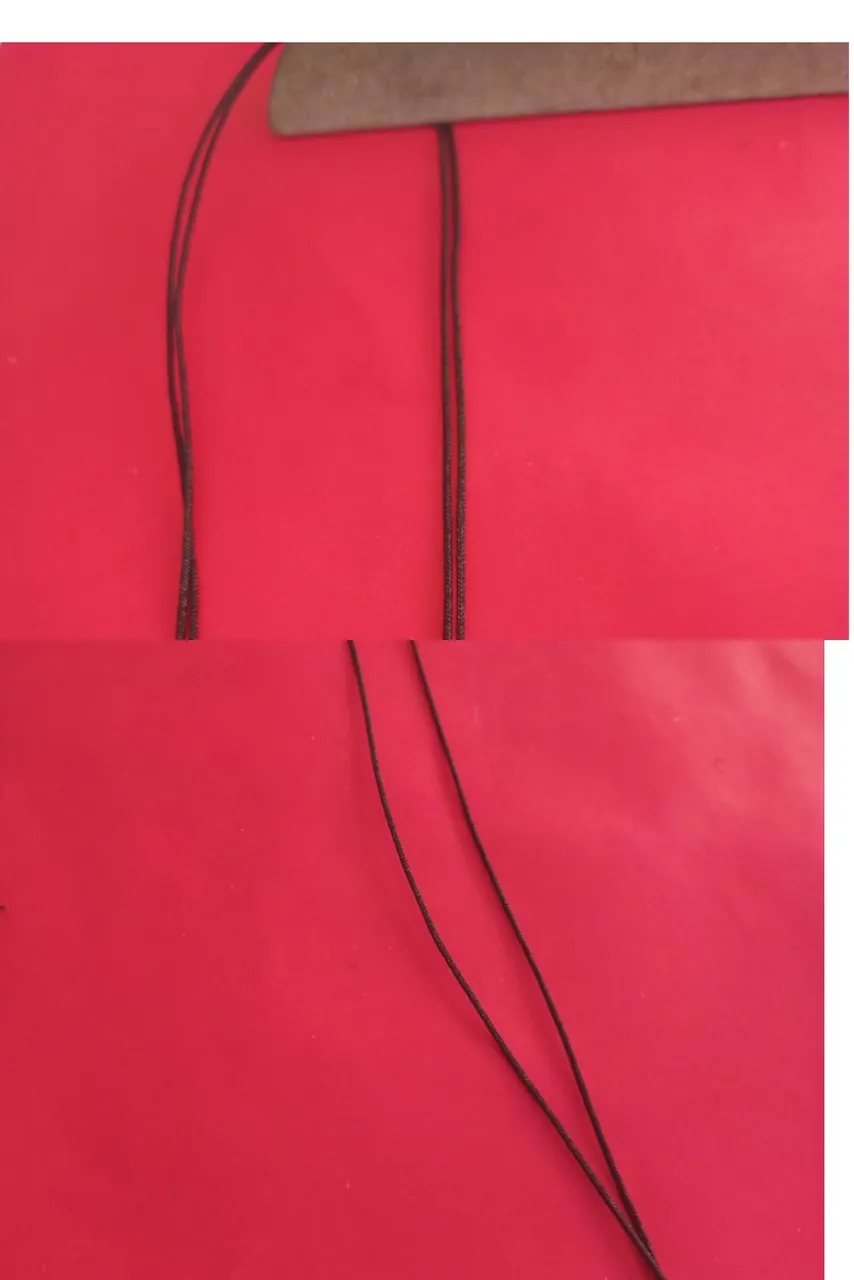
| El brazalete lo haré en hilo chino negro y nudos planos torcidos. Corté 2 pieza de hilo chino de 30 cm de largo, presione con un gancho de carpeta los dos hilos por uno de los extremos. | I will make the bracelet in black Chinese thread and twisted flat knots. I cut 2 pieces of Chinese thread 30 cm long, press with a binder hook the two threads at one end. |
| Paso 10 | Step 10 |
|---|---|
| El largo del brazalete es de 16 cm para el area de la muñeca, incluyendo el trancadero. Por lo que trabajare 8 cm de cada lado para cubrir la parte del centro. | The length of the bracelet is 16 cm for the wrist area, including the strap. So I will work 8 cm on each side to cover the center part. |

| Paso 11 | Step 11 |
|---|---|
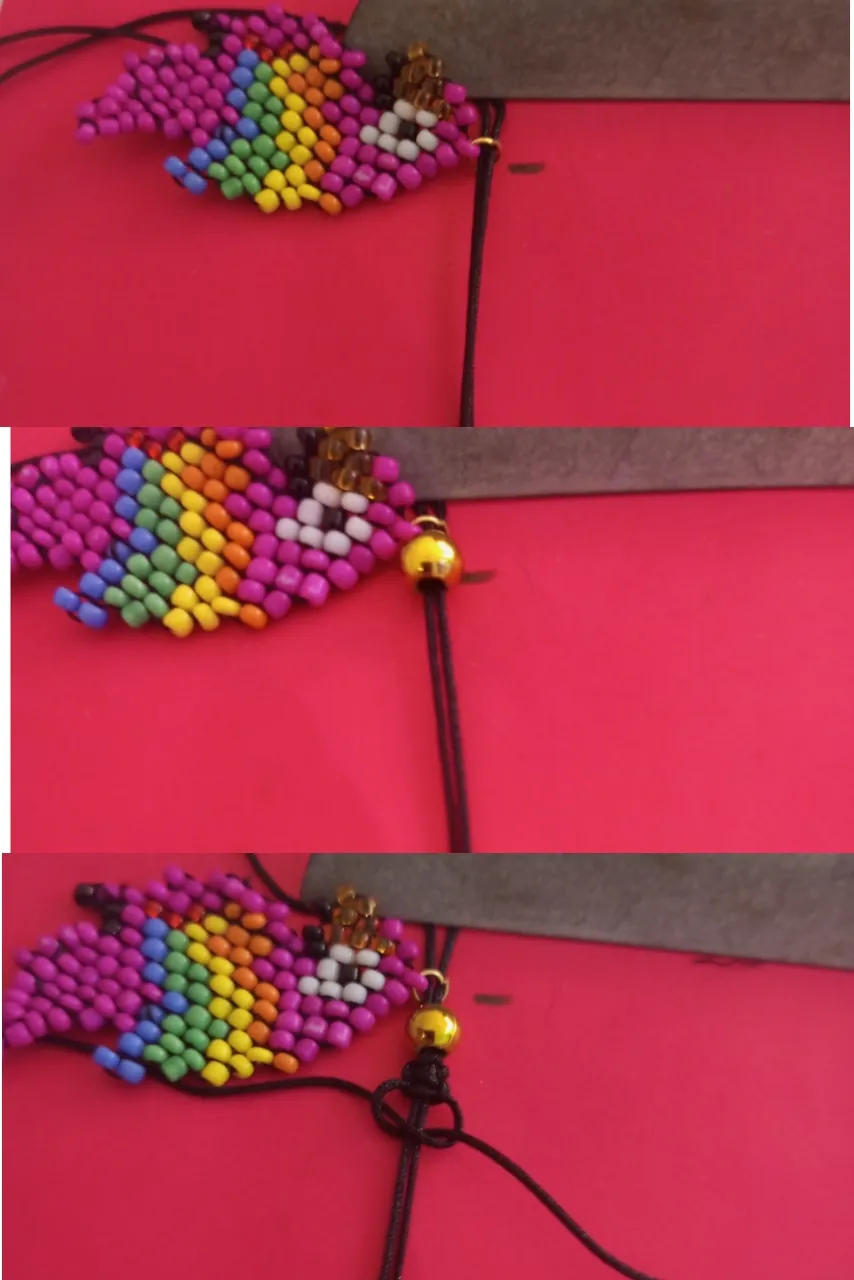
| Introduje el hilo por la argolla del dije, 1 balin y con otra pieza de hilo chino de 40 cm de largo. Comencé a realizar los nudos planos, inicie con dos hilos planos. | I introduced the thread through the ring of the pendant, 1 ball and with another piece of Chinese thread 40 cm long. I began to make the flat knots, I started with two flat yarns. |
| Paso 12 | Step 12 |
|---|---|
| Continuamos haciendo nudos planos pero los siguientes puntos los haremos haciendo el punto de un solo lado, en este caso los hice en el lado izquierdo, y el brazalete va tomando forma torcida. | We continue making flat knots but the following stitches we will make the stitch on one side only, in this case I made them on the left side, and the bracelet will take a twisted shape. |

| Paso 13 | Step 13 |
|---|---|
| En la marca que es a 5cm introduje un balin y continúo haciendo puntos planos hasta la marca de 8 cm. | At the 5 cm mark, I introduced a ball and continued making flat stitches up to the 8 cm mark. |

| Paso 14 | Step 14 |
|---|---|
| Introduje un balin y los dos nudos los tuerzo, hago un nudo y quemamos el excedente de los hilos. Este mismo procedimiento lo realizo del otro lado. | I introduce a ball and tighten the two knots, tie a knot and burn the excess threads. The same procedure is done on the other side. |

| Paso 14 | Step 14 |
|---|---|
| Para el trabcadero corté un hilo de 15 cm aproximados y sobre los dos hilos torcidos del brazalete, realice un trancadero de 6 puntos. | For the bracelet, I cut a thread of approximately 15 cm and on the two twisted threads of the bracelet, I made a 6 stitches bracelet. |

| Despedida | Farewell |
|---|---|
| Y está es mi propuesta de hoy para ustedes LINDO, BRAZALETE EN NUDO TORCIDO Y DIJE GUACAMAYA EN MOSTACILLA. Un post hecho con amor, espero les guste y disfruten mi post, hasta la.proxima publicación. | And this is my proposal today for you LINDO, BRAZALETE EN NUDO TORCIDO Y DIJE GUACAMAYA EN MOSTACILLA. A post made with love, I hope you like it and enjoy my post, until the next publication. |


| Créditos | Credits |
|---|---|
| Traductor: www.DeepL.com/Translator (free version).Las fotos fueron tomadas con mi Celular Tecno Sport 7T. Foto de portada editada con Canva y PhotoRoom Banner editado con Canva. . | Translator: www.DeepL.com/Translator (free version).The photos were taken with my Tecno Sport 7T cell phone. Cover photo edited with Canva y PhotoRoom. Banner edited with Canva. |
