
DIY Parol Making: The Star of Filipino Christmas
Hello, dear Hivers, happy holidays! How are you? I hope you are all doing well in your respective homes. Welcome to another "blogserye" (blog series) featuring the star of Filipino Christmas, "PAROLS" (lantern). Come and join me in crafting my do-it-yourself parol that symbolizes our very own local Filipino tradition during the Yuletide season.

Before this year ends, I would like to share with you my recently crafted DIY lantern. Parol has been a part of every Filipino Christmas; its presence reminds me of the nearing Christmas; it is a symbol of the colorful celebration of the nativity of Jesus across countries and boundaries. Just a quick trivia: did you know that here in the Philippines, Pampanga is dubbed the Parol Capital of the country? Now you know. Also, the largest parol is recorded in Pampanga measuring 25 feet tall, with the city of San Fernando hosting the yearly Giant Lantern Festival every December.

Since it was December, our barangay organized a parol-making contest. I, together with my brother, joined the said contest. We then started making our parol by December 23 and finished it by December 25, two days ahead of the contest last December 27. The criteria provide that the parol should be 50 cm wide, and the same goes with its height; it should also be either made of recyclable or indigenous materials. We then conceptualized for a concept and later on chose to make our parol out of indigenous materials. Among the 5 entries from each purok of our barangay, we rank first place in the said competition.
If you want to know the process of how we made our DIY parol, here is a quick guide for you:

Materials to be used:
1. Bamboo sticks;
2. Coconut coir parchment known locally as "ginit";
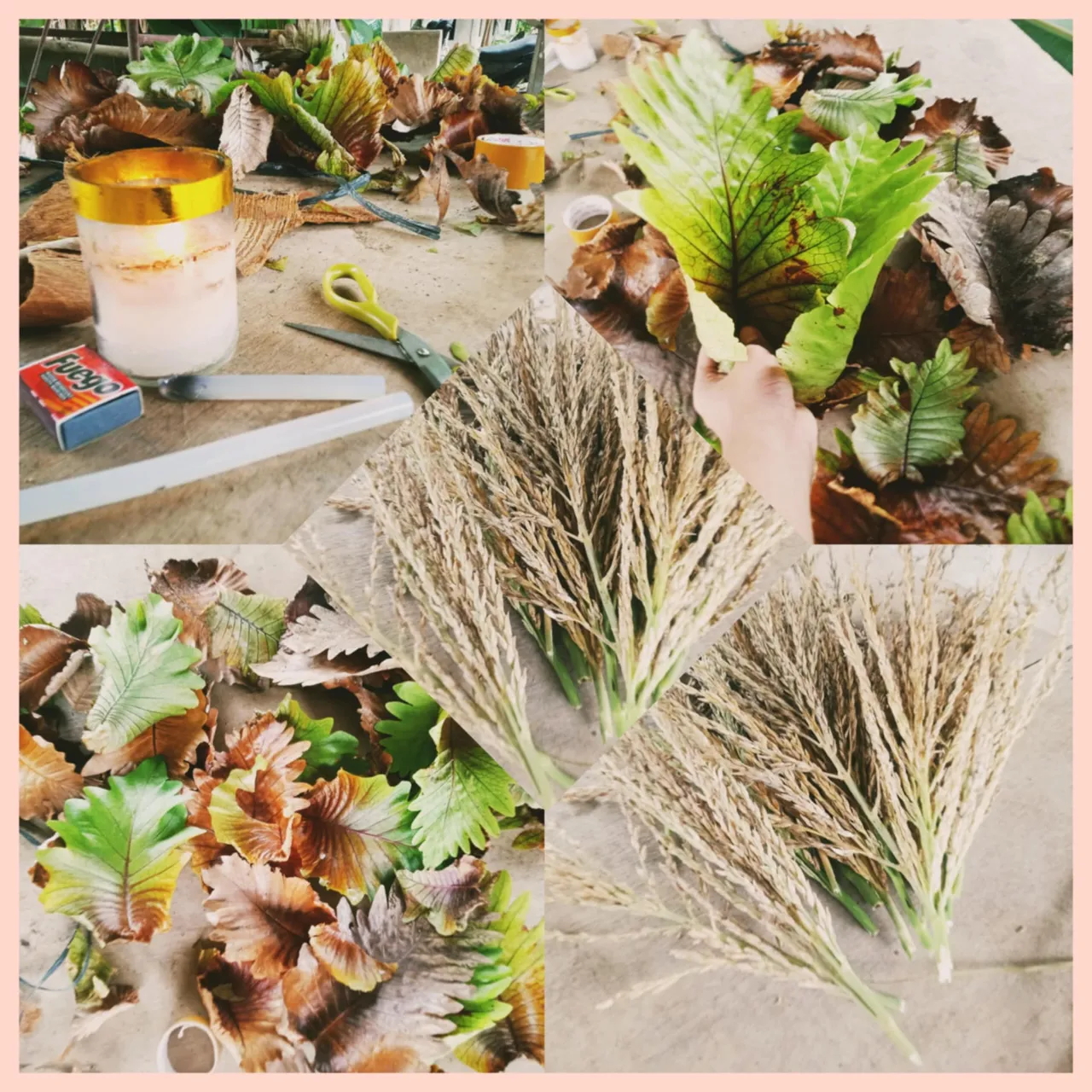
3. Aglaomorpha fortunei leaves known locally as "kab-kaban/cab-caban";
4. Corn flower known locally as "banay";
5. Glue sticks;
6. Strings;
7. Wire; and
8. Varnish (optional).
Steps in crafting the DIY Parol:
1. Using bamboo sticks, you have to form a star shape and tie it using strings. Note, you have to make two identical stars.
2. Put the two stars together and tie it using strings, put another bamboo stick within the two stars to create a 3D effect.
3. After the star has been made, cover it with coconut coir parchment, known locally as "ginit," using glue sticks. Cover all of the star's sides until no one is left uncovered.
4. Paste the aglaomorpha fortunei leaves known locally as "kab-kaban/cab-caban" around the star; rely on your artistic side, you can do whatever ever design you want.
5. Put a circular aluminum wire around the star, forming a circle. Attach the wire using strings.
6. Tie corn flowers using a string throughout the circular wire until done.
7. After all the materials have been added, brush or spray the lantern with varnish to bring out its color. Note applying varnish is optional.
8. Your lantern is ready for display.

During the making process, we hardly finished the parol since the materials come from the forest; we have to gather leaves from the forest. What makes it hard is that it's hard to find "kab-kaban/cab-caban" leaves nowadays, especially those that are still in good condition. I also have to ask for corn flowers from our neighbors to complete the parol; coconut, known locally as "ginit," is also hard to get since my brother has to climb up the coconut tree to gather some. Good thing my father helped us in gathering "ginit." Overall, the making process may be arduous but the final product is worth the hard times. We grabbed the 1st place in the competition and it was all worth it.

Moreover, parol symbolizes our deep cultural tradition as Filipinos. It reminds us of the spirit and essence of Christmas. That's all for now Hivers. I hope you've enjoyed reading my blog. Help me reach a bigger audience by up-voting, commenting, and re-blogging. Have a great day ahead everyone. See you in my next blog. Bye bye! 👋💗🌷✨