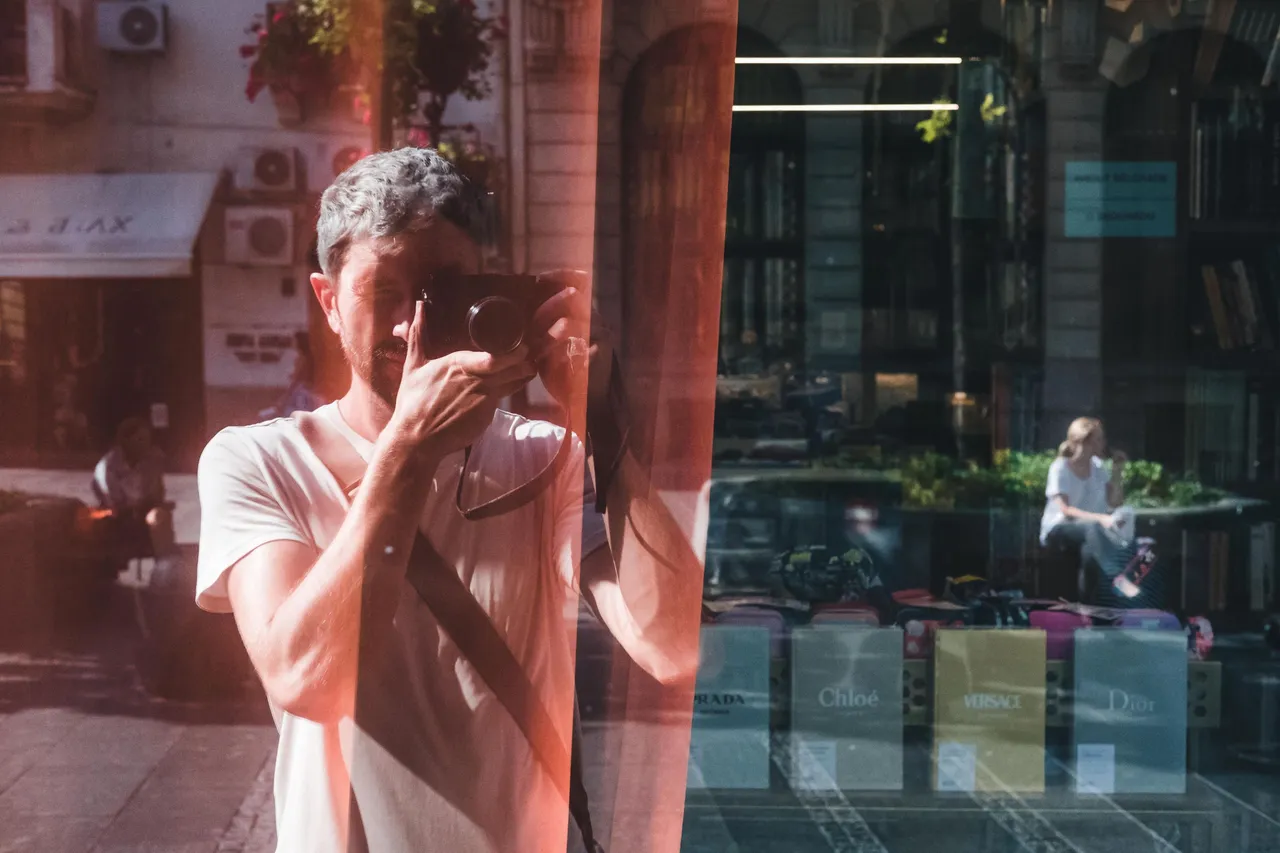
As promised, here is more in-depth talk about how to use different methods to capture the street scene in a good light. Light is the essential ingredient in a great image. The other necessary elements are good composition, interesting subject and a decisive moment. Many beginner street photographers will not pay attention to light and focus only on capturing a person or scene without other considerations. If you want to avoid one-dimensional results that a mindset like that produces, then here are some things to rules to follow.
Shooting with sun (light) behind you

This is when you are positioned between the light and subject. Light behind you, subject in front so the light hits them directly and they are fully illuminated. This approach works well when they are coming out of an area that's covered in shadows and the content behind them is dark so that there is contrast and separation. In this case you absolutely need to expose for the highlights - make sure that highlights are not overblown and let everything that's in the shadows fall into dark.
Light is behind the subject

It's also known as cinematic lighting. Now it's a reverse situation. The subject is between you and the light source so you are shooting directly into the light. This results in subjects showing only as a silhouette and it's a very popular technique nowadays. But for this type of photo to be interesting, it needs to have other elements, shapes, patterns to give it more oomph. As the subject is a silhouette, the background needs to be bright so there is contrast.
Sideways light

In this situation, light is coming from the side and the photographer usually shoots a profile of a subject. It's best best when they are facing the sun which means their face is illuminated and not their back. Because of your position, they will have an outline highlighted on one side. In order for it to work well, the area behind them needs to be in shadow. But this approach can have many different results depending on how the subject is relating to the light.
Something to be aware of
When the sun is too high in the sky (broad daylight), the light and shadows become much harsher. Shadows are not nice and long and the subject's face will have a lot of dark shadows on it. It's much harder to produce good results in conditions like this. It's best to go out early in the morning or during golden hour.
Shooting in the flat light or when the sun is hidden can also be fun. Usually in these conditions I focus on close-up portraits of people as the light is even and flattering.
Of course, rules are also there to be broken so don't be afraid to improvise and follow your intuition. :)
Here is the rest of the shots from few days ago. Hope this was helpful!