

Hi everybody :)
One day it would have to happen.
I ran out of objects that could provide interesting details after a macro photography session.
It was then that i decided to combine the useful with the pleasant and on a brief expedition to the middle of the mountain, together with my family, during a Sunday afternoon, we collected several objects that would later serve as the focus for macro photography sessions. Among the objects collected, some stand out with notable characteristics worthy of scientific analysis:
Stones with intriguing geological details, very different from those collected on the beach and which have been part of previously shared sessions.
This is not my case, but for those who understand or have studied this aspect, they will easily be able to obtain information about the local geological formation through the identification of the minerals present in the stones, through visual analysis and, when possible, chemical tests, as well as the observation of crystalline structures and textures.
Through other objects collected, it will also be possible to identify morphological and botanical characteristics and even the origin of tree species.
Each object collected provides a unique opportunity to explore different aspects of the surrounding environment.
Today i would like to present the plant that i share in a more reliable way, but after some research, i ended up not being able to identify the correct name, among many others that are quite similar.
Let me present today’s model:

Before moving onto the result...
My introductory thoughts about macro photography:
It's amazing how macros with their blurred background can result in such different images full of contrasts and textures especially with this kind of subjects.
In the world of photography, especially macro photography, there is a universe of things available to everyone, enabling totally different and original approaches.

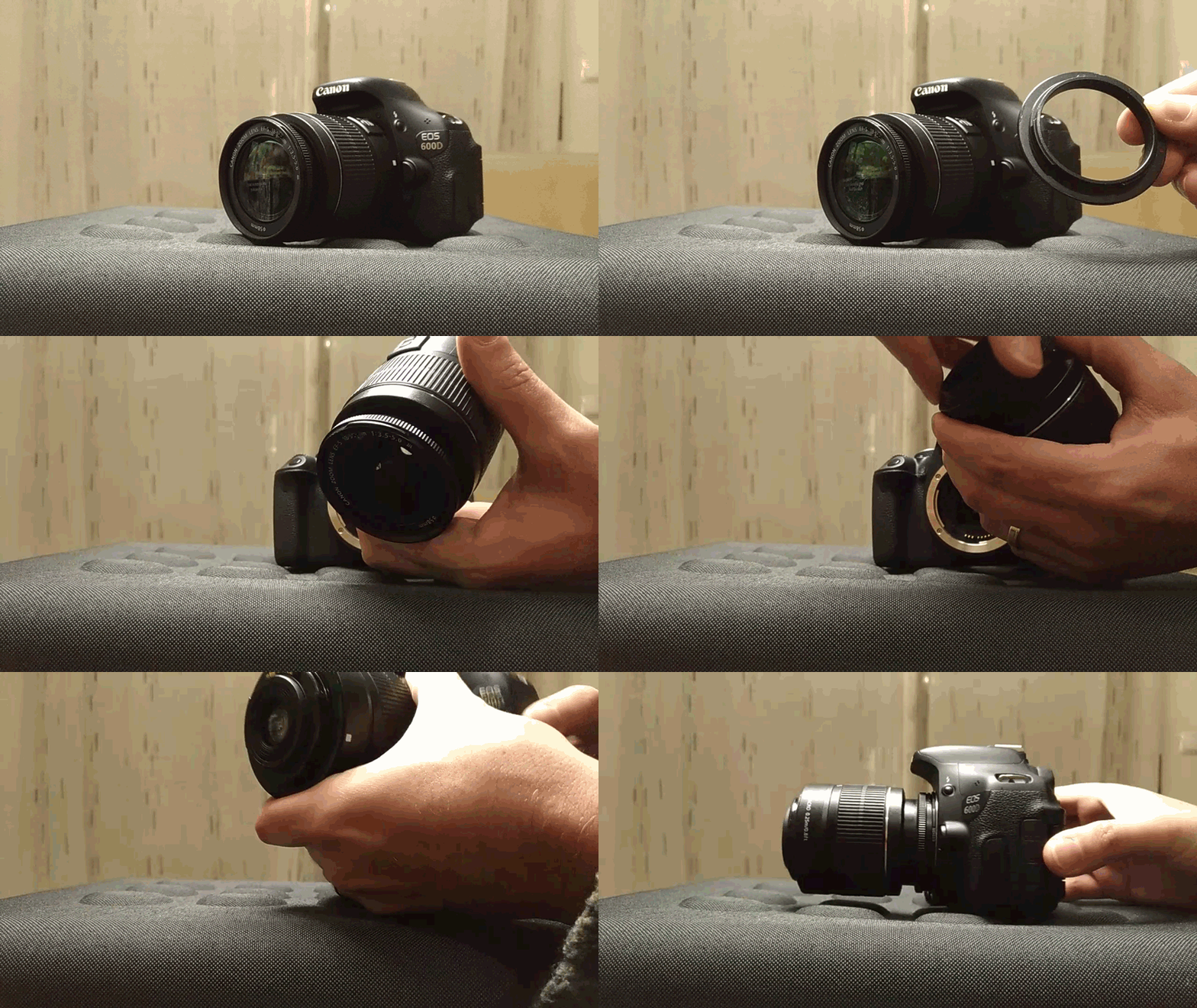
Among the various possible techniques to shoot macros, this is perhaps the most affordable and effective technique for those who have a camera with removable lens.
We can simply remove the lens and reverse the direction, and by using an inverter ring it ends up being more comfortable and facilitates the process.
Let's now move onto the result:


The session is closed for today.
Hope you like it :)
These photos weren't taken with a tripod
Photo by
Camera - Canon EOS 600D
Lens - EFS 18-55mm
Location - Portugal

Thanks for following me and support my work!

See you soon
Thank you for watching
Never forget
The price of anything is the amount of life you trade for it.
Time is life... value yours, make every fraction worth it.