
A couple of days ago I posted about my experience at the museum, where there was an exhibition about old technique and were exhibited some objects from different decades. You can read the post here, if you missed it.

Today I'd like to show you more interesting devices from the past. Come with me as it's going to be an interesting walk back to the past.

SEG cassette player, model SRD 1221-G, made in the 90's in Germany. This may be an ancient item for some, while others are going to smile and remember theirs as they were teenagers in the 90's or adults.

I think I still have some cassettes somewhere, but I believe most of these cassettes ended up in the garbage bin worldwide. There were good in their era, but what we have today is unbeatable in terms of quality.

This is a device called Walkman back in the day, but in it, it says anti-rolling, stereo headphone cassette player. It's a Crown, model SZ-31, made in China. However, on the device is written Japan. For those of you who have never seen one, you inserted those cassettes in this, pressed play, put it in your pocket and walked with it :) Now we have everything on our phone.


This is a Gestetner Mimeograph, made between 1930 and 1940, in Tottenham, GB and its case. I remember I was looking at it at the museum and could not figure out what it was. Most likely you're doing the same and asking wtf is this. So I ran a search and here it is.
A mimeograph machine (often abbreviated to mimeo, sometimes called a stencil duplicator) is a low-cost duplicating machine that works by forcing ink through a stencil onto paper. The process is called mimeography, and a copy made by the process is a mimeograph.
Mimeographs, along with spirit duplicators and hectographs, were common technologies for printing small quantities of a document, as in office work, classroom materials, and church bulletins. Early fanzines were printed by mimeograph because the machines and supplies were widely available and inexpensive. Beginning in the late 1960s and continuing into the 1970s, photocopying gradually displaced mimeographs, spirit duplicators, and hectographs. source
Even so, I've never heard of such device, but I'm glad I got to see it there and learn such thing existed.

There's a meter there, to adjust to print lower or higher, but honestly I don't understand what it is referring to.

A calculator machine called Mureșu, made by Electro Mureș in 1968. Now this is an 1 million $ question. How on earth was this working?

Have you ever seen one? Do you have any idea wow is this working? I have no clue. And imagine how we have the calculator function in our phone, along with other apps. No need for a 3 kg machine that does 0.0001% of what the phone app does. Mind blowing.

Now let's look at the phones :)) This was a bit of a mystery as it has no dial, which makes me believe you had to pick up the receiver and speak to the operator, tell her (or him, but back then most if not all the operators were women) the address and number you wanted to speak to and they connected you to that number.

Looks like I was wrong as there's a man on the photo. For those of you who have never seen a phone center, this is how it looked like. There were tens of people connecting the calls.

I have one of this, the exact same model 😂. I have even posted about it years ago.
This is an even older model as it has that crank, that generated impulse, which notified the phone center.

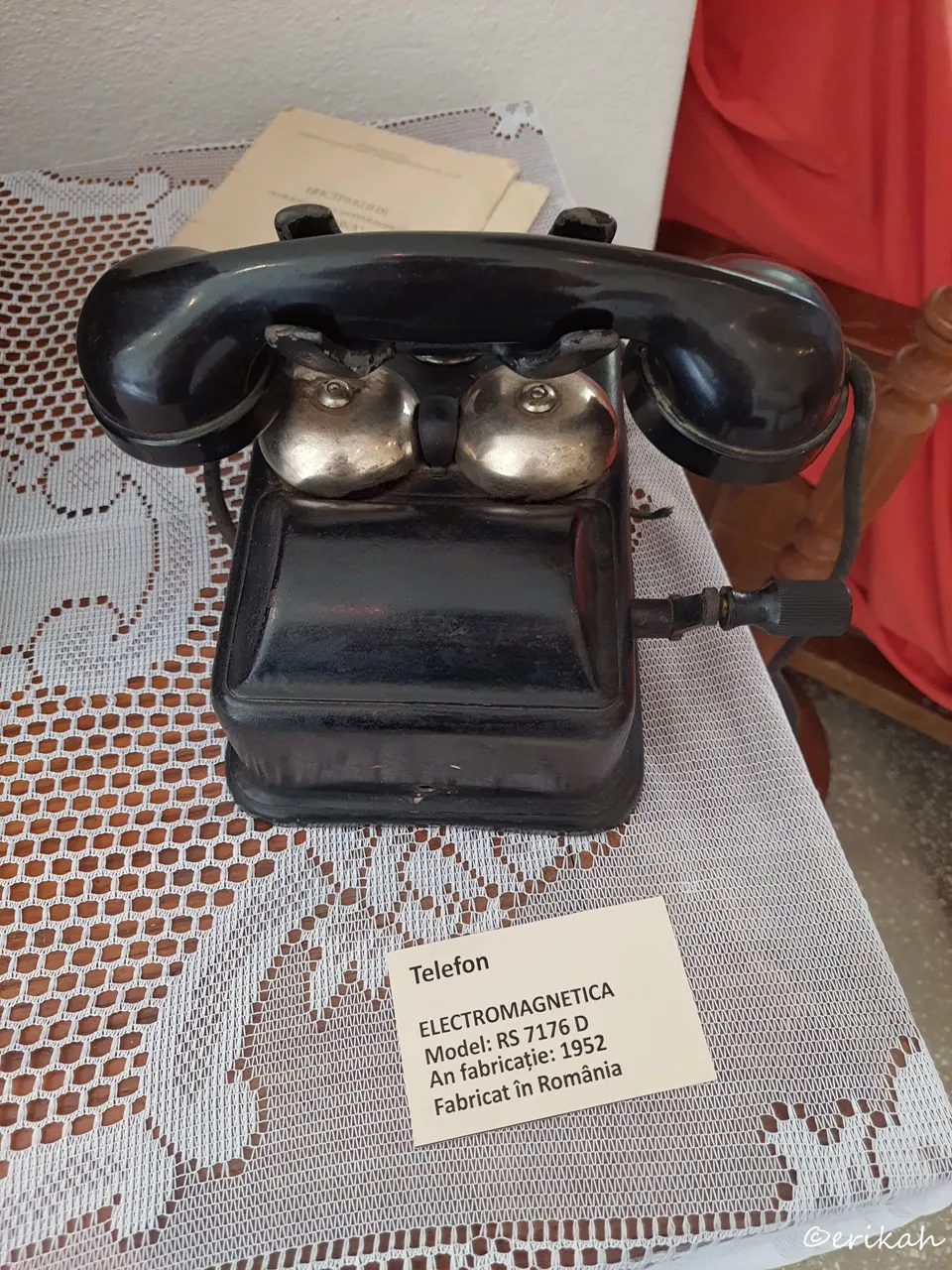
Imagine this phone ringing, with those two brutal bells 😁. I don't want to honestly. Rather prefer a nice ringtone.

This was a newer edition and I think it was used by factories, companies that had lots of departments. back in those days in Romania there was this internal phone system, where you could call the operator and ask to be connected to a certain department and if you wanted to speak outside the factory, you had to ask for an external line. But that was often frowned upon.

God, what an ugly phone! I remember I used these and as I had long nails, it was a bit difficult to dial and I always used my pencil to dial with 😂. God, those days 🤦♀

This was nicer, the design was not so brutal.

This was a nice design too.

Ok, let's hear it, who had these phones back in the day? I didn't have either of them.

These were a bit smarter as they had keys instead of dial and the one on the left had a cordless or wireless receiver, but you had to stay close to the phone.

These were used mostly, if not exclusively by the army. They set up a line wherever they went and the phone was portable, or mobile, but not in a sense we use the word today as it still needed a telephone line.


The components of the phone you saw above.
This is it for today. Please feel free to let me know if you've seen any of these items before, or if you had one of the phones. Don't be shy :)

If you're a newbie, you may want to check out these guides:
- Communities Explained - Newbie Guide
- Cross Posting And Reposting Explained, Using PeakD
- Hive Is Not For Me
- How To Pump Your Reputation Fast - Newbie Guide
- Tips And Tricks & Useful Hive Tools For Newbies
- More Useful Tools On Hive - Newbie Guide
- Community List And Why It Is Important To Post In The Right Community
- Witnesses And Proposals Explained - Newbie Guide
- To Stake, Or Not To Stake - Newbie Guide
- Tags And Tagging - Newbie Guide
- Newbie Expectations And Reality
