
All hail the Emperor! Such chants (in Latin or some of the Middle High German dialects) shattered the walls of this castle in the times of the Holy Roman Empire. Its emperors did not have a single capital and moved from one castle to another instead – a concept that seems very progressive to me. Nuremberg castle consists of two separated fortified sets of buildings. One of them was meant exclusively for the emperor and his suite while the other one served as a seat of the local governor. Guess which one is fancier… The emperor’s palace remained vacant when the monarch was not staying in Nuremberg.
Sláva císaři! Tento a podobné výkřiky (v latině nebo v některém ze středověkých hornoněmeckých dialektů) otřásaly zdmi tohoto hradu v časech Svaté říše římské. Její císaři neměli jediné sídelní město, namísto toho se stěhovali z jednoho hradu na druhý. Což je koncept, který působí hodně progresivně. Norimberský hrad se skládá ze dvou samostatných opevněných komplexů. Jeden z nich patřil výhradně císaři a jeho družině, zatímco ten druhý správcům města. Hádejte, který je honosnější... Císařský palác zůstával prázdný, když panovník zrovna nepobýval v Norimberku.

Being a humble traveller and not an emperor, I visited the non-imperial part of the castle first. The main building has two towers – the Pentagonal Tower that you can see on the picture above and the Luginsland Tower. The Pentagonal Tower is one of the oldest parts of the entire castle complex, it comes from the 13th century.
Jsa obyčejným poutníkem a nikoli císařem, navštívil jsem nejprve část necísařskou. Hlavní budova má dvě věže, Pětibokou, kterou vidíte na fotce, a Luginslandskou. Pětiboká věž ze 13. století je jednou z nejstarších částí celého hradu.

The Pentagonal Tower.
Pětiboká věž.

The main building is called the Imperial Stables. However, horses were obviously kept only on the ground floor. The rest of the building served to the court. Believe it or not, it is a hostel nowadays. Arguably one of the cheapest options for those who would fancy sleeping in an actual medieval castle.
Hlavní budově se říká Císařské stále. Koně byli každopádně ustájeni jen v přízemí. Zbytek budovy sloužil dvořanům. A věřte nebo ne, dnes je to hostel. Takže jedna z nejlevnějších možností pro ty, kteří by chtěli přenocovat v opravdovém středověkém hradě.

The Luginsland tower.
Luginslandská věž.

And finally, I enter the imperial part of the castle.
Konečně vcházím do císařské části hradu.
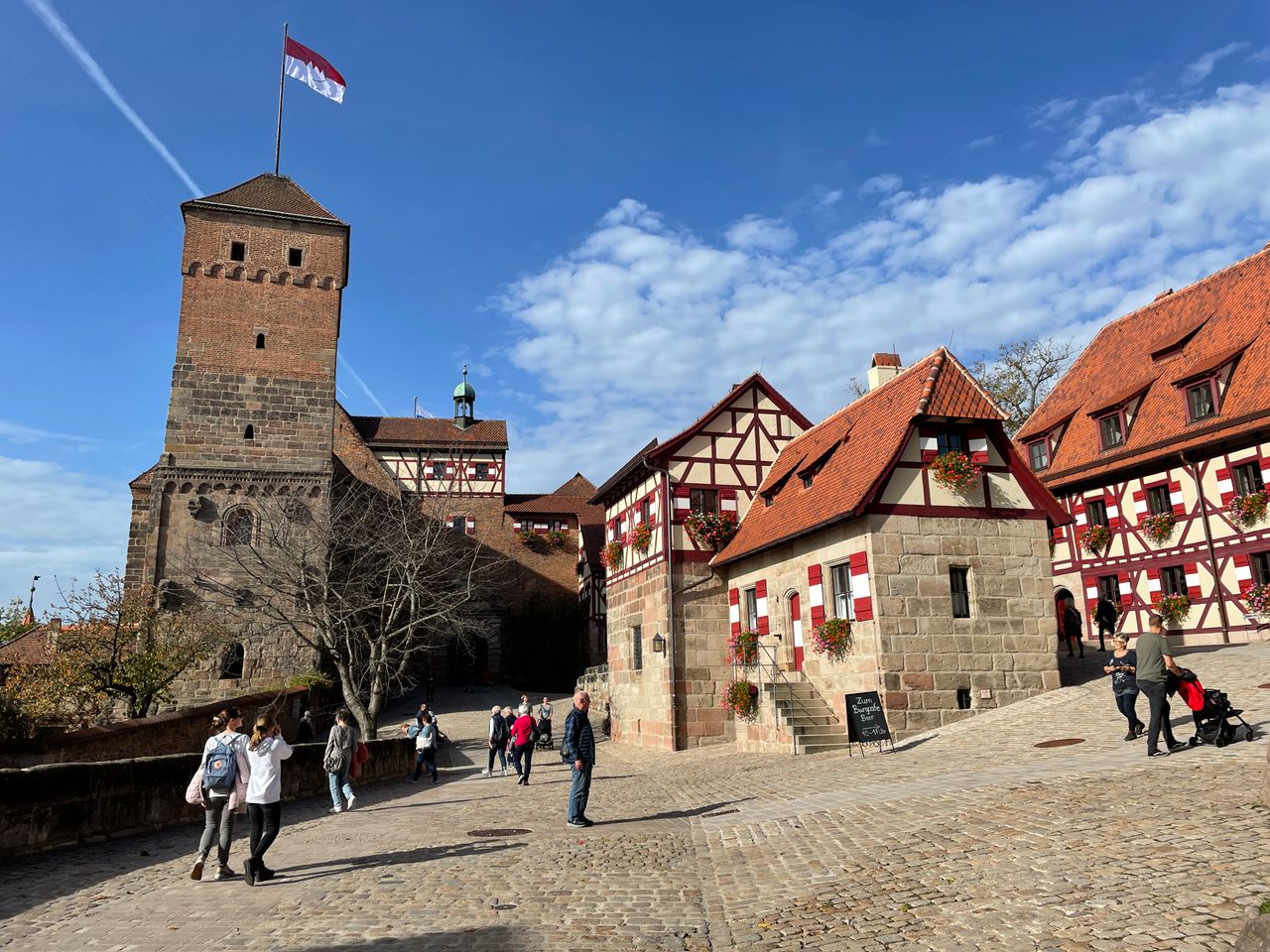


The yard is decorated in imperial colours and built up in a typical German style.
Nádvoří je ozdobeno císařskými barvami, budovy jsou klasicky německé.
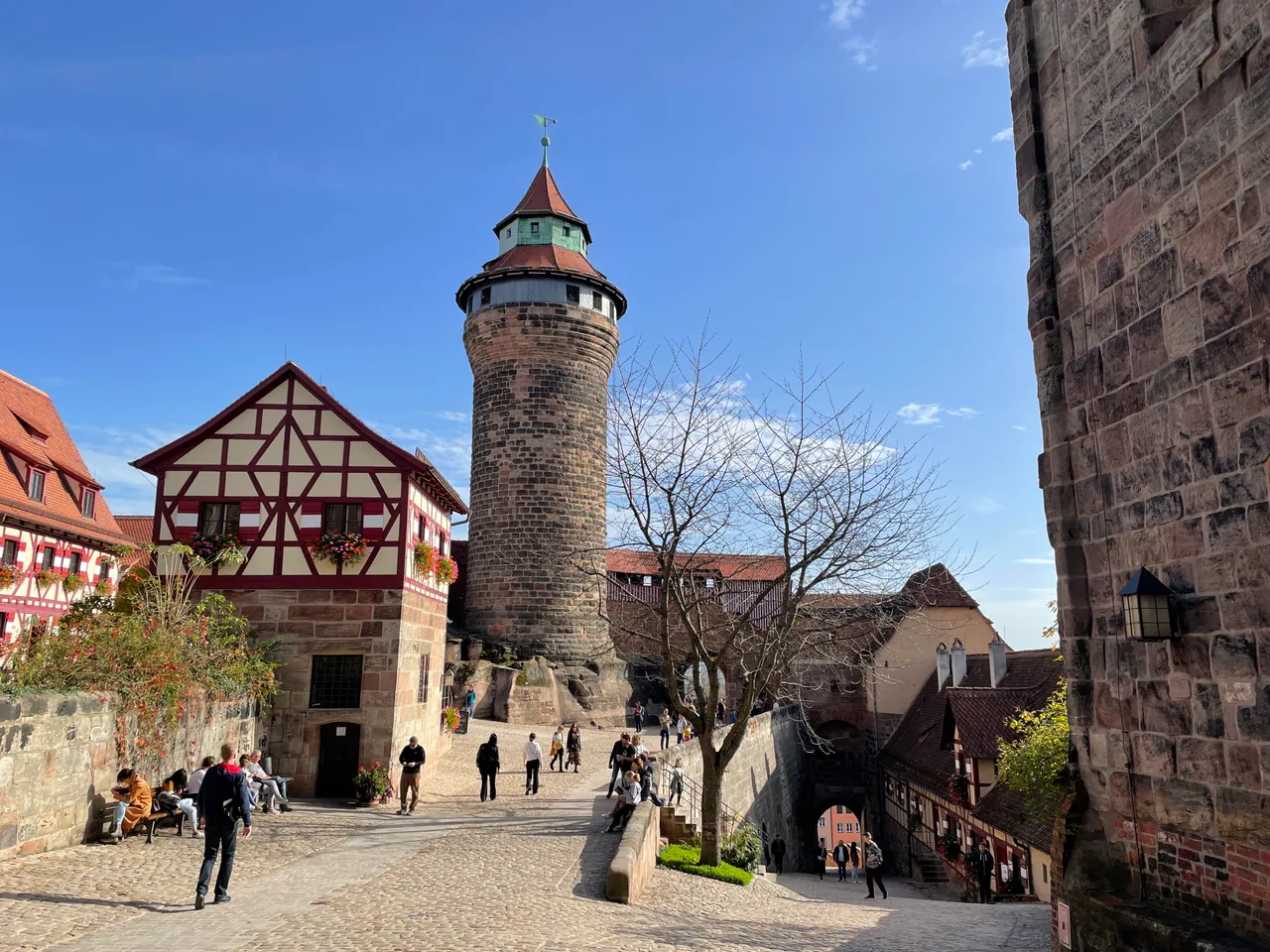


The inner yard, a part of the paid castle tour.
Vnitřní nádvoří, část placené prohlídky hradu.


Nuremberg castle is one of the finest examples of medieval military architecture, and its massive walls with multiple bastions are an obvious proof of this. As firearms evolved over the centuries, such fortification eventually become obsolete but it is still impressive.
Norimberský hrad je jednou z nejlepších ukázek středověké vojenské architektury, což dokládají jeho masivní hradby s mnoha bastiony. Ale jak se během století vyvíjely palné zbraně, postupem času zastaraly. I tak jsou ovšem úctyhodné.