As I’ve already mentioned in my previous Cypriot posts, there are three UNESCO World Heritage Sites in the island. We managed to visit two of them (or 1.2 of them, stay tuned for the 0.2 bit 😉). Tombs of the Kings were designated as the heritage site in 1980. It is a large necropolis that, accidentally, never served as a resting place for kings. Not a single one. What a clickbait, huh? No worries, the site is worth visiting anyways.
The first underground tombs were carved out of solid rocks on the coast in the 4th century BC, the youngest ones come from the 3rd century AD. They allegedly served for Cypriot aristocrats, high priests and possibly other ancient “celebrities” that could afford spending a fortune on their tomb. Cutting one into the rocks took years, decades in case of the most prestigious and largest ones.
Jak už jsem napsal v předešlých kyperských postech, na ostrově jsou tři světové památky chráněné UNESCO. Nám se podařilo navštívit dvě z nich (respektive 1,2 z nich, když budete číst další posty, dozvíte se, jak je to s těmi desetinkami). Královské hrobky se staly památkou UNESCO v roce 1980. Jde o rozsáhlou nekropoli, ve které shodou okolností nikdy nebyl pohřben žádný král. Ani jeden. Clickbait, řeklo by se dnešní hantýrkou. Ale nebojte, Královské hrobky stojí i tak za návštěvu.
První podzemní hrobky byly vytesány do kamene ve 4. století před naším letopočtem, ty nejmladší jsou ze 3. století po Kristu. Pravděpodobně sloužily kyperské aristokracii, velekněžím a možná i některým dalším starověkým "celebritám", které si mohly dovolit utratit celé jmění za honosnou hrobku. Jejich vysekání trvalo léta, v některých případech zřejmě i desetiletí.


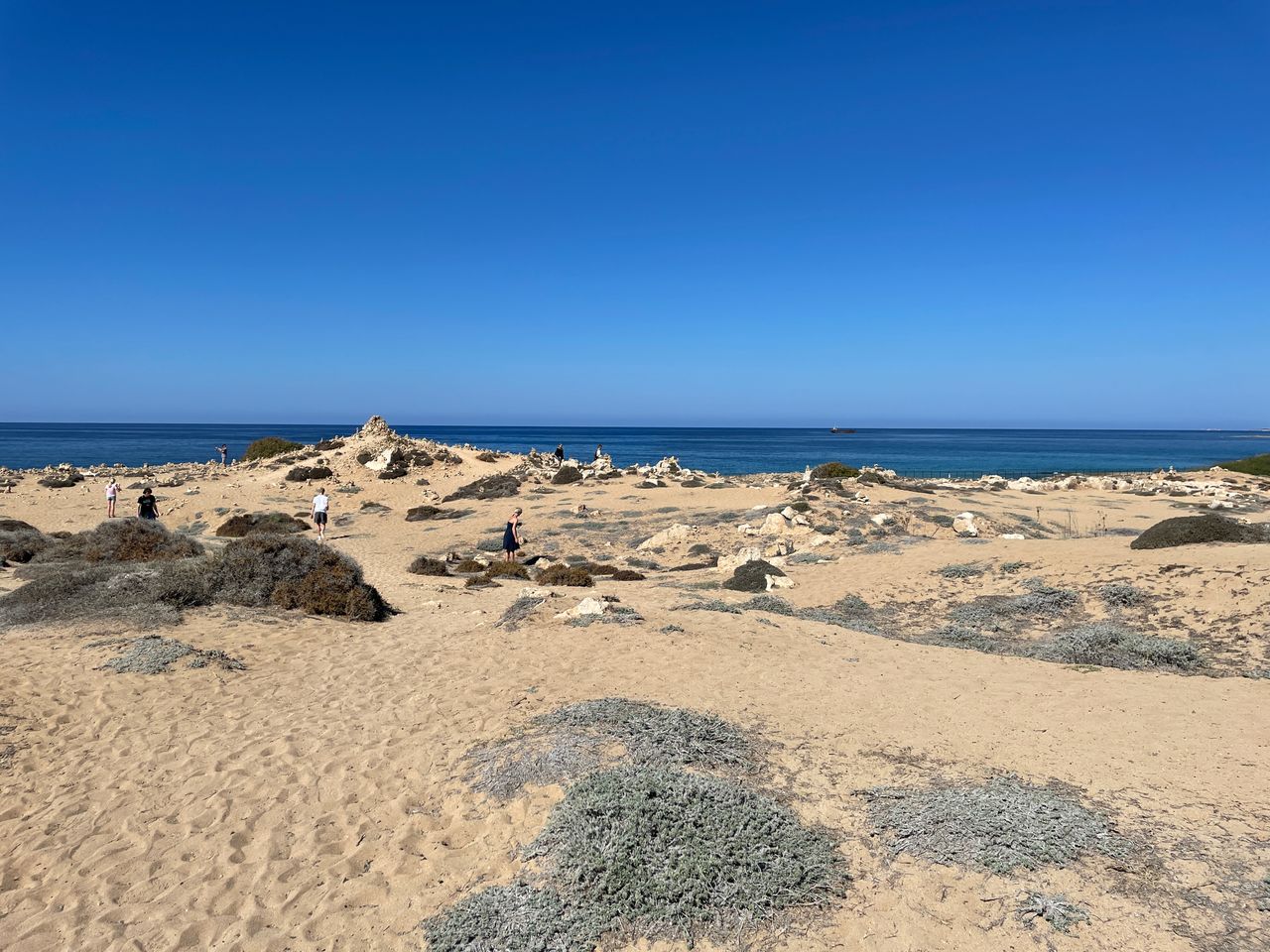
The necropolis is situated on the seashore and resembles a semi-desert urban park. With all the sun and sea noises, I didn’t feel like in a cemetery at all.
Nekropole leží na pobřeží a připomíná spíš městský park. Díky slunci a zvukům moře jsem se vůbec necítil jako na hřbitově.


Necropolis "promenade".

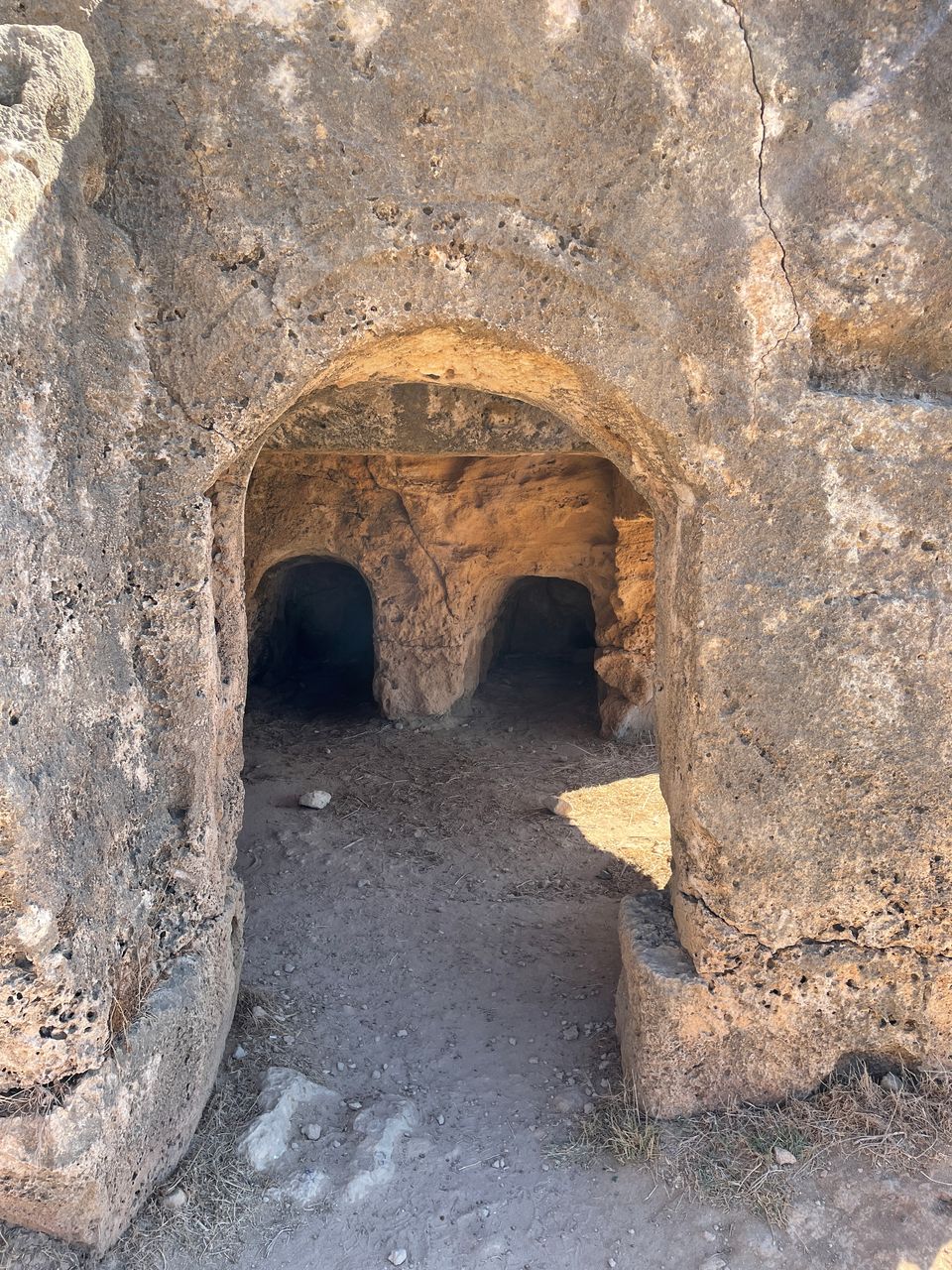
Most of the tombs are family ones, you can see spots for coffins of various sizes inside. This one is for 5 people in total, two adult-sized cadavers and three minors.
Většina hrobek je rodinných, uvnitř jsou místa pro rakve různých velikostí. Tahle je pro 5 osob, dva dospělé a tři děti.


Obviously, all the tombs weren’t lost for over a millennium. At least some were apparently used for sleeping over, or even as long-term shelters. You can tell by the smoke trails on their ceilings. No wonder it is mostly on the shallowest ones by the sea.
Ne všechny hrobky byly pochopitelně ztraceny po více než jedno milénium. V některých očividně lidé přespávali. Poznáte je podle stop kouře na jejich stropech. Nepříliš překvapivě jde hlavně o ty mělčí blízko moře.


Some of the younger tombs are huge and reminds of Greek temples. However, even those are underground, and you need to climb down several steep stairs to get into them. No altars, no place to praise any of the ancient deities, just rocks and empty coffin spots.
Některé z mladších hrobek jsou obrovské a připomínají řecké chrámy. Ale i tyhle jsou pod zemí a musíte sešplhat několik strmých schodů. Nejsou tu žádné oltáře ani prostor pro uctívání starověkých božstev, jen skály a místa na uložení rakví.




The "royal" cat at one of the tombs.
"Královská" kočka na jedné z hrobek.

And several extra pictures from all around the necropolis.
A několik dalších fotek z nekropole.