
I was planning to go on vacation. God is most amused when people plan things. Instead of a vacation, I went to organize my uncle's funeral. It's a sad occasion. But it doesn't mean I didn't look around.
I stayed in the small town of Merklín. (West Bohemia, Czech Republic, Central Europe.) On the little square I was attracted by the monument to the victims of the world wars. You can find such a monument in every Czech town and village. Hundreds of thousands of Czechs died in the first war and tens of thousands in the second. During World War II, it was mostly Jews.
It is not quite usual for Czechoslovak citizens to be divided according to religion or racial origin. It happened here. Later I traced that in 1938 there were about 1500 inhabitants in Merklín. Of these, 1% professed the Jewish faith. This implies that about 0.5% of the Czechs were murdered during the war and all the Jews.
I also deduced that there must be a Jewish cemetery and synagogue somewhere. I went looking for both.
I couldn't find the synagogue. Later I read that the Jewish community disappeared at the beginning of the 19th century and the synagogue was converted into a residential house. The local Jews joined the religious community from a neighboring town.
The car navigation on my mobile phone helped me to find the cemetery. I found the cemetery about two kilometres away in the neighbouring village of Ptenín.
I have further conceived this article as a photographic one. Czech readers can read some facts about the cemetery here. For others, a few facts. The cemetery was founded in 1685, the oldest tombstone found dates from 1718, the youngest from 1934.
After the murder of the Jewish community, there was no one to take care of the graves. The ruling communist regime was atheistic, so the cemetery fell into disrepair from 1940.
Jews were persecuted and discriminated against everywhere they went. That's why their cemeteries are far away from the villages, on barren land that someone was willing to sell them for an exorbitant price.
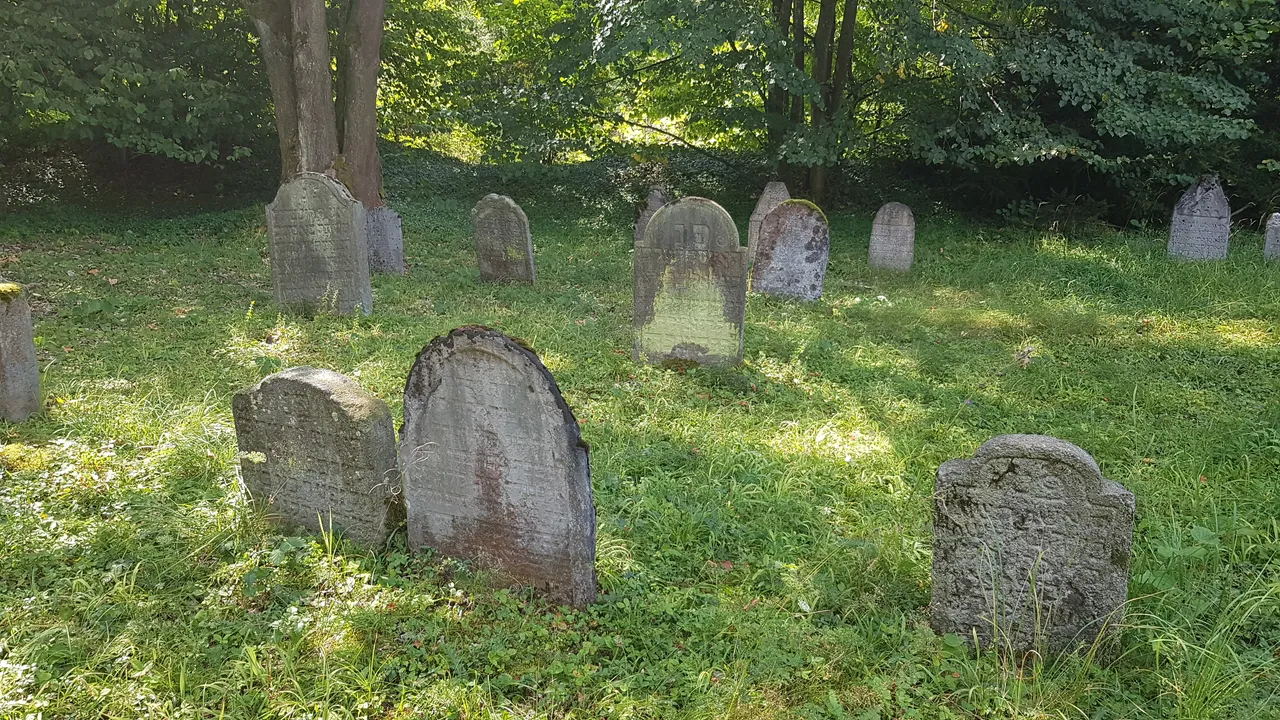
In some ways, all Jewish cemeteries are the same. The Hebrew on the tombstones is supplemented first by German, and since 1918 by Czech. The symbols are the same. Blessing hands. In this grave sleeps someone who derives his descent from Aaron, one of the kohen, descended from the priests of old.
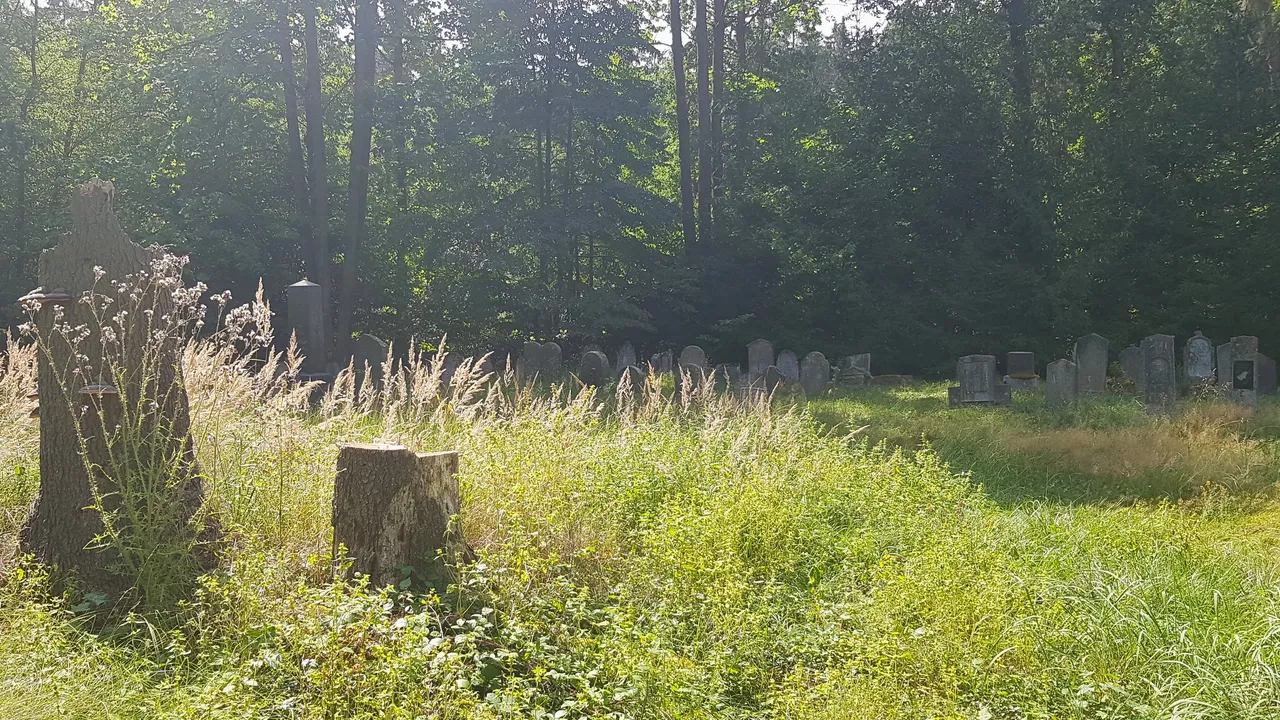
The cemetery was completely swallowed up by the forest. After the change of circumstances in 1989, the forest was partially removed.
I visited the forest cemetery in the afternoon, with temperatures around 34 °C and a scorching sun. If there was someone here who doesn't take pictures with a mobile phone like me, knows how to take pictures and doesn't rush, there could be some interesting pictures.
This is all that's left of the cemetery wall. Where the well, the morgue, the entrance to the cemetery, the Cohen´s gate might have been, I have not been able to find out.
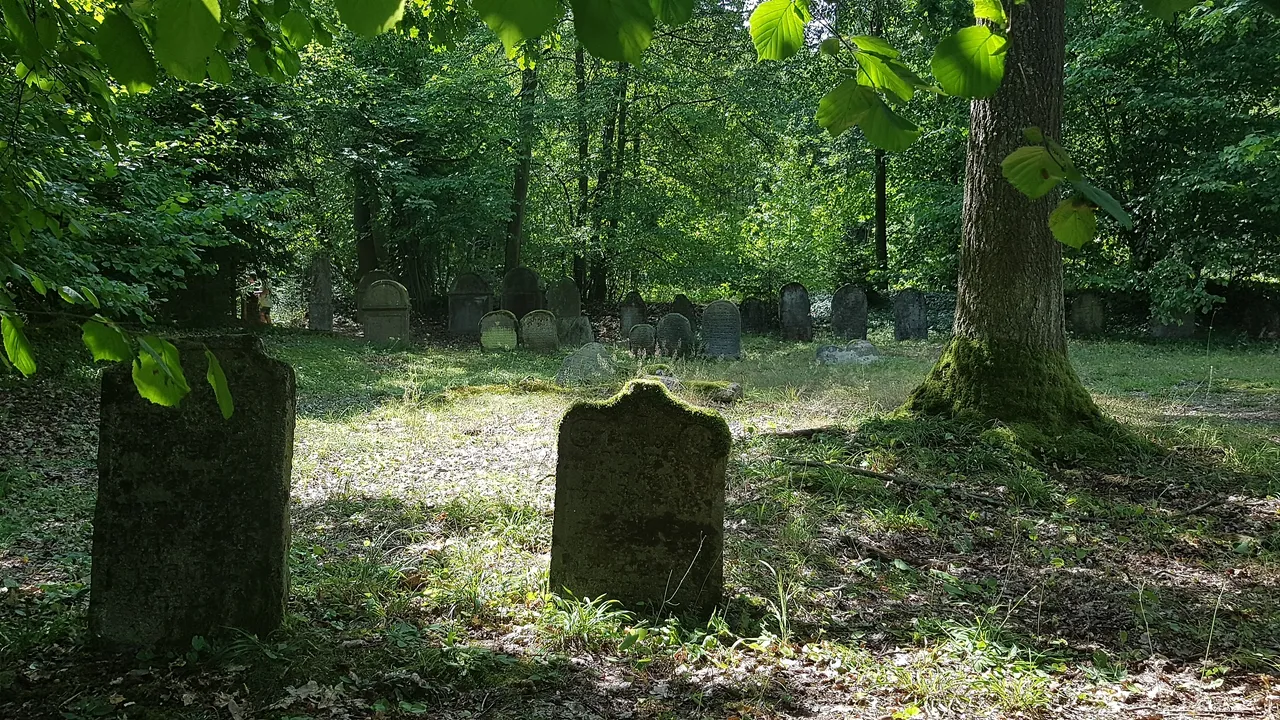
Stone and trees, light and shadow offered interesting photographic opportunities.
Abandonment and dilapidation is a rewarding subject for photography. I always fall into melancholy at Jewish cemeteries. Still, I don't miss an opportunity to visit a Jewish cemetery whenever I have the chance.
I don't know if I'll ever come back here again... Just a little trivia. The cemetery lies on the border of three territories, where it was customary to make gravestones out of different materials. All kinds of materials meet here. The tombstones here are made of limestone, sandstone and granite.
The light conditions are completely different in each part of the cemetery. It's very hot. We need to get back to the world of the living.
The last photo before leaving.







Starý židovský hřbitov u Merklína
Plánoval jsem odjet na dovolenou. Bůh se nejvíc baví, když lidé něco plánují. Místo dovolené jsem odejel organizovat pohřeb svému strýci. To je smutná událost. Ale neznamená to, že jsem se nedíval kolem sebe.
Ubytoval jsem se v městěčku Merklín. Na náměstíčku mě zaujal pomník obětem světových válek. Takový pomník potkáte v každém českém městě a vesnici. Za první války zahynuly statisíce Čechů a za druhé desetitisíce. Za II.světové války to byli převážně Židé.
Není úplně obvyklé, aby českoslovenští občané byli rozdělováni podle náboženství nebo rasového původu. Tady se tak stalo. Později jsem si dohledal, že v Merklíně v roce 1938 žilo asi 1500 obyvatel. Z toho 1% se hlásilo k židovské víře. Z toho vyplývá, že Čechů bylo za války zavražděno asi 0.5% a Židé všichni.
Také jsem usoudil, že někde musí být židovský hřbitov a synagoga. Obojí jsem se vydal hledat.
Synagogu jsem nenašel. Později jsem se dočetl, že židovská obec tu byla zrušena už na začátku 19.století a synagoga přeměněna na obytný dům. Místní židé se přidali k obci ze sousedního městečka.
S hedáním hřbitova mi pomohla autonavigace v mobilním telefonu. Hřbitov jsem nalezl asi i dva kilometry daleko u sousední obce Ptenín.
Tenhle článek jsem dále pojal jako fotografický. Česky čtoucí čtenář si může nějaká fakta o hřbitově přečíst zde. Pro ostatní pár údajů. Hřbitov byl založen 1685, nejstarší nalezený náhrobek pochází z roku 1718, nejmladší z roku 1934.
Po vyvraždění židovské komunity se o hroby neměl kdo starat. Vládnoucí komunistický režim byl ateistický, takže hřbitov od roku 1940 chátral.
Židé byli pronásledováni a diskriminování všude, kam přišli. Proto jsou jejich hřbitovy vzdáleny daleko od obcí, na neúrodné půdě, kterou jim byl ochoten někdo za přemrštěnou cenu prodat.
V některých ohledech jsou všechny židovské hřbitovy stejné. Hebrejština na náhrobcích je doplněna nejprve němčinou a od roku 1918 češtinou. Symboly jsou stejné. Žehnající ruce. V tomto hrobě spí někdo, kdo odvozuje svůj původ od Árona, jednoho z kohenů, potomků starých kněží.
Hřbitov zcela pohltil les. Po změně poměrů v roce 1989 byl les částečně odstraněn.
Navštívil jsem lesní hřbitov odpoledne, při teplotách kolem 34 °C a pálícím slunci. Kdyby tu byl někdo, kdo nefotografuje mobilním telefonem jako já, umí fotografovat a nepospíchá, mohly by tu vzniknout zajímavé fotografie.
Z hřbitovní zdi zbyla jen malá část. Kde mohla být studna, márnice, vstup na hřbitov, cohenská branka, se mi nepodařilo zjistit.
Kámen a stromy, světlo a stín nabízely zajímavé fotografické příležitosti.
Opuštěné a chátrající objekty jsou vděčným námětem pro fotografování. Na židovských hřbitovech vždy propadám melancholii. Přesto si nenechám ujít příležitost navštívit židovský hřbitov, kdykoli mám možnost.
Nevím, jestli se sem ještě někdy vrátím... Jen malá zajímavost. Hřbitov leží na hranici tří území, kde bylo zvykem dělat náhrobky z různých materiálů. Setkávají se tu tak všechny tři druhy materiálů. Náhrobky jsou tu z vápence, pískovce a žuly.
V každé části hřbitova jsou zcela jiné světelné podmínky. Je tu velké horko. Musíme se vrátit do světa živých... Poslední fotografie před odchodem.
