
Generally when I visit any castle in France I tend to focus on the exterior of the building and its architecture. I often find that the interiors of castles can become a bit monotonous and after a while they all start to seem the same to me. For that reason I rarely take many pictures of the interiors of the castles I've visited. But some of the interiors are pretty cool so I figured I'd share a few photos of some castle interiors that I liked over the years.
So if you are interested, follow me as I take you on a tour inside the castle.
The Great Hall
We will start the tour in the Great hall, which was sometimes referred to as the Gallery. Its a fitting place to start in my opinion considering these rooms were often the centerpiece of any castle.

In medieval times the great hall was often the largest room in the keep and generally functioned as the administrative and social hub of the entire estate. It was the place where people gathered to eat meals and back then, also to sleep.

Later on these rooms evolved into lavishly decorated banquet halls where nobles would hold official audiences and court and where socialites would gather for feasts and balls.

The rooms were typicall very large and well lit by windows and chandeliers. They were often used by nobles to show off their wealth and importance, as well as their power and generosity to others in their elite social circles.

Now lets move on to a different room of the castle, to everyone's favorite place, the kitchen!
The Kitchens

In modern day castle tours the kitchen tend to be the most interesting to experience. They are often equiped with a variety of cooking tools and utensils and are sometimes staged to look as they did several hundreds of years ago when they were still in use.

These rooms were often located below the great hall of the castle or some place on the ground floor, perhaps even in the basement. Food would be prepared there and then brought up to the great hall by servants. Sometimes the kitchens were even located in a separate building altogether. This was to reduce the risk of burning down the main building if a fire were ever to break out while cooking. Its a smart idea but of course it created more work for the serving staff who had to lug the meals up to the main residence.

Copperware is common to see in castles. Its typically hanging on the walls of the kitchens and pantries. Mortars and pestils and sometimes knives are also fairly common to see on display.

Refrigerators didn't exist back then so most food would have to be stored in clay pots like the ones in the photo below. I imagine that it was fairly difficult to keep any food fresh for extended periods of time back then, which makes me realize just how much we take things for granted nowadays with all of our fancy technology.

Now lets move on to a less common site to see in a castle, the bathroom!
The Bathrooms

There is a saying in real estate that kitchens and bathrooms sells homes, I wonder if that was true back in the days of castles?
Bathrooms in castles are extremely rare to see during a tour, at least in France. I've seen a few latrine style toilets before but in all the castles that I've visited I've only ever seen one full bathroom that was equipped with a tub.

Back in the day most washing stations were really just a bowl set up on a counter in an extremely dark room so this modern day copper tub was probably a state of the art feature at the time.
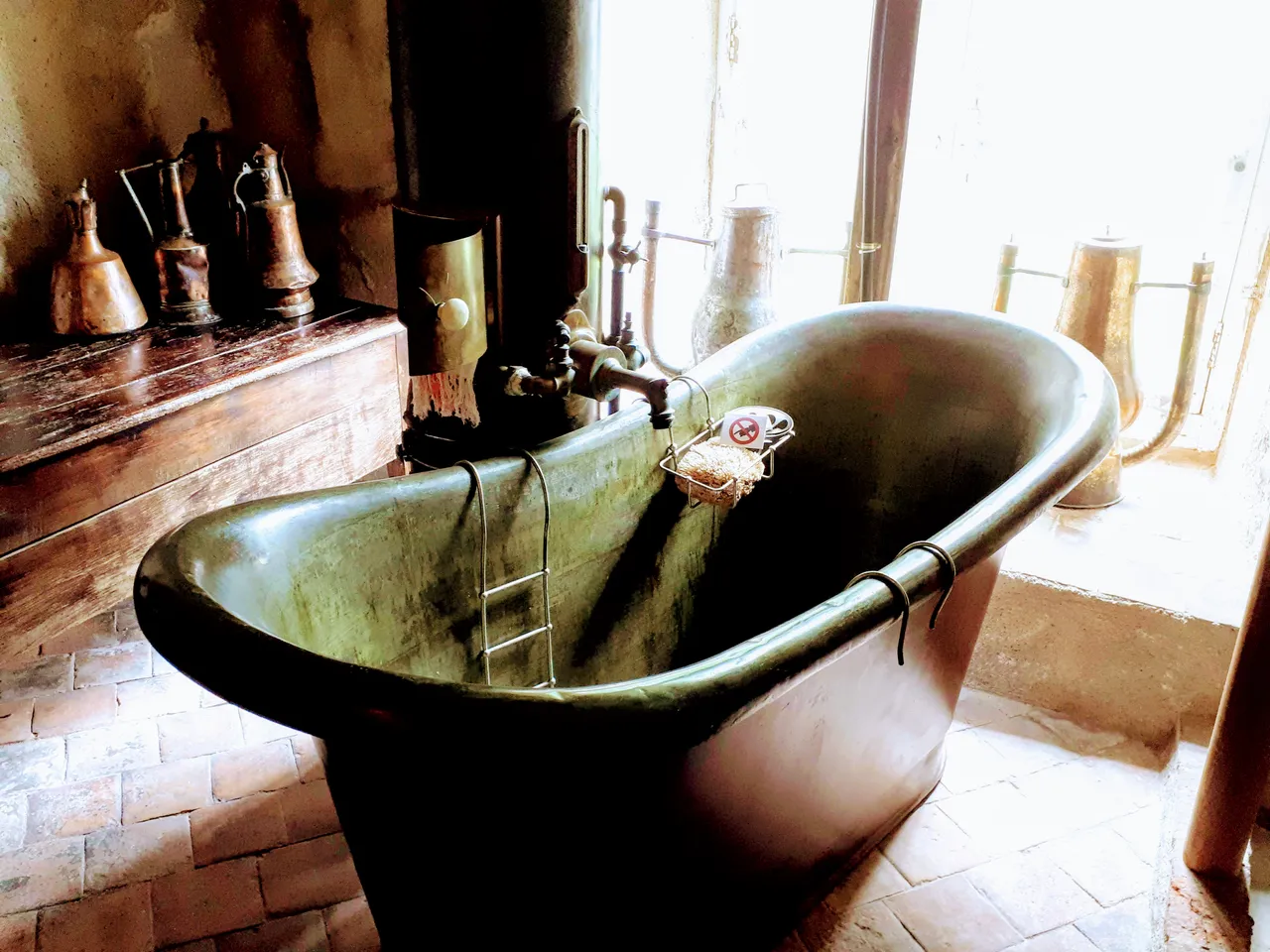
Taking a bath though was a lot of work back then. There was no hot water like we have today so water would need to be heated in a pot on an open fire and then poured into the basin. The tub room here was located in the basement of the castle. The room was nicely decorated room but it was in the old basement so the space was quite dark and a bit dingy. But it did have a window to let in some natural light whichwas nice. It also had a large fire place to heat up water as well as the room.
The Chapel

Most of the castles that I have been to have had their own dedicated chapel attached to them. Instead of the king traveling to the common church in town, priests would go to the castle and provide a service for the king and his family and any wealthy nobles that happened to be visiting the estate at the time. The nicest most extravagant chapel that we have seen is featured below. It is Napoleon's chapel which is located in chateau Fontainebleau. All other chapels pale in comparison. The photo was taken from the second floor balcony.
Moving on to our last stop of this tour we will be heading to the bedroom.
The Bedroom

The typical bedroom in any castle tends to be very large and extravagantly decorated and well furnished. These rooms were not only for sleeping but were also used for hosting guests. Along with a large four poster canopy style bed, most bedrooms contain several chairs and a few tables.

Most castles in France also had a bedroom that was dedicated to the king. These were built specifically for him in the off chance that he ever came to visit. What we've read on many of the tours though was that the king almost never actually visited any other castle. As such, most of the these rooms and beds were never used at all.

I didn't take a picture of it, which I regret, but one of the most unique and interesting personal items that I've seen in a castle bedroom was a common tool used by most wealthy women at the time.

It was a small wooden hand attached to a long stick (just like the plastic ones that you can find nowadays in most dollar stores). This one in particular was finely carved and belonged to a female resident of the castle. Back then it was fashionable for women to wear large curly wigs that could not be washed. Back then hygiene and bathing were also more difficult, so many women (and men I'm sure) had lice, the tiny mites that eat away at a persons scalp. Large wigs and poofy dresses made reaching up to your head quite difficult so women used the wooden hands on a stick to scratch their scalp that itched terribly from the lice.
I found that whole thing fascinating.

Well that concludes the tour of the inside of the castle. I hope you enjoyed it.