
Who doesn't enjoy fairy tales, castles, princesses, and princes? Today, I'll talk about an area that reminds us of a storybook, although its stories aren't quite as romantic.
Hello my #photographylovers.

Also, I'd want to thank everyone who upvotes and comments on my blogs; it means a lot to me and I appreciate your nice gestures.
I started all of this for pleasure, and largely to introduce people to my photography, which is why my early posts were mostly photographs and less words.
I now find joy in both photography and writing. It feels fantastic to introduce folks from all over the world to locations I've visited. Just as I enjoy reading other people's posts about places. The photos I will put on this post are from all seasons and events at the fort. I hope you enjoy this post that takes us on a journey back in time.
TRSATSKA GRADINA - TRSAT CASTLE

Trsat Castle, built in the 13th century, sits on a 138-meter-high hill overlooking the Rječina Canyon. Rijeka will be completely under your feet in it. In prehistoric times, the road from the interior to the sea was controlled from this location. When the Croats arrived in Kvarner, they used Trsat's tower as a military castle.
The largest tower in the castle is circular, which is a curious feature. It is thought to have been built by the Romans, which is why it is also known as the Roman Tower, despite the fact that no Roman remains have been discovered in the hillfort's vicinity.

The ancient Romans lived a little further away from Trsat, in the city-fortress Tarsatika, which is now part of Rijeka's Old Town. Trsat's native population coexisted with the Romans. The people must have enjoyed the name of the Roman fortification because they took it over, changed it to the Chakavian pronunciation, and hence Trsat was born.

Trsat castle, one of the oldest fortifications on the Croatian coast, is mentioned for the first time 1288 in the Vinodol law. The Vinodol law is the oldest Croatian law. It is written in Croatian and Glagolitic script. (Ancient Croatian alphabet)

Count Laval Nugent, an Austrian military marshal, purchased the castle ruins in 1826. He commissioned the Venetian artist Giacomo Paronuzzi to remodel the castle into an opulent mansion. Because the castle's defensive purpose was no longer necessary, the towers were "decorated." As a result, the Entrance Tower received new windows, while the Roman Tower received a crown from the parapet. The castle is furnished with high-end furniture and several works of art.

Croatian-Hungarian King Andrew II granted the entire Vinodol to the Krk princes in 1225. Of course, no one asked the free peasants in this area if they wanted to be serfs to the feudal lords, so they revolted. Numerous wars erupted, lasting around 63 years! They were able to strike a deal in 1288.


Since 1225, the Frankopans have owned the Trsat fort, as well as castles in Novi Vinodolski, Ledenice, Bribir, Grižane, Drivenik, Hreljin, Bakar, and Grobnik. It's fantastic that we can now visit all of these castles! Some are in outstanding shape, while others are in ruins, and all are part of the cultural and tourist trail "Frankopan Roads."


THE LEGEND OF THE DRAGON
Once upon a time, a dragon lived on Trsat. He lived in his cave and watched over the city of Rijeka. There was also his opponent in town, a giant octopus hiding in the darkness of the sea where no one could follow her.
One morning something unusual happened. The dragon was embarking on his daily tour when he noticed a little girl sitting by the Dead Channel (channel in downtown Rijeka) and drawing a dragon. The dragon watched the girl for a long time, fearing for the octopus lurking from the depths. At that moment, her father came, "It's time to go home!" The girl asked Dad, "Dad, can I come here tomorrow to finish the painting?", To which he said, "Of course." they had no idea that an octopus was watching and listening to them from the water, planning easy prey.

The next morning the girl, unaware of the danger, came again to the same place and continued to draw. And while the girl was calmly creating, the octopus pulled her leg and carried her into the water. The dragon watched all this and in the blink of an eye flew after the girl, fighting the octopus. Their struggle lasted a long time. The dragon fought heartily blowing fire until it finally defeated the octopus.
The next day the girl decided to thank the dragon. She went to his cave to give him a drawing, but he was not there. The dragon felt that he had become too close to people and had gone somewhere far away. All the locals were sad. They missed the dragon.
Then the girl's father, the mayor of Rijeka, came up with the idea of placing a forged dragon statue on Trsat, made by a famous artist from Vienna.
Since then, the famous Trsat Dragon has been watching over Rijeka ...


The truth behind the statues
Antun Dominik Fernkorn, an Austrian sculptor (creator of the Ban Jelačić monument in Ban Jelačić Square in Zagreb), created two bronze statues of the basilica for Field Marshal Laval Nugent's mausoleum about 1862. The sculptures are created in pairs and are nearly identical except for minor elements and qualities. Trsat basilisks stand 1.40 meters tall, and the length of the line from the top of the crest to the end of the tail is 3.80 meters.
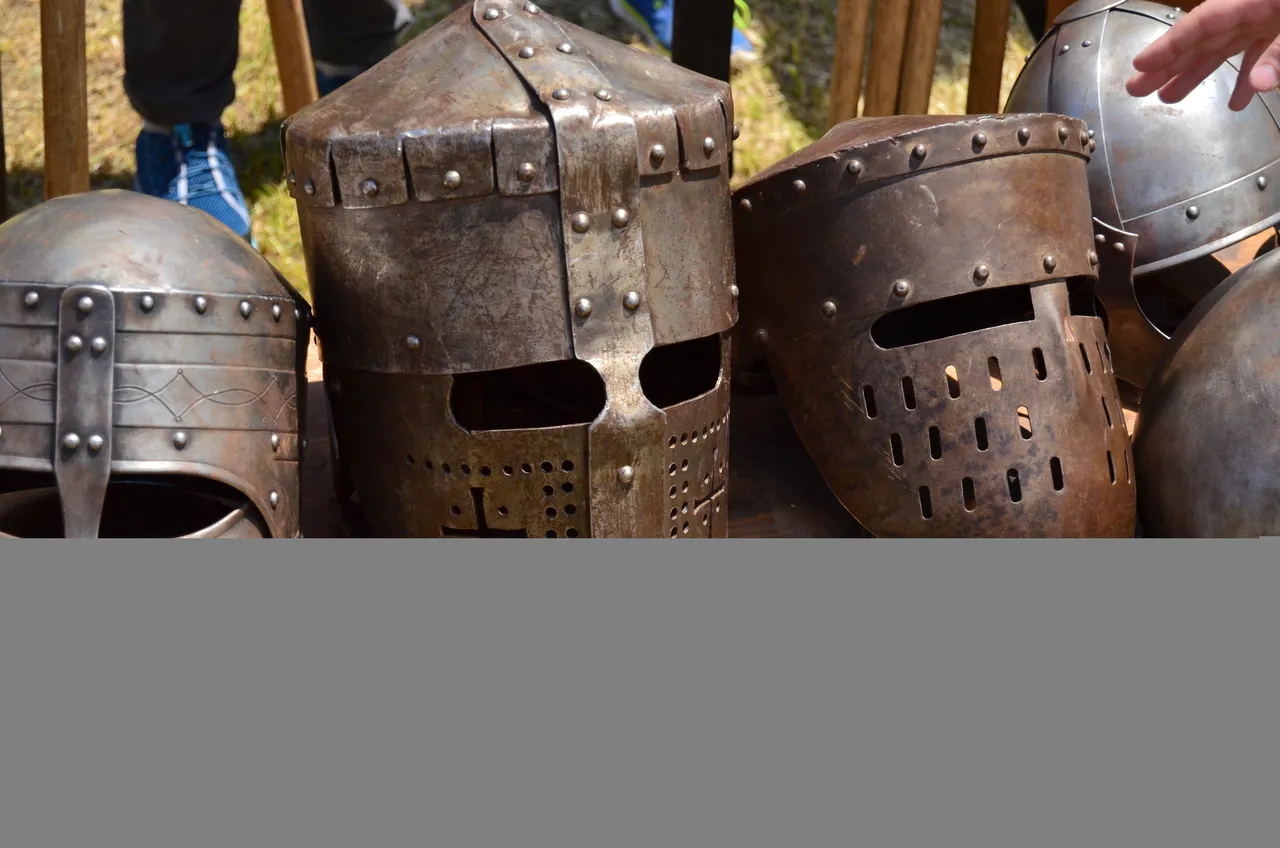


Throughout the year, there are many manifestations on the castle, such as concerts, Advent, plays, and so on...
Perhaps Christmas Advent deserves a bit more attention. For the fourth year in a row, the Christmas fantasy at Trsat Castle has been dressed in its famous costume, ready to welcome visitors in a cloak of Christmas lights, distinctive decorations, and unique handmade Nativity scene that is eagerly expected by holiday delights admirers.


Isn't it enchanting?

I must say that I had a good time composing this post. I hope you enjoy it at least half as much as I do. Especially the dragon legend. This fantastic post has come to an end.
I hope you're all doing well and having a good time.
Until the next time. xoxo
I do believe in an everyday sort of magic -- the inexplicable connectedness we sometimes experience with places, people, works of art and the like; the eerie appropriateness of moments of synchronicity; the whispered voice, the hidden presence, when we think we're alone.
- Charles de Lint