
Today was officially a day of experiments.
And no — not with the new lens I bought yesterday.
Instead, I pulled out my old Sony FE 90mm F2.8 Macro G OSS — the one that had been quietly sitting in a drawer for almost a year.
I used it exactly once after buying it. In my head, it was “that macro lens for spiders and creepy insects.” That was its category. End of story.
Turns out… I was completely wrong.


Last night I randomly stumbled on a YouTube video about this lens and discovered people are actually shooting portraits with it. Portraits. With a macro lens. That plot twist hit me harder than it should have.
For a moment I genuinely felt like an idiot. I could’ve been using it all year instead of letting it collect dust.
Breaking My Own Rules
So today I decided to go all in.


For some reason, I’ve always had this quiet fear of “shooting the wrong thing” or doing something incorrectly. As if photography were a math equation with a single correct answer.
But it’s not.
Photography is interpretation. It’s instinct. It’s how you see light and shape and contrast in that exact moment. And honestly? Sometimes you just have to ignore the rules and shoot what feels right.
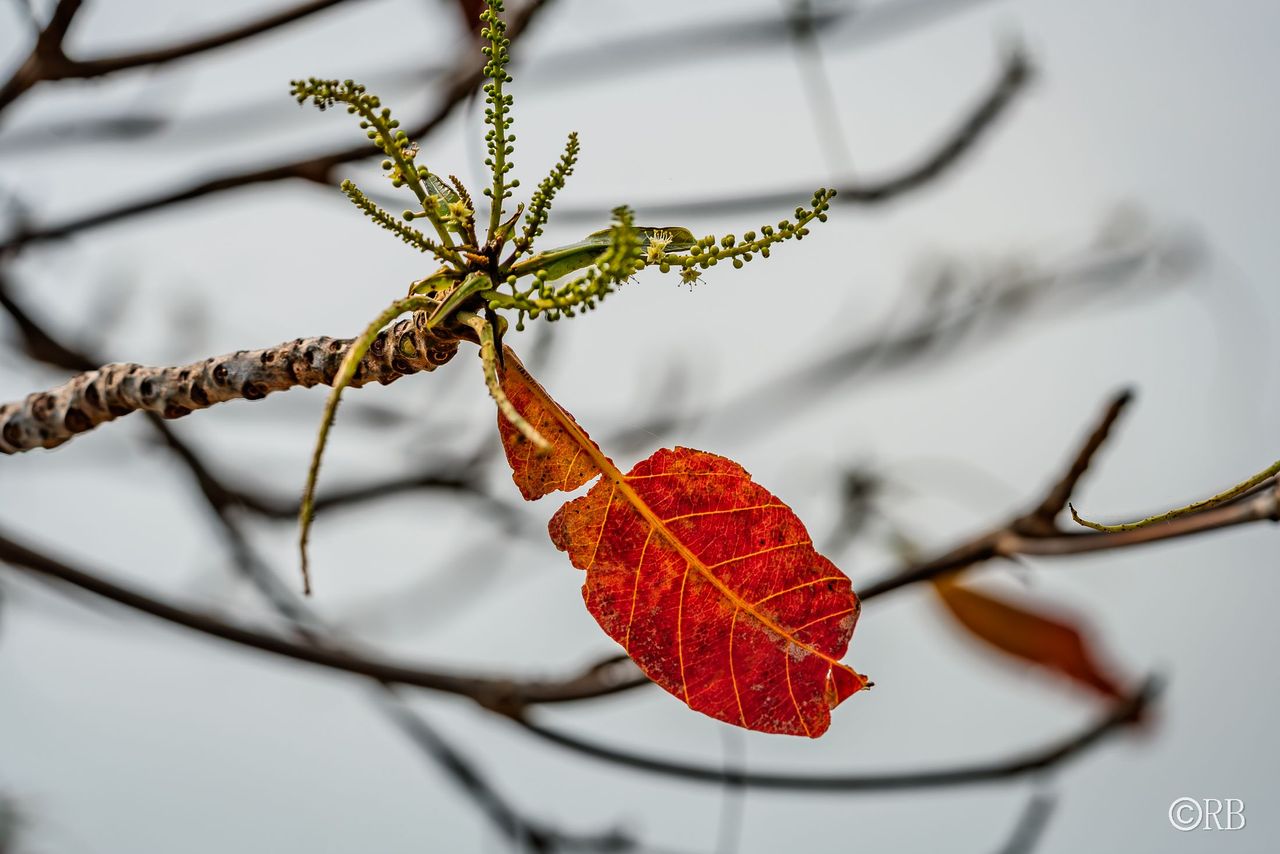


So I walked out with a simple plan:
Shoot close.
Don’t overthink locations.
Don’t search for “perfect” compositions.
Crop aggressively later if needed.
Just experiment.
No pressure. No expectations.
The Result? A Color Kaleidoscope
What I got was chaos.
A kaleidoscope of colors, scales, and textures.


 |  |
There’s no clear narrative thread tying the shots together. No structured visual story. But that’s the whole point of experimentation.
You don’t experiment to prove something works.
You experiment to discover what works.
Every frame teaches you something — about distance, about depth, about how light behaves, about what you are drawn to.
And this lens… surprised me.
What I Learned About the 90mm Macro
This lens loves light.
Not harsh, direct sunlight — but soft, diffused light.
I didn’t fully understand that while shooting. I only realized it later, scrolling through the images in Lightroom. The frames with gentle light had depth, smooth transitions, beautiful separation. The harsher ones? Not even close.
 |  |

 |  |
It’s funny how sometimes you only understand what you were doing after you see the results.
One Question Though…
Here’s something that still bothers me:
Why do my photos sometimes look noticeably worse after exporting from Lightroom to JPG?
They look crisp and alive inside Lightroom — and then the exported JPG feels flatter, softer, less detailed.
Anyway, today reminded me of something simple:
Sometimes the best gear upgrade isn’t buying something new.
It’s rediscovering what you already have — and finally giving it a real chance.

I write my texts myself, correct mistakes and translate via ChatGPT (which is not a violation on Hive)!
All photos were taken by me personally - I am a beginner photographer, so I ask professionals not to judge strictly.
Thank you for sharing these moments with me! Until new stories and new holidays! ✌️.
Camera 📷: Sony Alpha 7 IV full-frame
Lens 🔭: Sony FE 70-200mm F: 2.8 GM OSS II
Lens 🔭: Sony FE 90mm F2.8 Macro G OSS
Lens 🔭: Sony FE 24–70mm f/2.8 GM II
Processed 🛠: Lightroom
photo by openai
