
Dear esteemed readers. It’s been a pleasure writing on this platform (STEMsocial) once again after taking a break for some while. It’s a great privilege to be back. My post today is a sequel to one I’ve written close to three months ago titled, ATOMIC NUCLEUS. In the previous post, I explained about Energy and Politics, Activity and Half-life, and Forces in the nucleus.
In this present post, I’ll like to explain how nuclei change as a result of radioactive decay, gamma emission, binding force and binding energy.
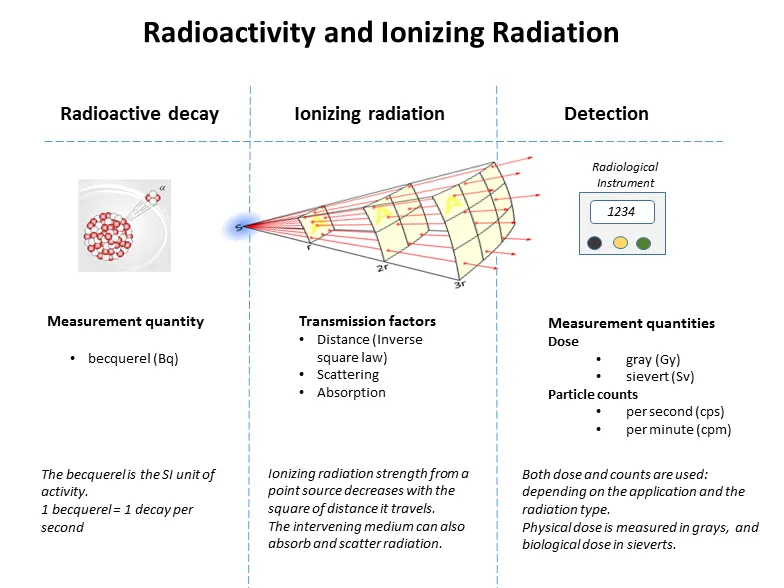
HOW NUCLEI CHANGE AS A RESULT OF RADIOACTIVE DECAY
When a nucleus emits an alpha particle it loses two neutrons and two protons. Its mass number decreases by 4 and its proton (atomic) number by 2. This means that it has become a different element. For example, thorium-232 emits an alpha particle and becomes an isotope of radium:
23290Th → 22888Ra + 42α
The radium-228 then emits a negative beta particle (an electron), leaving its mass unchanged since the electron has negligible mass compared with a nucleon. What has happened is that a neutron has decayed and emitted an electron, so changing to a proton. The proton number increases by one to 89. This means that the new nucleus has approximately the same mass but becomes a new element –actinium.
22888Ra → 22889Ac + 0 -1β
I have represented these changes as two nuclear equations. Note that they are doubly balanced: both the mass numbers and the proton numbers have the same totals on each side of the equation.
Many of the natural radioactive nuclides on Earth are the result of similar alpha and beta emissions from larger nuclei that were formed during the final explosion of a dying star, billions of years ago. This event formed some nuclides with such long half-lives that they still exist. Examples, and their half-lives, are:
thorium-232: 1.41 × 10¹⁰ y
uranium-238: 4.51 × 10⁹ y
uranium-235: 7.1 × 10⁸ y

The 4n decay chain of 232Th, commonly called the "thorium series". :BatesIsBack, CC BY-SA 3.0
The decay of these nuclides and of their radioactive ‘daughter’ products provides a large amount of energy, which helps to keep the interior of the Earth hot enough to be molten. In the figure that shows the natural decay series for thorium-232. Looking carefully at the decay series above, you will see how the changes described above result in the formation of successively different elements. Similar decay series exist for the large nuclei of the long-lived naturally radioactive elements that went to make up the Earth as it formed from the debris of dead, exploded stars.
GAMMA EMISSION
Gamma rays are photons of very short-wave electromagnetic radiation. Their wavelength is about 10-13 m, about a thousandth of the wavelength of X-rays. They have a photon energy some ten million times that of a photon of light. As gamma rays have neither mass nor charge, the nuclíde stays the same (but in a more stable state) after emission of a gamma photon, so gamma emission does not feature. The emission of gamma photons from an unstable nucleus can be explained by a model similar to that used to explain why low-energy photons are emitted from an atom in an excited state – that is, electrons move between energy levels so that the atom reaches its ground state. The energy of a gamma photon from a nucleus is very much greater than that of a photon from an excited atom, because the nuclear forces between nucleons are far greater than the electromagnetic forces between the nucleus and the electrons.
THE PROBLEMS OF BEING A LARGE NUCLEUS
The figure below is a graph of an element, with proton number Z (on the x-axis) plotted against (nucleon) number A, for the most common isotope of each element, It has a slight curve which shows that A (protons + neutrons) increases more rapidly than Z (protons only). For example, the nucleus of lead (Pb-206) has 82 protons and 124 neutrons, whilst calcium (Ca-40) has 20 of each.

Types of radioactive decay related to N and Z numbers. Table_isotopes.svg: Napy1kenobi, CC BY-SA 3.0
Nuclei larger than those of bismuth (Bi) with more than 83 protons and 1.5 times as many neutrons are unstable. They are all radioactive – which means that they break down (disintegrate) to emit:
- a group of two protons plus two neutrons as an alpha particle, or
- an electron (as a beta particle
- then, for both, possibly a photon (a gamma-ray).
BINDING FORCE AND BINDING ENERGY
A mass on the Earth’s surface is held there by the force of gravity. When the mass is lifted above the ground, the Earth-mass system gains energy. Work has been done to separate the two bodies. This energy is the gravitational potential energy. In that chapter, we calculated the gravitational potential energy per kilogram of a mass on the Earth’s surface. Since the force is attractive, and since the potential energy when the mass is at infinity is zero, the potential energy at the surface is therefore negative. Although this value is calculated for the mass m, it is, in fact, the energy of the Earth-mass system, not of the movable mass alone. We could call it the binding energy of the Earth-mass system, which is shown to be – GMm/r where G is the gravitational constant, M the mass and r the radius of the Earth.
In the same way, we can think of the particles in the nucleus as making up a system which contains binding energy. The force here is not gravity, but the net sum of the attractive strong nuclear force and the repelling electric force. For nuclei that can actually exist, the strong force is greater than the electric force. The effect is much the same as for the Earth-mass system: it takes a supply of energy to break up the nucleons of a normally stable nucleus.
You cannot work out the binding energy of a nuclear system by summing the forces for the individual nucleons. The two main forces involved obey different laws, unlike the simple one-force gravitational system. But we can do it easily using a very simple, but quite an amazing idea: Mass and energy are equivalent.
THE MASS DEFECT AND BINDING ENERGY
Physicists have measured the masses of nuclei, and the masses of the individual protons and neutrons to a high degree of accuracy using mass spectrography as explained above. A helium nucleus has two protons and two neutrons, and so we would expect it to have a mass of 2mp + 2mn totaling 6.695104 × 10⁻²⁷ kg. But this is greater than the actual mass of a helium nucleus. We seem to have lost 0.048322 × 10⁻²⁷ kg. This lost mass is called the mass defect.
EINSTEIN TO THE RESCUE
One of the major discoveries of the twentieth century was Einstein’s realization that energy and mass are equivalent: mass has energy and energy has mass. In the right circumstances, they are interchangeable. Any energy change means a mass change. We explain the lost nuclear mass by saying that it represents the loss of energy that occurred when the particles combined to form the helium nucleus. Just as an Earth-mass system loses potential energy when a lump of matter falls to Earth, so a nucleon system loses potential energy when nucleons fall together to make helium nuclei. The energy loss appears as a mass loss according to the Einstein relation ΔE = c2Δm. Using the value of the speed of light c as 3 × 10⁸ ms-1. We can calculate the mass defect for helium as a binding energy of 4.349 × 10⁻¹² J.
BINDING ENERGY PER NUCLEON
It is often more useful to consider the binding energy per nucleon (BEPN) in a particular nucleus. This is the energy needed to take one nucleon out of a nucleus, doing work against the net attracting force. For helium–4, the binding energy per nucleon is a quarter of the total binding energy calculated above from the mass defect: 1.0873 × 10⁻¹² J.
Physicists also prefer to use the electronvolt (eV) as the unit of energy. The value of the binding energy per nucleon for helium-4 is -7.07 MeV. The binding energy per nucleon is useful because it tells how strongly bound the nucleons are in different nuclei. In a graph of BEPN against proton number. The nucleus in which the particles are most strongly bound is that of iron (Z = 26, A = 56). This is because iron has the lowest value of BEPN – when they enter iron, nucleons have ‘further to fall’ than for any other nucleus. It means that more energy has to be supplied to get them out again. This means that iron (Fe) has the most stable nucleus. The position of nucleons on this curve decides whether or not we can get energy by their fission or by fusion.
HOW BINDING ENERGY LEADS TO GETTING ENERGY FROM NUCLEAR FUSION
In theory, any two nuclei could be combined together to form a larger one. Consider adding a helium nucleus (Z = 2, A = 4) to a lithium nucleus (Z = 3, A= 7). We would end up with an isotope of boron (Z = 5, A = 11). Think of doing this the hard way, by breaking up the smaller nuclei into nucleons and then reassembling them into boron. This break-up would cost their binding energies (in MeV):
Binding energy for 4 nucleons of He/MeV @ 7.07 MeV per nucleon – 28.30
Binding energy for 7 nucleons of Li/MeV @ 5.61 MeV per nucleon – 39.25
Sum of this binding energy for all 11 nucleons/MeV – 67.55

If we now push the bits together to form boron, we would create a nucleus with a known binding energy per nucleon of -6.93 MeV. This gives a total binding energy of – 76.21 MeV. This would produce an energy gain of 8.66 MeV (76.21 – 67.55) per nucleus of boron produced. In forming boron, the nucleons have fallen further into the energy well, so have less potential energy. This difference in energy would leave the nucleus as radiation, say. But lithium is a rare element, so this is not a cost-effective source of nuclear energy.
The formation of helium from four protons (by a complex route) releases 26.7 MeV per helium nucleus formed. Looking at the graph: the fall from hydrogen (one proton) to helium is large, and suggests a large energy release when hydrogen is converted to helium. The falls from helium + lithium to boron are smaller, so less energy is released.
Even with smaller nuclei, it is not easy to produce fusion. The electric repulsion between positively charged nuclei is a long-range force and produces a barrier stopping nuclei from getting close enough to each other for the strong nuclear force of attraction to come into play. So, for nuclear fusion, nuclei need to collide at speeds high enough to overcome the repulsion barrier. There can be nuclear fusion in stars because the very high temperatures in their cores (over 10 million kelvin) mean that the average speed of the particles is very high.
Till next time, still, on the atomic nucleus, I remain my humble self, 
Thanks for reading.
REFERENCES
https://en.wikipedia.org/wiki/Radioactive_decay
https://www.nde-ed.org/EducationResources/HighSchool/Radiography/radioactivedecay.htm
https://www.radioactivity.eu.com/site/pages/Radioactivity_Gamma.htm
https://www.britannica.com/science/radioactivity/Gamma-decay
https://en.wikipedia.org/wiki/Gamma_ray
https://www.ncbi.nlm.nih.gov/pmc/articles/PMC2680097/
https://en.wikipedia.org/wiki/Atomic_nucleus
https://www.sjsu.edu/faculty/watkins/nuclearcon.htm
https://www.britannica.com/science/binding-energy
https://en.wikipedia.org/wiki/Nuclear_binding_energy
https://courses.lumenlearning.com/introchem/chapter/nuclear-binding-energy-and-mass-defect/
https://opentextbc.ca/universityphysicsv3openstax/chapter/nuclear-binding-energy/
https://www.britannica.com/science/nuclear-fusion
https://en.wikipedia.org/wiki/Nuclear_fusion

https://courses.lumenlearning.com/boundless-chemistry/chapter/nuclear-fusion/