
Before modern medicine, scientists have been treating people. At least, there was a way they were able to treat people during the black death pandemic and while non of us were there to explain first hand, we have scientific history by our sides.
During the pandemic, the plague doctor mask was common, and while it looks creepy today, it was iconic then. It's beak was filled with tobacco, flowers, herbs and lots of substances that smelled nice compared to the corpses that they were carrying or the people they were treating. This was because in the 14th century, physicians were concerned about smell because of the believe that diseases spread through putrid ad poisonous air. They used the Miasma theory, and we will be discussing about the Miasma theory in this post.

https://www.flickr.com
With miasma theory, the smell of corpses or the smell of rotten things weren't a sign of disease or spoiling, it was the disease. Pointing to its origin ca be very difficult because as far as 500BCE, people believed that disease was gotten from the air or water and even in the 1600s, this still held weight. The believe was held strong because people noticed that disease tended to be around bad smells such as trashes, dead livestock, living but smelly livestock, and corpses. The epidermic confirmed it then, as the only common factor of people was air so it must have been caused by something in the air.
Why you might not believe this, even illnesses such as malaria came from the Italian word that mal aria which means bad air. Hippocrates and his student were a major force in the spread of the believe of Miasma, as they believed that diseases arises from the balances of humans bodily fluids; blood, black bile, yellow bile, and phlegm. It was believed that every physical thing has these properties and any imbalance in any of the bodily humors can be as a result of a change in the physical properties of things.
It was believed that a change in environment such as a change in climate can lead to an epidermic. Hippocrates book titled "Air Waters and Places" talked about considering the season of the year, and what they produce when investigating medicine as they were not the same. With miasma, different people had their own believe of miasma as the Greek and Romans used the four humors context, traditional Chinese medicine, and Indian medicine used the change in environment causing disease context.
While Miasma was believed to be a way of disease transmission, it was not the only way as scientist also believed in Contagion where humans transferred diseases to themselves. Where it was believed the diseases such as leprosy, fever, and some other chronic disease could be transmitted from person to person through sex, touch, or sharing clothes. Galen also noticed that when people spent a lot of time with plague victims, they also became victims and proposed that the diseases were transferred through semina.
People like Ibn Sina subscribed to both contagion and Miasma theory and would use that for treating. Even in the black death pandemic, it was believed that the pestilence was a contra-natural change in the air and its quality which led to corruption, and sudden death, as well as various maladies in certain regions beyond the ordinary. Physicians at the University of Paris also agreed that the current pandemic was caused by foul smell, and could be countered by good smelling substances.
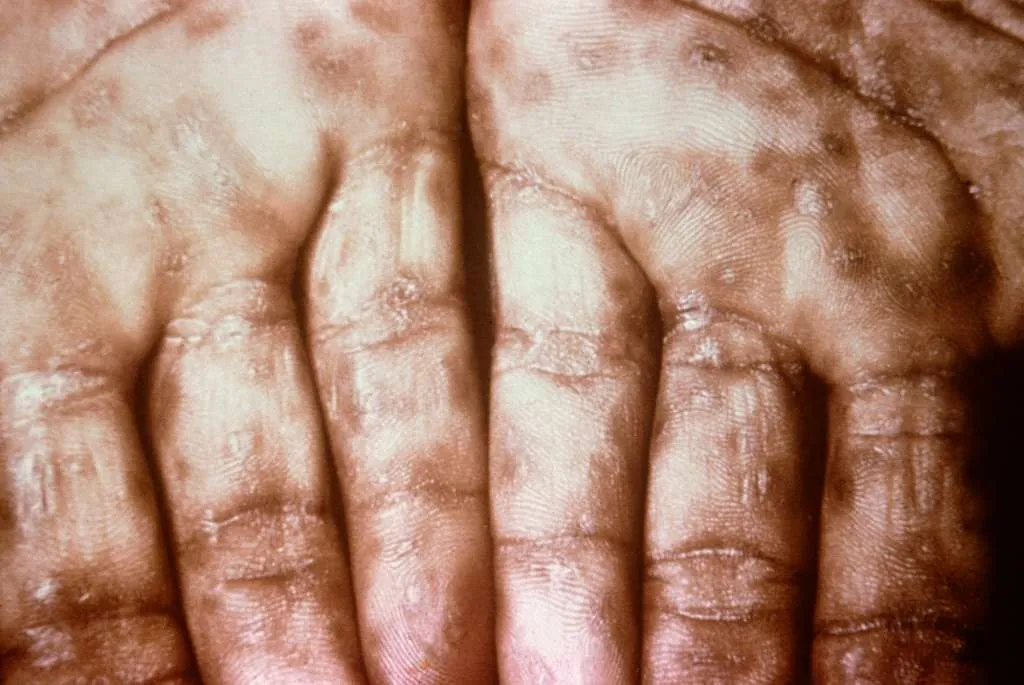
Scientists were working hard to get to understand how disease was caused but this didn't happen until the french disease came into existence, and Italian physician Girolomo Fracastoro started studying the epidemic. With Syphilis, we started to understand modern medicine, and he published the first formal of contagion theory where he talked about airborne contagion, direct touch, and indirect touch. While he made headway, he didn't make much impact with his treatment and he wasn't supporting his theory with evidence and he hypothesized with seeds causing diseases.

Things continued until Anton Van Leeuwenhoek and Robert Hooke came into the picture with microscopy.Leeuwenhoek would use the microscope to examine structure under ponds and named them animalcules. In his curiosity, he observed his semen under the microscope and was the first to see sperm under a microscope. Robert Hooke and Micrographia was a change in modern medicine as he was able to identify and use the word Cell with microorganism.
It is no doubt that Van Leeuwenhoek and Hooke did a great deal but they didn't focus on medicine, they were focused on microscopy but one man Athanasius Kircher would be credited for combining microscopy and medicine together, which was the beginning of Modern day Medicine where Miasma wasn't regarded again.
Reference
- https://www.degruyter.com/document/doi/10.9783/9780812297812-057/html?lang=en
- https://www.loebclassics.com/view/LCL147/1923/volume.xml
- https://www.jstor.org/stable/24620862
- https://www.ncbi.nlm.nih.gov/pmc/articles/PMC7853563/
- https://curiosity.lib.harvard.edu/contagion/feature/concepts-of-contagion-and-epidemics
- https://www.jstor.org/stable/3568029
- https://brill.com/display/book/edcoll/9789004383302/BP000018.xml?language=en
- https://www.jstor.org/stable/301787
- https://www.ncbi.nlm.nih.gov/pmc/articles/PMC126866/
- https://www.tbsnews.net/panorama/enduring-legacy-ibn-sinas-work-contagions-73987
- https://www.jstor.org/stable/44443424
- https://quod.lib.umich.edu/e/eebo/A47218.0001.001/1:3?rgn=div1;view=fulltext
- https://www.jstor.org/stable/44442234
- https://www.ncbi.nlm.nih.gov/pmc/articles/PMC3956094/
- https://www.ncbi.nlm.nih.gov/pmc/articles/PMC4360124/
- https://www.ncbi.nlm.nih.gov/pmc/articles/PMC4634005/
- https://royalsocietypublishing.org/doi/10.1098/rsnr.2015.0057
- https://www.jstor.org/stable/301567
- https://harvardlibrarybulletin.org/microscopic-musings-athanasius-kircher-and-roman-plague