
OC/Excel
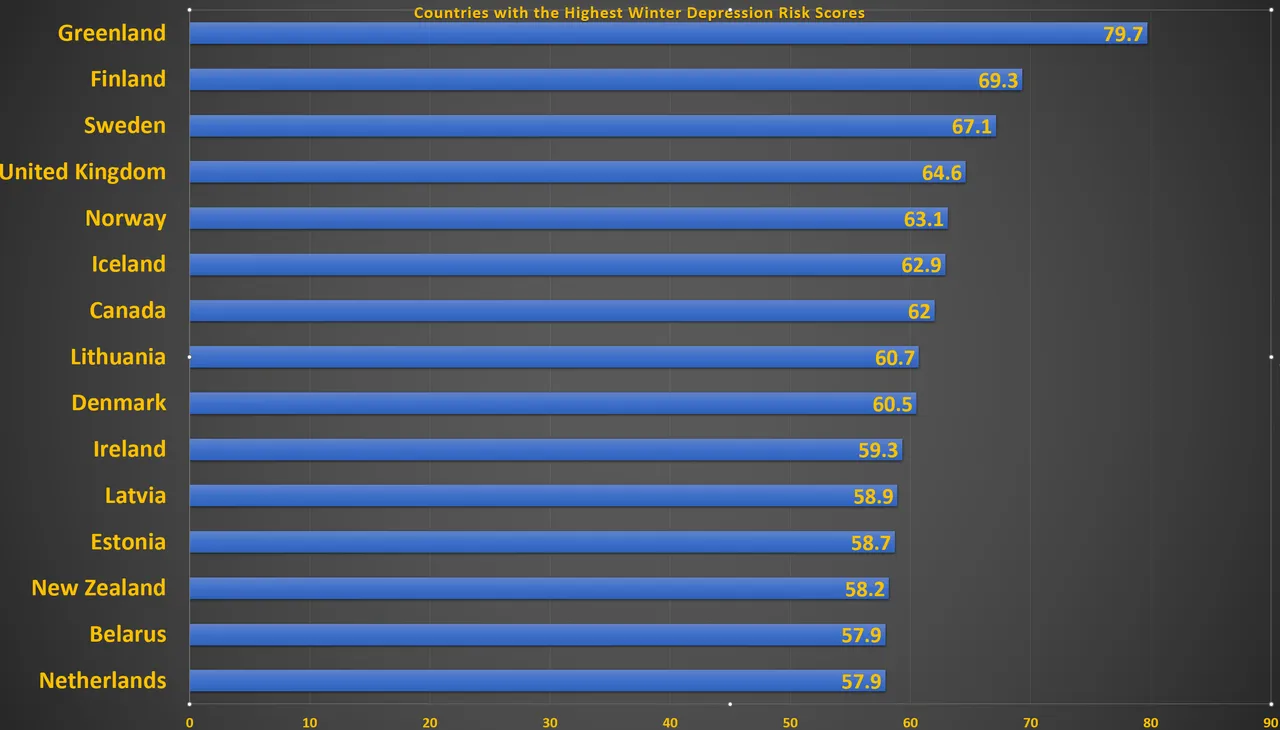
Countries were ranked by a score (0 to 100) based on latitude, mental health data and population factors, showing their risk for winter depression, not actual percentages of people affected.

Image by the Author
We are in the midst of the deep winter season here in England. It is cold, the sun disappears early, and the days are short and mostly dark. Most people stay indoors. Seasonal Affective Disorder (SAD) is prevalent around this time.
Out of curiosity, I looked for data on which country has the highest winter depression risk. It seems that the further north you live, the higher the risk. There are about 5 % of people worldwide who experience SAD, and the number is particularly higher in northern places where the winter days are shorter and darker. Greenland tops the list.
Sunlight is really important to our health; it affects how we feel. With less sunlight, we dont get enough vitamin D, and we also produce less serotonin, this hormone helps keep our mood stable, and having short days can also affect our sleep. As people stay mostly indoors, having less activity can make some lonely and add to their low mood.
By understanding how this affects us, we can prepare ourselves during the darker months. A light lamp is a good thing to have and could provide relief from a lack of sunlight. We can take advantage of the short days by going out in the daylight and trying to keep ourselves active and keeping in touch with others. These simple measures can make a big difference to our mood.
Data Sources:
Sloane, E. (2024). Top 15 countries at highest risk for winter depression. Longevity live
Almeida, O. P., et al. (2025). Global prevalence of seasonal affective disorder by latitude: A systematic review and meta-analysis.Journal of affective disorder