
In a previous post done four months ago, we revamped our entire potato garden. The previous year the potato harvest was rather disappointing, and with some additional sweat equity we were determined to increase our bounty.
https://steemit.com/homesteading/@thebigsweed/if-at-first-you-don-t-succeed-try-try-again
This is a picture of last year's potato bed, still covered in hay from the year before.
We determined that the bed we were growing the potatoes in was not adequately raised. With the placement of some rocks along the perimeter of the potato bed, we were able to bring the height of the bed up more than 12 in.
In so doing, we were able to add a lot more organic matter to the bed.
After planting the potato seeds and covering with hay, only time would tell if these changes would garner a larger potato harvest.


By the middle of August, the foliage growing above the ground was remarkable. Having this being only the second year of growing potatoes, we were shocked by the floral beauty of the vegetation.

If this was any indication of what might be going on below the surface, wow harvesting should be a ball!
The one thing about growing tubers is that you never really know what you have until you uproot the plants, and only at that time do you certifiably know.

After digging up just a small portion of the 30 foot potato bed, we were unearthing potatoes like crazy. The potato in my hand was the very first one we uncovered, and it was huge.

This end of the bed was planted with white baking potatoes.


Some bunches we were able to pull right out of the ground by the stalk of the potato.

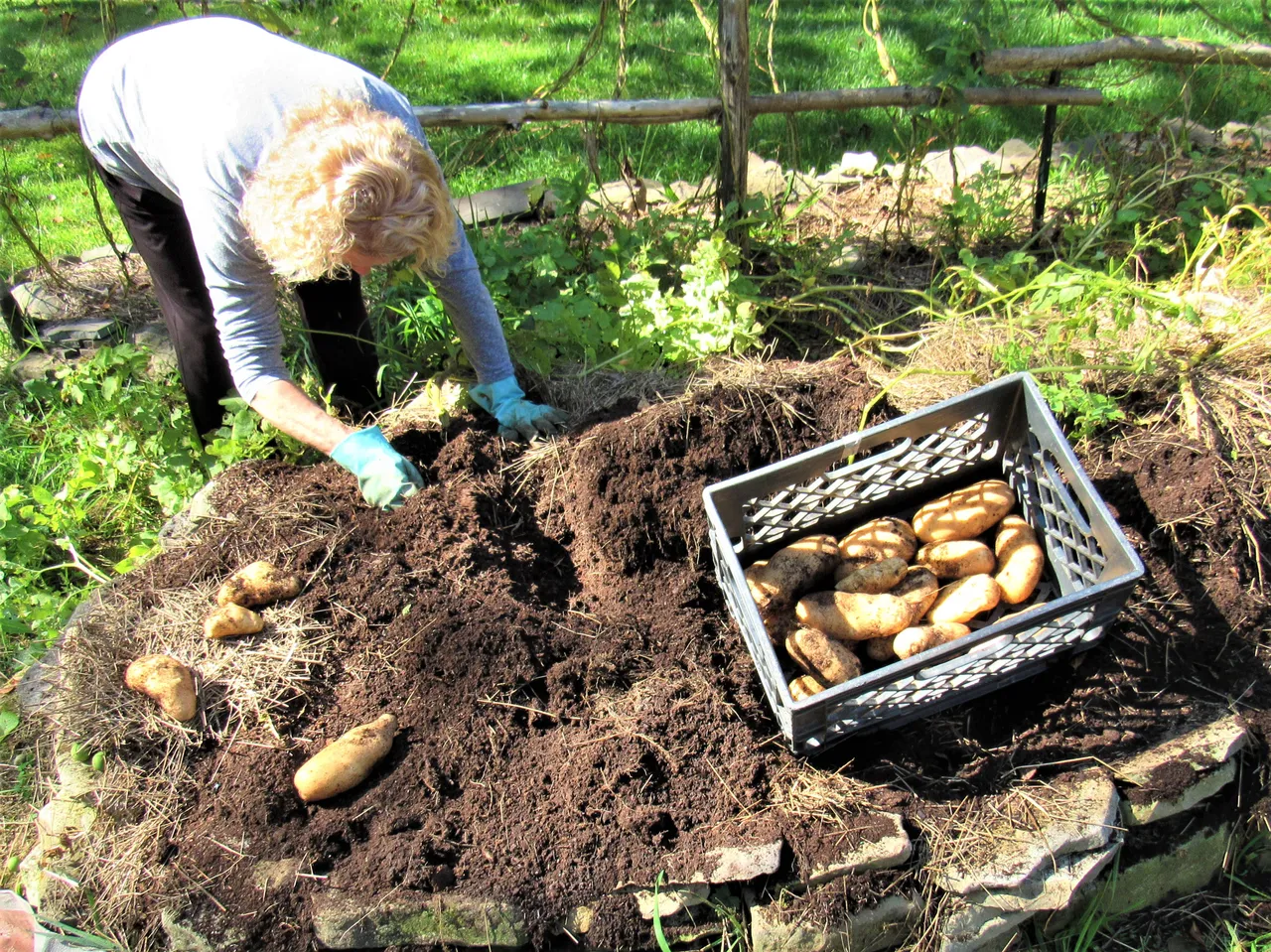
About half way down the plot we ran into the red potatoes, and they didn't disappoint.

It was a perfect day for picking as it was nice and sunny.
It had been dry for several days, and that made it easy to unearth the spuds.
The one thing you must do when harvesting spuds, is to keep them out of the sunlight.
Keeping the sunlight off of the spuds will prevent solanine production.

We dug,

and dug,

and dug some more,

and they just kept coming.

Most of the vegetation from the potato plants was collected, and will be added to our compost pile.


After digging up all of the spuds, the hay, as well as some of the vegetation from the plants, was placed back on top of the bed.
As this decays, it will add more organic matter to the bed.

Our goal was to grow 200 pounds of potatoes. Well, we fell somewhat short of that #, but 103 pounds of SPUDS was quite the hall.
After uprooting more spuds than we could have imagined, the process of getting them ready to store included:
- Brushing the soil from the potatoes, never wash!
- Cured them by placing them in a humid 65 to 70 degree F spot for two weeks
- Now they were ready to store in a cool dry place.
When things slow down a little, we will blanch some of the potatoes, and freeze them.


Cleaning the spuds with these soft cotton gloves, worked out perfectly. When rubbing off the loose dirt, the last thing you want to do is damage the skin.

This was the first time we tried growing Sweet Potatoes. For me, learning on the go, coupled with first hand experiences, is always the best way to go.
Made some crucial mistakes with the planting and caring for Sweet potatoes.
Never too old to learn.
With some adjustments, we will hopefully have a bounty of these bad boys next year.

I thought that this was a pretty cool pic I would say goodbye with.

May your harvests be bountiful!
Hope you enjoyed!