
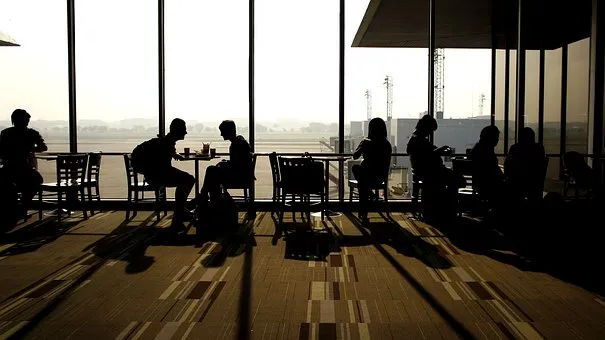
Coffee Ritual and Creative Culture

Each generation has its own cultural challenge to remain rooted in the ancestral culture or even to erode the outer culture that pounded from various sides of the technology. The choice is not merely to reject and accept, sometimes the generation itself chooses without awareness because cultural change is not an atomic bomb that takes its toll in a single blow. Ripples appear more to certain events that are judged to clash with existing beliefs and cultures. The rest was quiet in long duration, almost unnoticed.
Technological strikes
Advances in informatics technology provide the widest space for the entry of foreign cultures. The process is practically like the story of a frog in a boiling water. At first, he was comfortable in the cool water that slowly turned warm. When the water turns hot and then burns, it's too late to jump. The frog was killed in the boiling water. More or less so culture works in society.
Informatics technology works faster than limited human migration in urban areas. Cultural penetration through technology provides a change of behavior that is almost natural (natural change). Our society has no agenda for controlling and planning change for the better. Religion is often referred to as a strong fortress withstand the onslaught of bad culture, only serve as a ritual of worship alone. The noble values of religion have not been used in all lifelines. Finally, people tend to swear cultural changes that can not be denied right.
That is what happens in the people of Aceh today. Rector of UIN Ar Raniry, Prof. Farid Wajdi Ibrahim MA, who mentioned that 80 percent of Aceh young generation likes to spend time sitting in a coffee shop (Bahasa: warkop), is a form of academic as well as parents concern about behavior change of Aceh young generation (Serambi, 22/3/2016 ). This concern has been voiced even long before the cafe boom that now hit Aceh. With a frightening comparative comparison, Farid Wajdi mentions the culture of hanging out in coffee shops day and night is a bigger disaster than the atomic bomb.
The impact of the disaster did not immediately look like an atomic bomb that claimed the visible casualties. The cultural disasters of coffee are slow changes that will appear to impact ten to fifty years later. Aceh cannot enjoy demographic bonuses because the generation that lives in the future is largely an unskilled generation, the generation is less competitive with the generation of other regions, let alone other countries that first shot. The world moves fast, then anyone who is slow is finally gone.
What really encourages cultural change among the younger generation of Aceh? The proliferation of cafes with charming designs and an increasingly diverse selection of coffee and non-coffee drinks is a demand that Wilbert Moore (2008) thinks is not a symptom of modern society—but a universal thing in human experience. Actually, this also happens outside of Aceh even in any hemisphere. The cafes grow and die, people come and go.
The concept of a shabby coffee shop with makeshift service is now marginalized. Cafe owners are now willing to spend hundreds of millions of dollars "only" for the interior to attract the attention of visitors and feel at home in it. Comfort atmosphere, taste, plus internet network to make visitors can surf comfortably and quickly.
Productive hangout
Whether touched or not by Prof Farid, the cafe is now not just a place to hang out, enjoy coffee, and then go home. As far as owning wi-fi networks, cafes are now transformed into offices, where young people with a number of professions work in productive hours—sometimes even up to dawn—compete in the virtual world. Business and commerce in cyberspace also penetrated Aceh. Even the students who manage the blog also benefit from Google AdSense with the cafe as an office. Some writers, making the cafe as a place to write news, short stories, and novels. With Rp6,000 sanger (local cappuccino) earns a writing that is worth more than ten times as much.
Although it must be acknowledged, social life in Aceh has not supported a certain career in the coffee shop. Concentration is often interrupted. We are a social society that intercepts each other occasionally when the self is at the peak of concentration. This is different from the life of cafes in big cities that provide many options to work in a place that is almost unknown to anyone. Existence in the cafe day and night should be a creative and productive source.
So far not been studied, how much money turns from the growth of the cafe is mushrooming. Not only from empty coffee or sanger glasses, there is a long business turnover, ranging from coffee farmers, distributors, barista, to café lovers. The cafe is not just a place of kill leisure time but can be a productive place for the creative generation. Unfortunately, only a small portion of Aceh's young generation is in this slice.[]


Ritual Ngopi dan Budaya Kreatif
Setiap generasi memiliki tantangan budaya sendiri untuk tetap mengakar pada budaya leluhur atau malah ikut tergerus budaya luar yang menggempur dari berbagai sisi teknologi. Pilihannya bukan semata menolak dan menerima, terkadang generasi itu sendiri memilih tanpa kesadaran sebab perubahan budaya bukanlah bom atom yang menelan korban dalam sekali hantam. Riak muncul lebih kepada even tertentu yang dinilai berbenturan dengan keyakinan dan budaya yang ada. Selebihnya berlangsung senyap dalam durasi panjang, nyaris tanpa disadari.
Gempuran teknologi
Kemajuan teknologi informatika memberi ruang seluasnya bagi masuknya budaya asing. Prosesnya bisa dibilang seperti kisah katak dalam rebusan air. Mulanya ia nyaman berada di dalam air sejuk yang perlahan berubah hangat. Ketika air berubah panas dan lalu membara, semuanya sudah terlambat untuk melompat. Sang katak tewas mengenaskan dalam air mendidih. Lebih kurang begitulah budaya bekerja di tengah masyarakat.
Teknologi informatika bekerja lebih cepat dibandingkan dengan migrasi manusia yang terbatas di wilayah perkotaan. Penetrasi budaya melalui teknologi memberikan perubahan perilaku yang nyaris alamiah (natural change). Masyarakat kita tidak memiliki agenda untuk mengendalikan dan merencanakan perubahan (planned change) ke arah yang lebih baik. Agama yang sering disebut sebagai benteng kuat menahan gempuran budaya buruk, hanya dijadikan sebagai ritual ibadah semata. Nilai-nilai luhur agama belum dijadikan acuan dalam semua lini kehidupan. Akhirnya, masyarakat cenderung menyumpah perubahan budaya yang sejatinya tak bisa ditolak.
Itulah yang terjadi di tengah masyarakat Aceh saat ini. Kritik Rektor UIN Ar Raniry, Prof Farid Wajdi Ibrahim MA, yang menyebutkan 80 persen generasi muda Aceh suka menghabiskan waktu dengan duduk di warung kopi (warkop), merupakan bentuk kekhawatiran akademisi sekaligus orang tua terhadap perubahan perilaku generasi muda Aceh (Serambi, 22/3/2016). Kekhawatiran ini sudah disuarakan bahkan jauh sebelum booming kafe yang kini melanda Aceh. Dengan komparasi yang terdengar seram, Farid Wajdi menyebutkan budaya nongkrong di warung kopi siang dan malam merupakan bencana yang lebih besar dari bom atom.
Dampak dari bencana itu memang tidak langsung terlihat seperti bom atom yang menelan korban kasat mata. Bencana budaya ngopi merupakan perubahan perlahan yang akan terlihat dampaknya sepuluh sampai lima puluh tahun kemudian. Aceh tidak bisa menikmati bonus demografi karena karena geneasi yang hidup di masa mendatang sebagian besar merupakan generasi tidak berketerampilan, generasi yang kalah saing dengan generasi dari daerah lain, apalagi negara lain yang lebih dulu melesat. Dunia bergerak cepat, maka siapa pun yang lambat akhirnya tiada.
Apa sesungguhnya yang mendorong perubahan budaya di kalangan generasi muda Aceh? Menjamurnya kafe dengan desain menawan dan pilihan minuman kopi dan non-kopi yang kian beragam rasa, merupakan sebuah tuntutan yang menurut pemikiran Wilbert Moore (2008) bukanlah sebuah gejala masyarakat modern—melainkan sebuah hal universal dalam pengalaman manusia. Sebenarnya ini juga terjadi di luar Aceh bahkan di belahan bumi mana pun. Kafe-kafe tumbuh dan mati, orang-orang datang dan pergi.
Konsep warung kopi yang kumuh dengan pelayanan seadanya kini mulai terpinggirkan. Pemilik kafe kini mau mengeluarkan ratusan juta rupiah “hanya” untuk interior demi menyedot perhatian pengunjung dan betah di dalamnya. Kenyamanan suasana, cita rasa, ditambah jaringan internet membuat pengunjung bisa berselancar dengan nyaman dan cepat.
Nongkrong produktif
Entah disinggung atau tidak oleh Prof Farid, kafe sekarang bukan sekadar tempat nongkrong, menikmati kopi, dan lalu pulang. Sejauh memiliki jaringan wi-fi, kafe sekarang menjelma perkantoran, tempat generasi muda dengan sejumlah profesi bekerja di jam produktif—bahkan terkadang sampai dinihari—bersaing dalam jagat maya. Bisnis dan perdagangan di dunia maya juga merambah Aceh. Bahkan para mahasiswa yang mengelola blog juga mendapatkan keuntungan dari Google AdSense dengan kafe sebagai kantor. Beberapa penulis, menjadikan kafe sebagai tempat menulis berita, cerpen, dan novel. Segelas sanger Rp6.000 menghasilkan sebuah tulisan yang nilainya lebih dari sepuluh kali lipat.
Meski harus diakui, kehidupan sosial di Aceh belum mendukung karier tertentu di warung kopi. Konsentrasi sering diinterupsi. Kita adalah masyarakat sosial yang saling bertegur sapa—kadang terjadi ketika diri di puncak konsentrasi. Ini berbeda dengan kehidupan kafe di kota besar yang memberikan banyak pilihan untuk bekerja di tempat yang nyaris tidak dikenal siapa pun. Keberadaan di kafe siang malam, harus dijadikan sumber kreatif dan produktif.
Sejauh ini belum diteliti, berapa banyak perputaran uang dari pertumbuhan kafe yang menjamur. Bukan saja dari gelas-gelas kopi atau sanger yang terisi lalu kosong, ada perputaran bisnis ikutan yang panjang, mulai dari petani kopi, distributor, peracik, sampai penikmat di kafe. Kafe memang bukan sekadar tempat poh beurakah, ngalor-ngidul yang tak jelas juntrungnya, tetapi bisa menjadi tempat produktif bagi generasi kreatif. Sayangnya, hanya sebagian kecil generasi muda Aceh berada dalam irisan ini. []
The above article has been published in Serambi Indonesia daily on April 11, 2016 and can be read on links at here.


