
Going Nowhere Slowly - Oribi Gorge A Hidden Gem.
Approaching Oribi Gorge driving through Port Shepstone up the Kokstad route takes you on a different approach. Leaving this area we used Harding route back down to the coast.
Sandstone cliffs rise up to greet you quite quickly as you descend to the valley floor.

Tree aloe (Aloe barberae) perched up on high, thin stem with vegetation on tops, look something like telephone poles planted in the hillside.

Winding through thick undergrowth consisting of indigenous trees, bush and grasses you soon reach the bottom crossing the Umzimkulwane River.
Water in this region; Visitors are advised not to swim due to the danger of Bilharzia, which obviously makes the water not drinkable.
Bilharzia is a disease caused by parasitic worms. The parasites that cause bilharzia live in some freshwater snails.

Steep walls on both sides this river ambles slowly, baking in the sun one can see by just looking, it would not be an ideal place to swim. Parasites living in the water are most probably more dangerous than coming up against a crocodile. (When you can see something, we humans appear to appreciate it more)

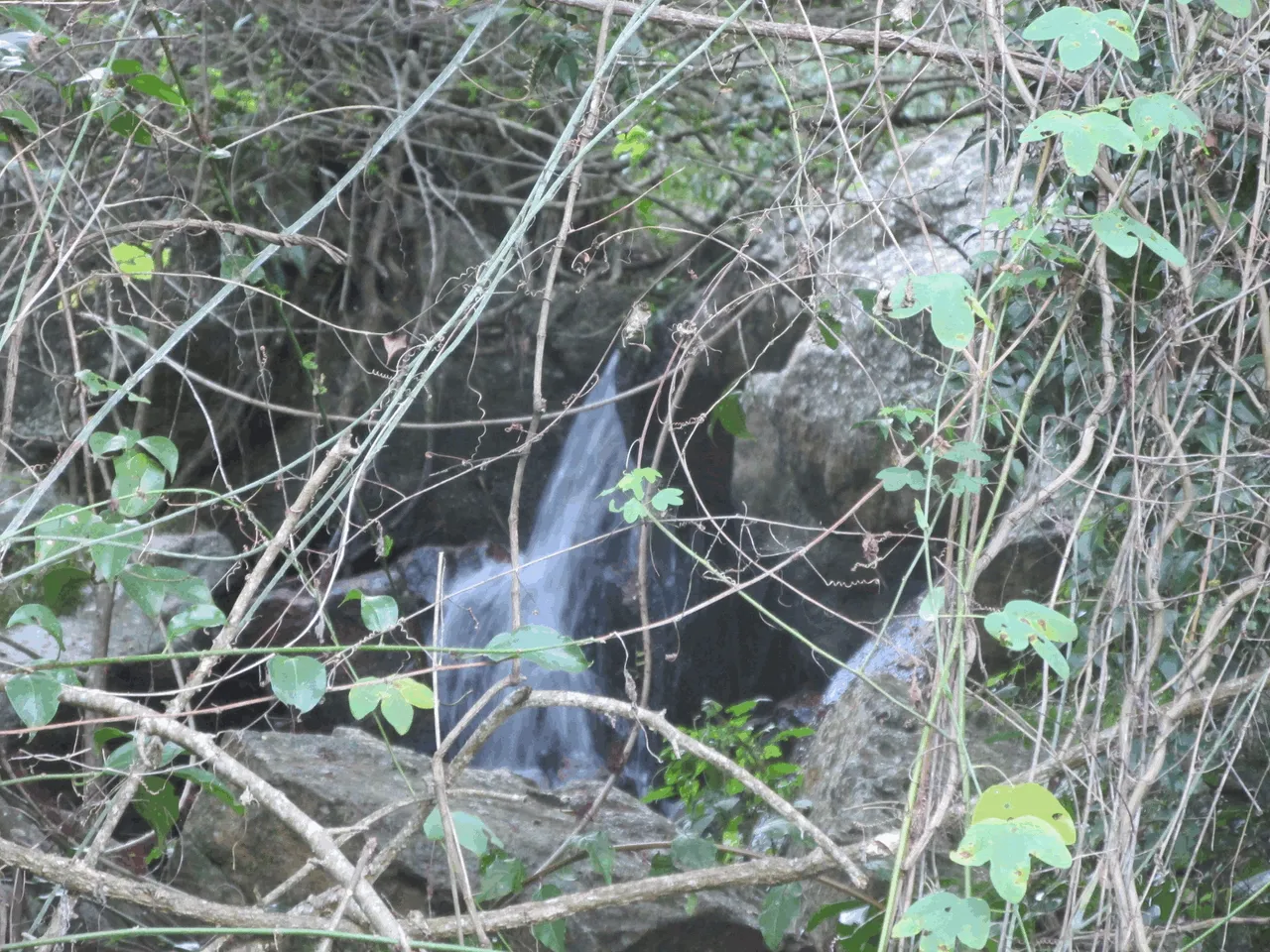
Water trickling down from above like a brides veil in the afternoon sun, refreshing, rejuvenating lush growth.

Gurgling further down running through the rocks, going down to the river, through moss and vines feeding everything with life giving moisture.
Driving through thick bush eventually you start to see the start of the Gorge.

Oribi Gorge is a canyon in southern KwaZulu-Natal, South Africa, just west of Port Shepstone, which itself is 120 km south of Durban. Oribi Gorge, cut by the Mzimkulwana river, is the eastern gorge of two gorges that cut through the Oribi Flats (flat sugarcane farmlands) of KwaZulu-Natal. The western gorge was formed by the Mzimkulu river. The gorge is approximately 400 metres (1,300 ft) deep, and almost 5 kilometres (3.1 mi) wide at its widest.
Erosion by these rivers have carved out nearly 30 kilometres (19 mi) of spectacular kloofs and crags, covered with subtropical vegetation. In the gorge, the dense forest on the sandstone slopes is home to various small mammals, while the large leguaans excavate their burrows along the riverbanks.
At the base of the cliffs of both gorges the basement rocks are part of the Kaapvaal Craton, which are over 1000 million years old. The cliffs themselves are formed from sandstone deposited about 365 million years ago. Downstream from the gorges, a large surface mine producing cement from a limestone deposit. The road through Oribi Gorge was built by Italian prisoners of war.
Oribi Gorge derives its name from the oribi, a small antelope that lives in the gorges. Source
Next time we will visit the farm we stayed on and a later post to follow on the gorge, what you see and what you can do in this beautiful part of the world.
Landscape Photography with @juliank
Communities I support: @qurator @steemitbloggers @steemthat @teamsouthafrica @kryptonia


!steemitworldmap 30.695 lat 30.2833 long Oribi Gorge D3SCR

