
Latex Weapons are as close as we can get to the real thing. At a distance, they're nearly indistinguishable from a real steel blade.
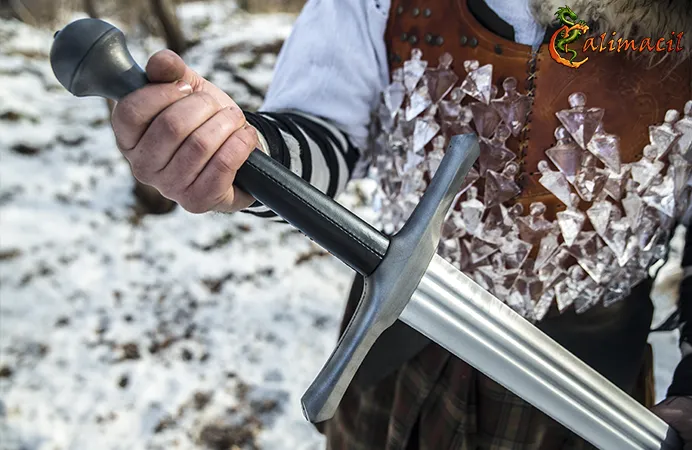
So what is there to hate? If the options are "made at home DIY foam-and-cloth" or "Coke Zero tastes just like regular Coke and this looks just like a real sword", why not choose the sexier option?
*1. They're not created equal.
So you've found THE longsword of your dreams. Just something about the typology, color, geometry, or something is making this particular blade tug at your heartstrings. The reviews swear that it is made out of Valerian foam...

Dont pretend you don't know what this is...
But you take it out to the park exactly once and it is shredding in places. The core is exposed, and safety personnel ban it on those grounds. Bye bye 30$.
Which leads me to my next point...
*2. They're expensive.
30$ will get you an "ok" weapon... but on the field, that weapon is what allows you to stay in the game versus... well... not. Sure, you can revive, but does that mean you're going to go to a serious paintball game with a "plinker" gun? I mean, you can always respawn in paintball too, right?
Only the best will do, of course... but which is the best? Unlike paintball, there aren't any "name brand" latex weapon manufacturers that come to mind, and even fewer sites where different brands/models are tested to any degree. As a melee weapon, an individual's mileage may vary. One person may hate a given weapon, and someone else absolutely love it.
As with anything else, you get what you pay for. I've seen some latex weapons that were lined internally with kevlar to prevent core-punctures and increase weapon life. Which reminds me...
*3. They have to be maintained regularly.
I've seen "latex weapon lubricant", that's right... lube for your weapons, being sold online. When two dry weapons "bind" (meet during a swing and press upon one another) they form dimples and lock into one another. Excess kinetic energy meets friction, and the latex can rub hard. This can rapidly wear the weapon out. Given their very design, catching a strike on the flat is problematic as well for the same reasons. Lubricant helps prevent this, but it must be maintained.
Hot cars are to be avoided as well. Latex breaks down in heat over time. This is why we don't carry condoms in our wallets gentlemen. Lightning will not strike you. It's safe to leave them at home. In a drawer. Cool and safe.
Condoms, too. Haha.
*4. Their use means you have to sloooowww.... doooowwwwn.
The smaller surface area and high probability that a slow or inattentive player will catch a latex-slap to the face means you have to be "in control" at all times. Not to say that boffer weapons are out of control by any means, but they are generally considered "safer" and it is more accepted to move at a full pace. Latex weapons, with guards and protrusions, could potentially poke an eye... and therefore have to be monitored during use. As they say, it's all fun and games until someone loses an eye...
So, let's compare all of this to a DIY boffer sword.

The more I look at this, the more I want to make it...
A solid boffer sword would run you 5$, and 2 hours of work if you want it quality, 15 minutes if you want it "now". Neither of these would require much maintenance, could be left in the heat or used in a light rain, and would have all the weight and feel of the real thing. Keep latex where it belongs, folks... at home, and in your drawer.