
Aurorafalter ■ Orange tip
Anthocharis cardamines (Linnaeus, 1758)
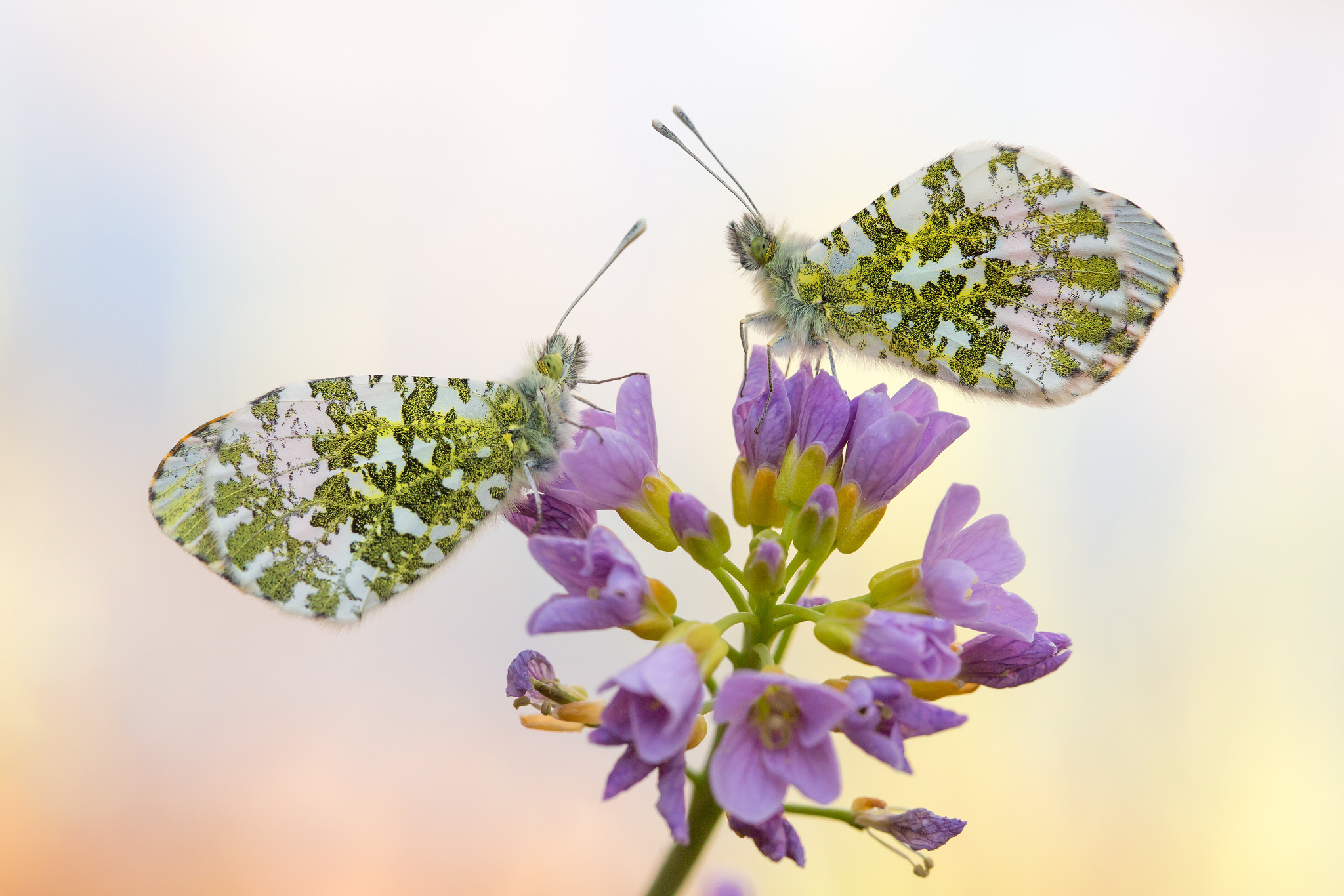
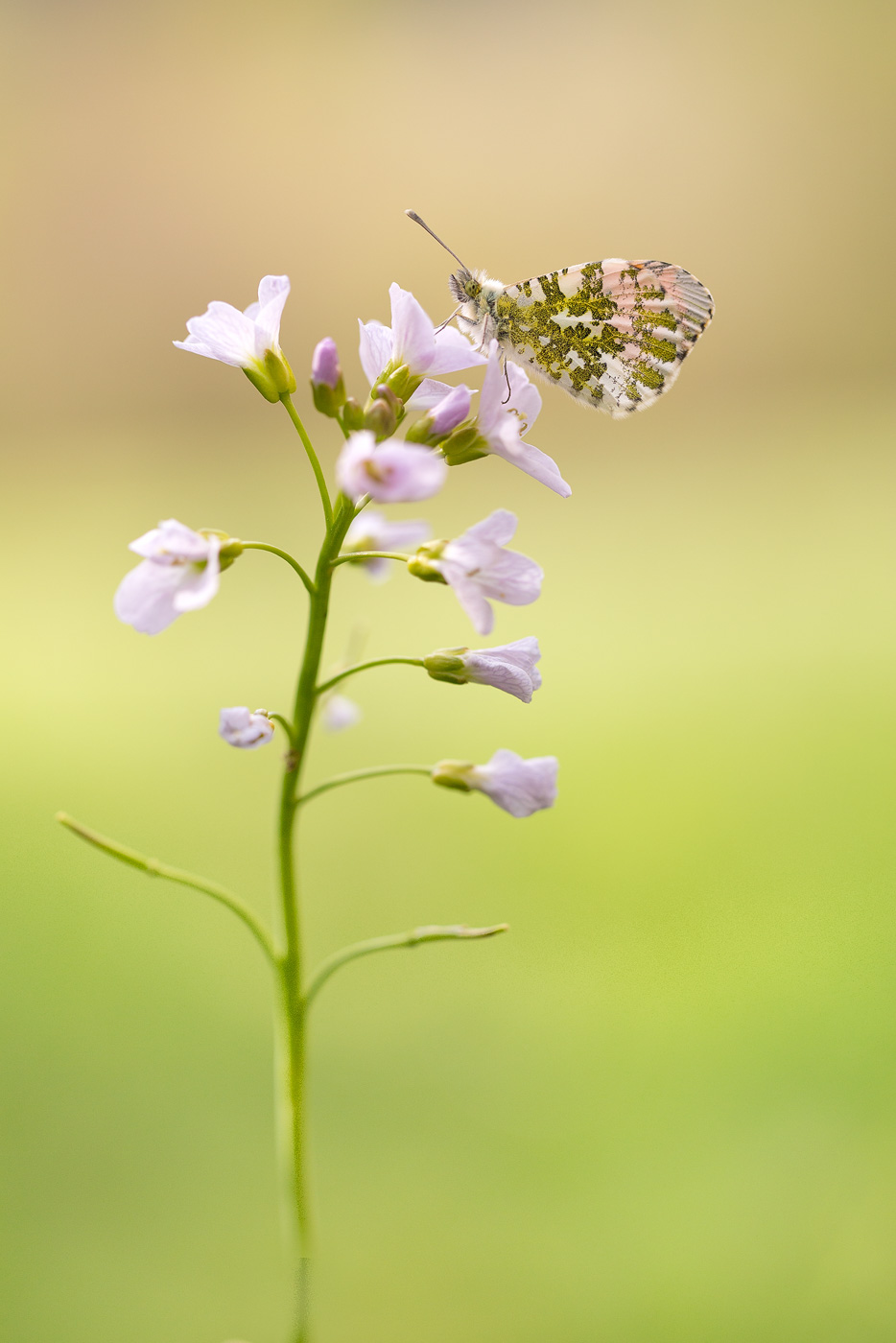
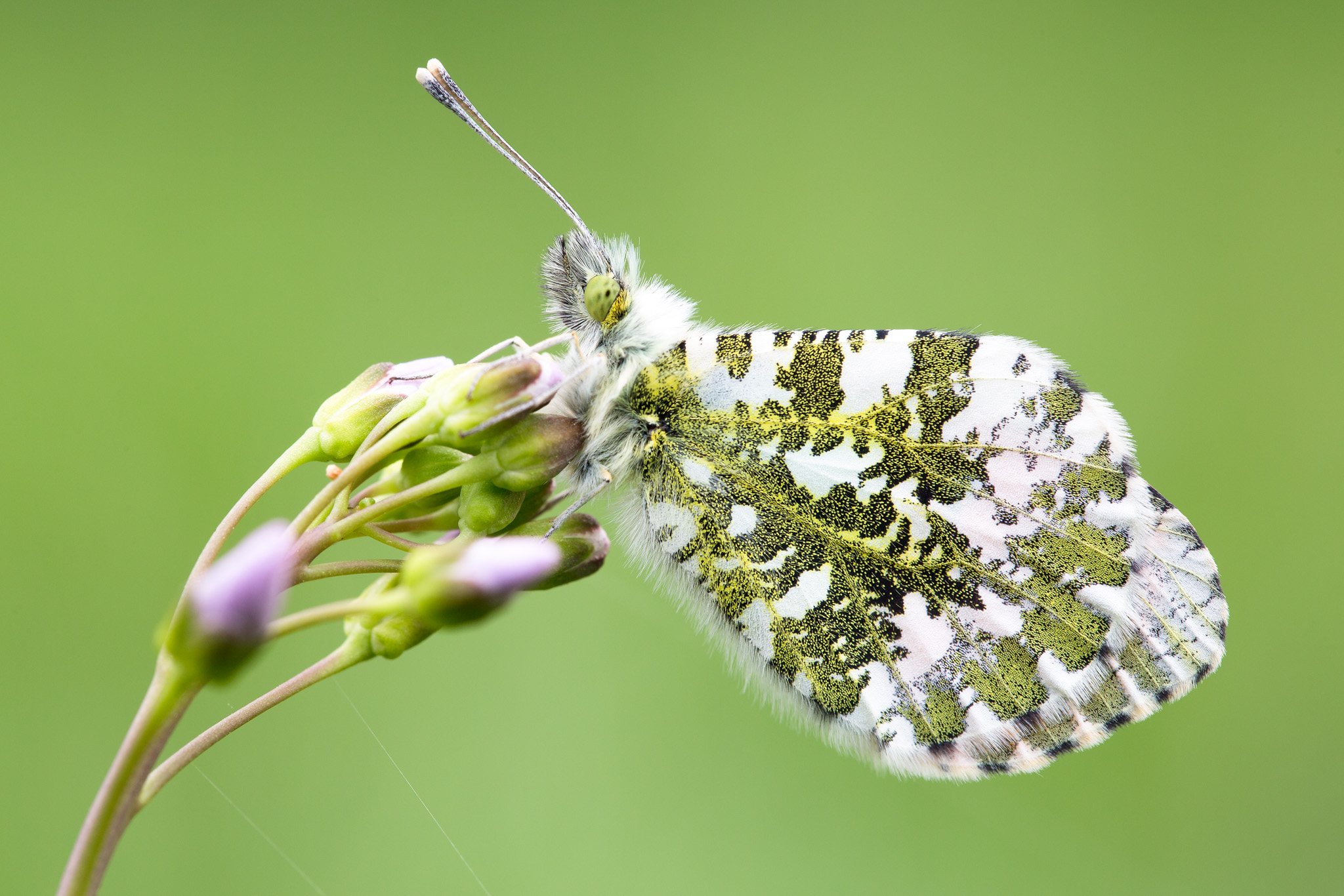
Mit den ersten Blüten vom Wiesenschaumkraut läutet dieser Schmetterling den Frühling ein. Seine frischen Farben und die auffällig orange Zeichnung der Flügeloberseite der Männchen, sind markant und unverwechselbar. In Ruhestellung haben sowohl die Männchen als auch die Weibchen identische Merkmale auf der Flügelunterseite. Ein grüngelbes Muster kommt erst durch die Makrofotografie optimal zur Geltung.
This butterfly rings in spring with the first flowers of the meadow bittercress. Its fresh colours and the striking orange markings on the upper wing of the male are striking and unmistakable. At rest, both males and females have identical characteristics on the underside of the wings. A greenish-yellow pattern only comes to its best through macro photography.
▲ Click on the image for full resolution ▲
▲ Click on the image for full resolution ▲
▲ Click on the image for full resolution ▲
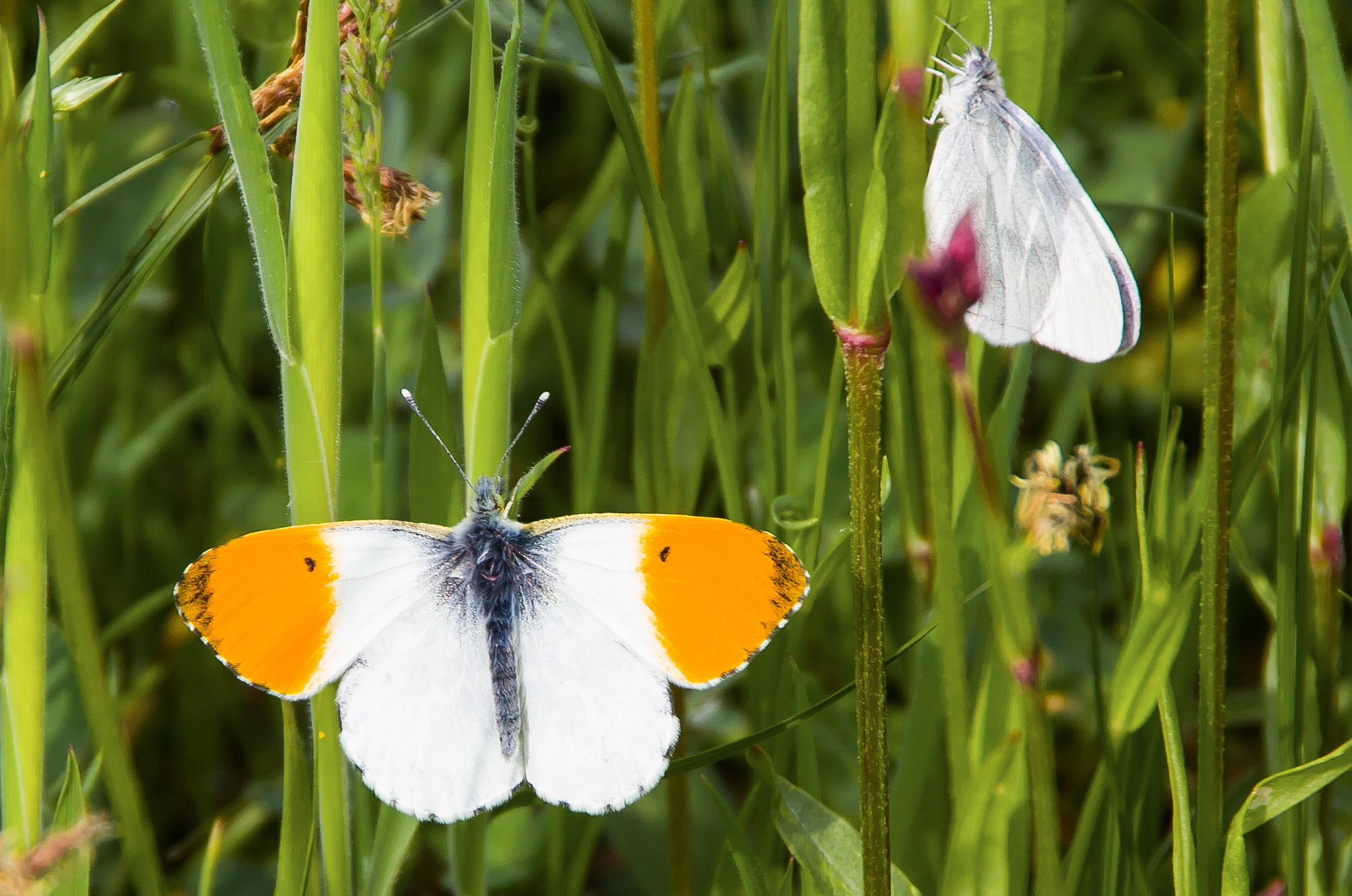
Deutlich unterscheiden sich die Männchen von den Weibchen durch die orange gefärbte Flügeloberseite. Das leuchtende Orange der Flügelenden ist selbst im Flug deutlich zu erkennen. Die nachfolgende Aufnahme zeigt zwei Schmetterlinge. Der Falter auf der rechten Seite ist ein Tintenfleck-Weißling.
The males clearly differ from the females through the orange colored wing-upper side. The shining orange of the wingtips is to be recognized clearly even in the flight. The following picture shows two butterflies. The butterfly on the right side is an wood white.
▲ Click on the image for full resolution ▲
Oft suche ich den Falter am Abend an seinem Ansitz, dem Wiesenschaumkraut. Dort verbringt er bevorzugt die Nacht. Ich kenne einige Stellen an denen das Wiesenschaumkraut, als erstes sprießt. Mit den ersten Blüten finde ich an den Stellen auch den Aurorafalter. Durch eine lichte Hecke in der Nähe, konnte ich den Hintergrund mit schönen runden Kreisen gestalten. Das Spiel mit dem Licht bereitet mir immer wieder große Freude.
I often look for the butterfly in the evening at its hide, the cuckooflower (Cardamine pratensis). He prefers to spend the night there. I know some places where the cuckooflower is the first to sprout. With the first flowers I also find the orange tip in these places. By a light hedge in the proximity, I could arrange the background with beautiful round rings. The play with the light always gives me great joy.
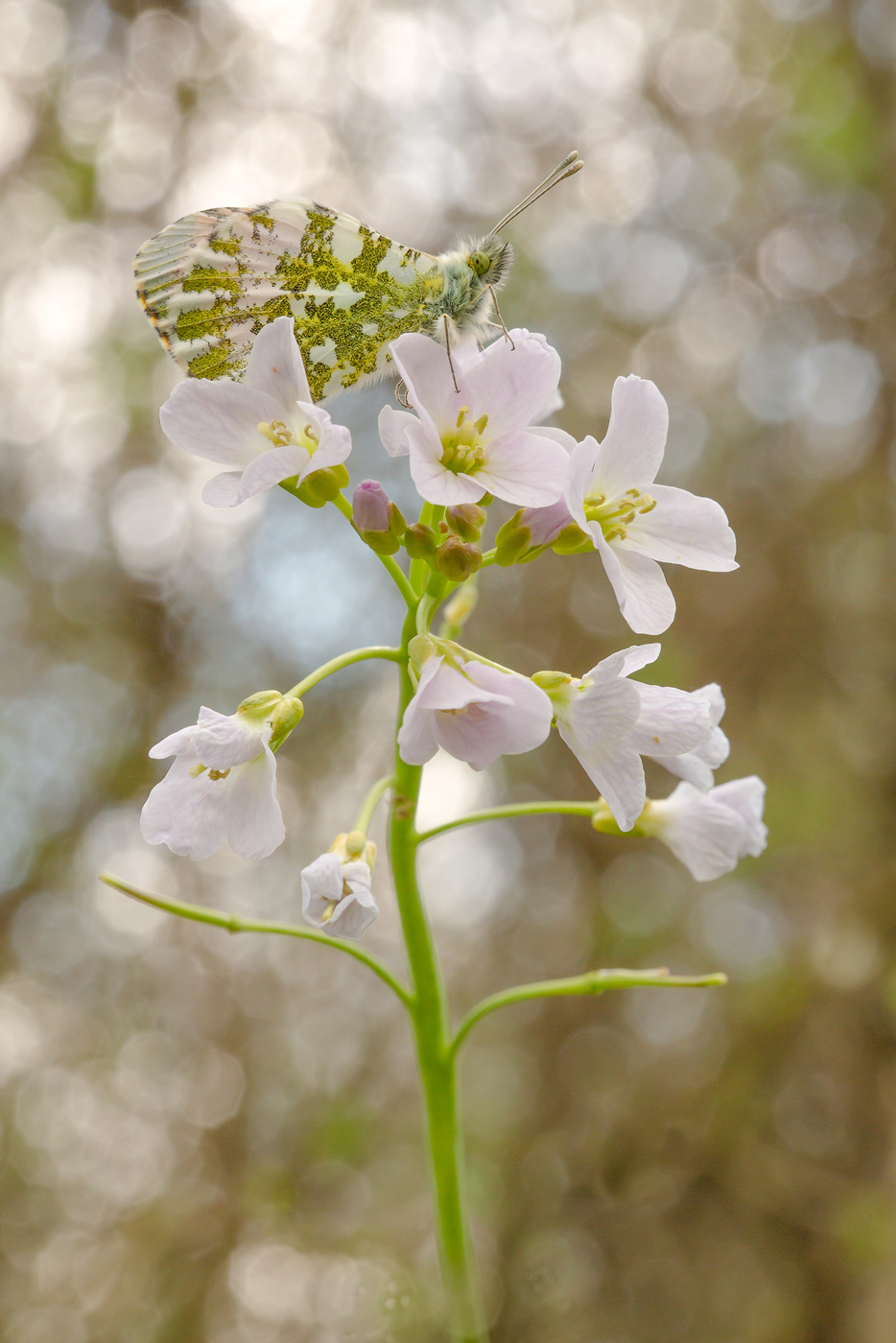
▲ Click on the image for full resolution ▲
An diesem Morgen wollte zuerst nichts gelingen. Ich war mit meinen ersten Bildern nicht zufrieden. Doch auf einmal war der Bann gebrochen. Ich konnte noch zahlreiche fantastische Aufnahmen an diesem Tag fotografieren. So ist es, wenn man ungeduldig ist und das Glück erzwingen möchte. In der Ruhe liegt die Kraft.
This morning, at first, nothing was going to succeed. I was not satisfied with my first pictures. But suddenly the spell was broken. I was able to take many more fantastic pictures this morning. So it is when you are impatient and want to force happiness. The strength lies in the silence.
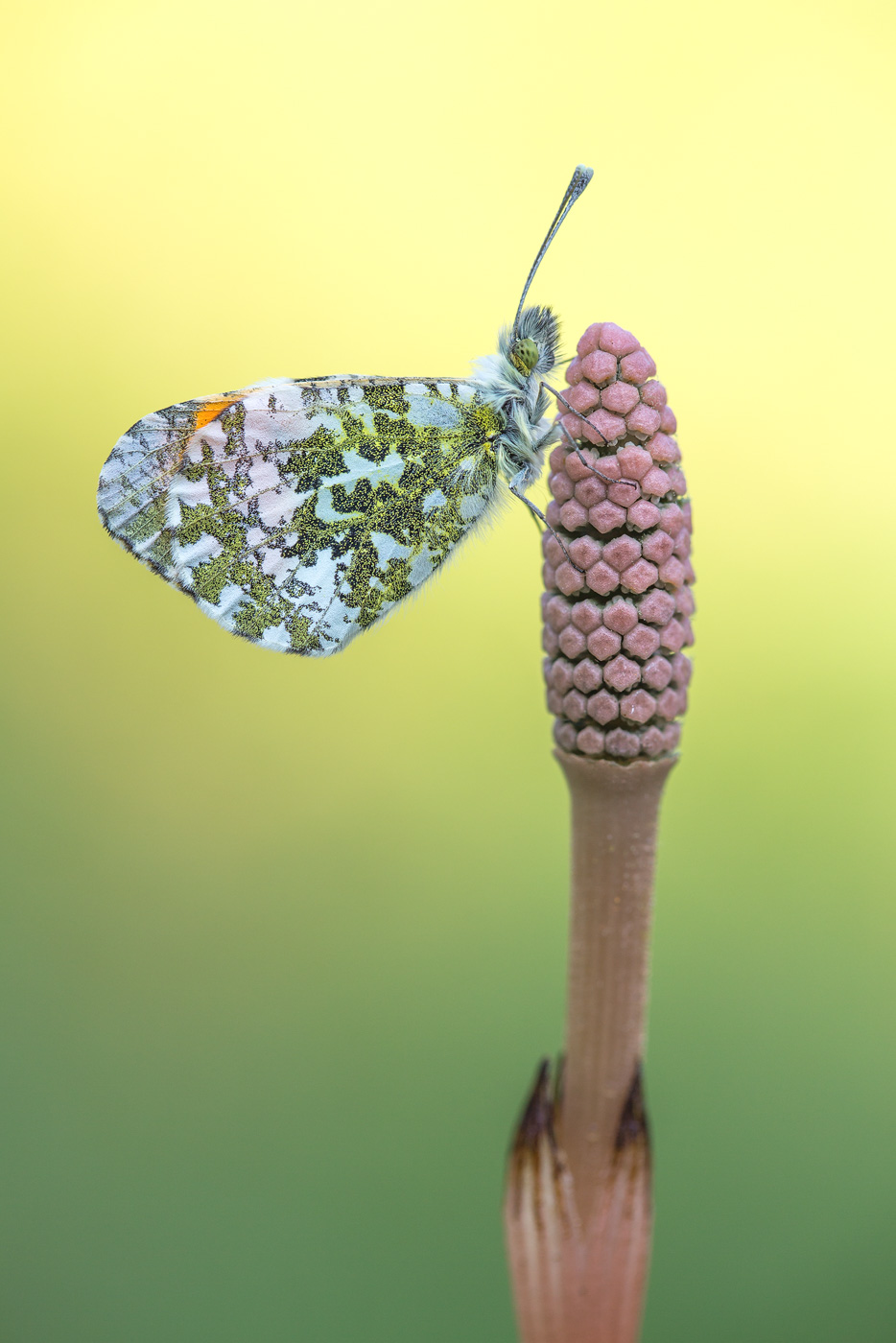
▲ Click on the image for full resolution ▲
Bei dem kleinen Videoclip konnte ich zwei Männchen bei der Balz um ein Weibchen beobachten. Sie waren so sehr miteinander beschäftigt, dass sie mir keine Beachtung schenkten. So war es möglich, mit dem Smartphone nahe genug heranzukommen.
With the small video clip I could observe two males at the courtship display around a female. They were so busy with each other that they didn't pay attention to me. So it was possible to get close enough with the smartphone.

Der Aurorafalter ist ein Tagfalter aus der Familie der Weißlinge (Pieridae). Er fliegt auf Wiesen mit Wiesenschaumkraut (Cardamine pratensis) und Waldränder, an denen die Knoblauchsrauke (Alliaria petiolata) wächst. Dort legt das Weibchen bevorzugt im Halbschatten an diesen Pflanzen seine Eier ab. Schon nach wenigen Tagen verfärbt sich das Ei von Weiß, über Gelb bis Rot. Die Raupe schlüpft und ernährt sich von den Blättern und Blüten. Die Gürtelpuppe überwintert am Stamm der Pflanze. Der Falter schlüpft ab April und fliegt in einer Generation bis Juni. Der Falter fliegt noch sehr zahlreich und sein Bestand gilt als nicht gefährdet.
The orange tip butterfly is a butterfly of the family (Pieridae). It flies on meadows with cuckooflower (Cardamine pratensis) and forest edges, where the garlic mustard (Alliaria petiolata) grows. There the female prefers to lay her eggs in semi-shade plants. Already after few days, the egg discolors from white, over yellow until red. The caterpillar hatches and feeds on the leaves and flowers. The belt doll hibernates on the stem of the plant. The butterfly hatches from April and flies in one generation until June. The butterfly flies still very numerously and its continuance is not considered endangered.
| Category | Macro │ Video |
| Camera | Canon 5D Mark III |
| Lens | Canon EF 100 mm 1:2.8L Macro IS USM |
| Location | Germany, Baden Württemberg, Mainfranken, Mondsee |
Wenn dir mein Beitrag gefällt, freue ich mich über deine Nachricht.


If you like my contribution, I am looking forward to your message.
Many thanks and greetings from Germany 🦋
Frühere Beiträge in der Übersicht │ Previous articles in the overview